
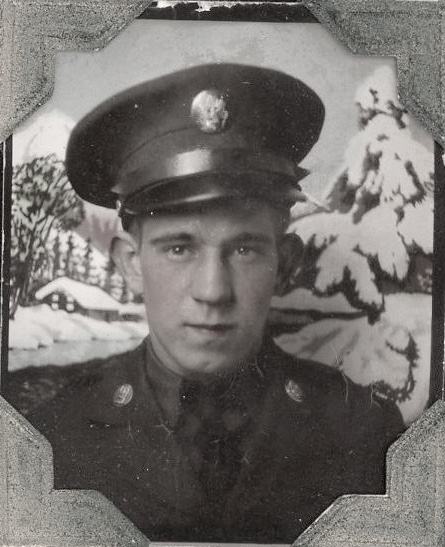
Abe and the First Battalion of the 117th Regiment, under individual company control, crossed the channel at night. Weather in the channel was rough. Continued enemy air action made the crossing hazardous, but it was completed without serious mishap. Daylight found the improvised harbor at Omaha Beach filled with vessels of all descriptions and the sky dotted with big anti-aircraft balloons.
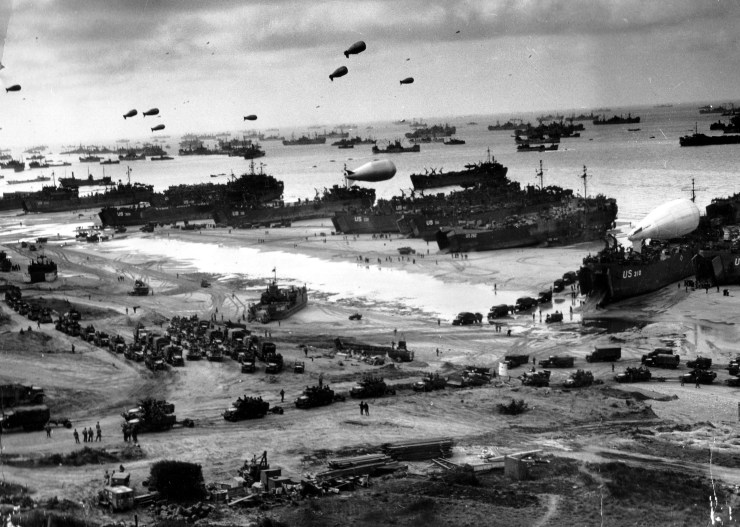
The 117th landed on Omaha Beach June 8-9. Other units of the 30th crossed the English Channel and landed on Omaha Beach through June 15. Coming ashore, the troops were confronted with little or no enemy action. They were, however, exposed to the effects of the carnage that had occurred on the beach within the previous few days. There were more than 2000 US casualties from the assault of Omaha Beach, less than half of what some had predicted.
Source: May 29, 2011
An interview by David Venditta, OF THE MORNING CALL
Jerome Neff, a 19 year old had gone ashore with the 29th Infantry Division on June 7, 1944, he recalled:
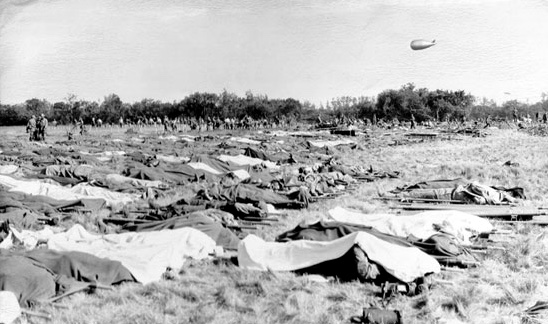
“Four or five days after D-Day, the Graves Registration guys were busy getting bodies…They picked out maybe 10 guys from my company — including me — …we were to go down to the beach…
“There was some guy with a bulldozer digging trenches 3 1/2 feet deep, maybe 50 yards long. Our job was to pick up a body, put it on a litter, get it into the trench, then go back and get another one…We worked in pairs.
“Unfortunately, and I never even talked about this to my family or anybody, but there were guys without limbs, with guts hanging out, guys with clothing blown off from a concussion, all kinds of very terrible sights. Some were clean shots, some were pretty messy.”
Abe and his unit crossed the beach and moved inland. On June 15, 1944, the 30th went into front line combat in an area about ten miles inland from Omaha Beach and south of the French town of Isigny-Sur-Mer. They relieved elements of the 101st Airborne Division and the 29th Infantry Division.

The troops would recall vividly the “smell of Normandy, cordite (an explosive) mixed with apples and rotting cattle.” (This area of Normandy is known for its apple orchards and cider brandy.)
Now that they were engaged in combat, Abe and the other GIs were constantly sleep deprived and had hot meals, only K and C rations.
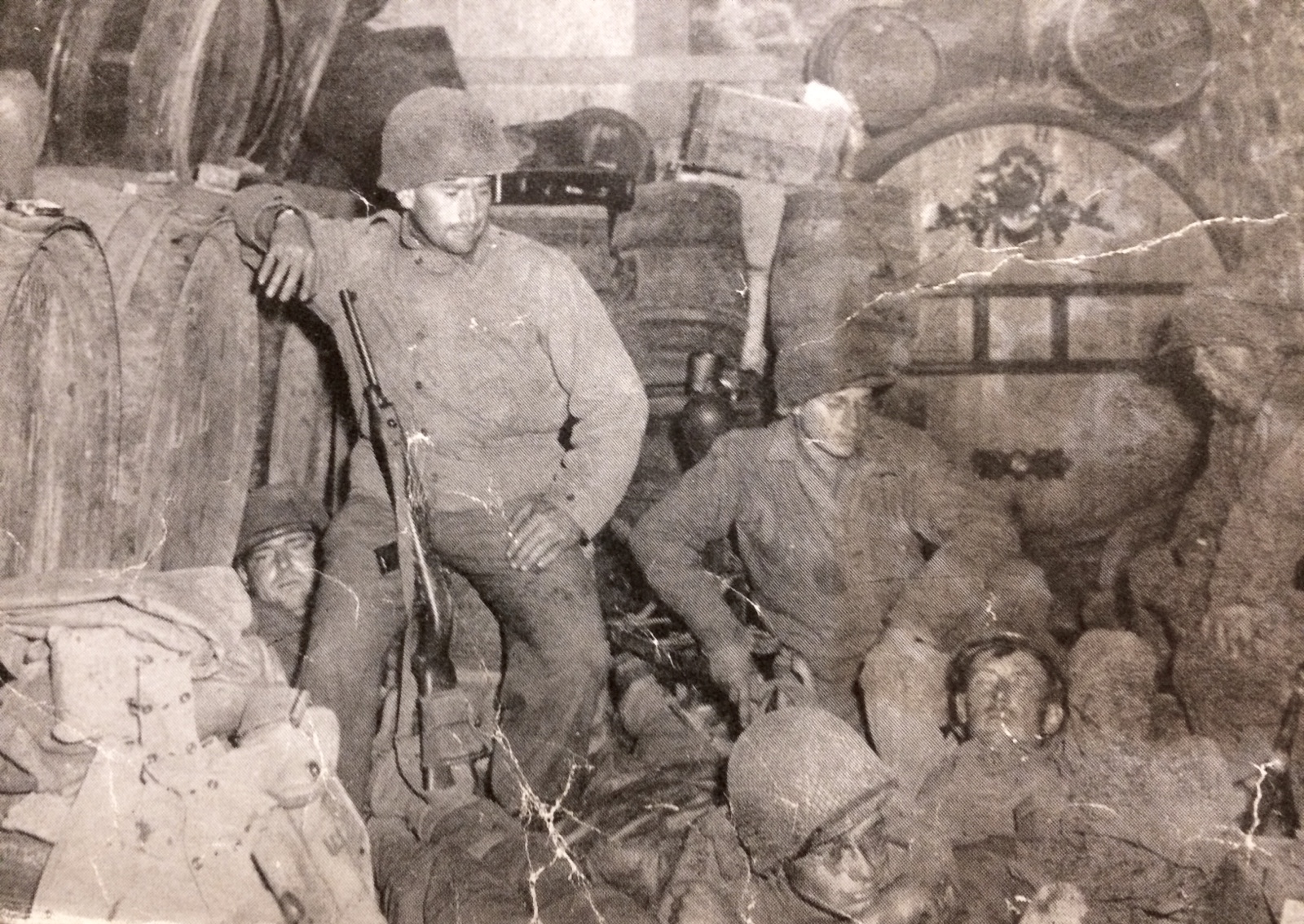
The US Army introduced the K-ration, a daily individual combat food ration. The K-ration provided separately boxed meal units: breakfast, dinner and supper of non-perishable, ready-to-eat food that could fit into a soldier’s pocket. The meals only gained “palatable” and “better than nothing” ratings from soldiers, but did relieve hunger and provided sufficient energy. The C-ration was the only ration comparable to the K-ration in widespread issue, with six cans comprising one full ration, it was significantly heavier, and had less variety but more calories.
By July 7, 1944, the 30th had fought its way another six miles inland through the hedgerows of Normandy and liberated the town of St Jean-de-Daye. In the weeks that followed, the Allied forces became bogged down, stalemating front. Concerned that this would play out like the trench warfare of WWI, American General Omar Bradley ordered an attack on the major German defenses near Saint Lo. If Saint Lo could be gained, then the Allied forces would have access to rolling countryside enabling them to advance faster.
The Battle at Saint Lo
July 12-13: the 30th was assigned to spearhead a breakthrough of the German defensive position at St Lo.
The assault on the German position was set for 11:30 AM on July 24. A few hours before the assault was launched, the troops of the 30th were withdrawn 1,200 yards from the front.
At about 10:30, more than 50 Battalions of artillery began firing into the target area, the heaviest artillery barrage since the Omaha Beach landings.
At 11:15, they fired red smoke shells to clearly define the Bomb-Line so that the 8th Air Corps could begin carpet bombing.
As the aerial bombing began, wind caused the red smoke to drift. In a matter of minutes, the red smoke was on top of the men of the 30th Division. Since the planes were required to maintain radio silence from the time they left England until their mission was accomplished, there was no way to warn the bombers about the drift of the red smoke. Some of the Air force planes dropped their bombs directly onto the 30th Division troops.
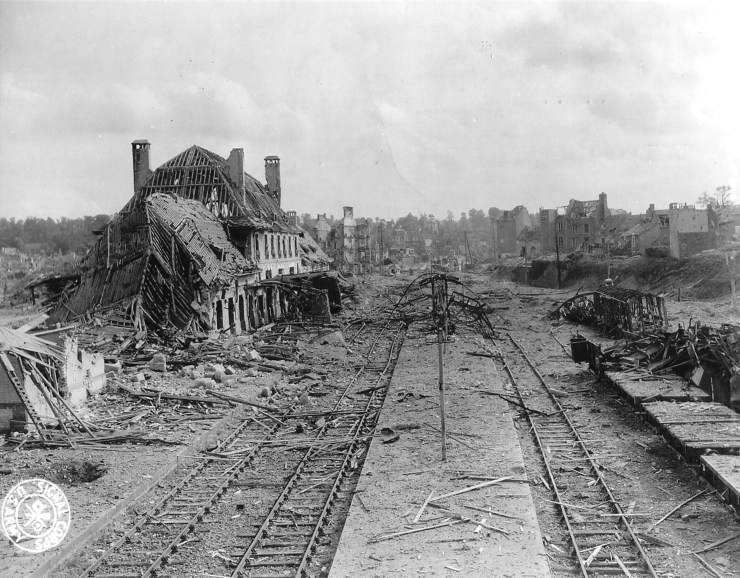
The 120th Regiment sustained 24 men killed and 128 wounded; the 119th Regiment had 5 killed and 28 wounded. The 117th Regiment were in reserve and escaped casualties. The planned assault on St Lo was cancelled and rescheduled for 11:00 AM the following day.
“I was about two hedge rows back of the 120th when the bombs fell.”
─Abe
July 25 was a bright, sunny day. A few hours before the scheduled assault, the 30th was again withdrawn 1200 yards from the front. The artillery shelled the enemy position. A few minutes prior to the arrival of the air force bombers, they again fired red smoke shells to mark the location of the aerial bombing. Again as the shells land and exploded, a wind pushed the red smoke over the waiting troops of the 30th. More than two thousand planes took part in the attack. Seventy-seven of them bombed troops of the 30th with high explosives and napalm.
Sixty-four men were killed, 374 were wounded and 60 were reported as missing. Among those killed was General McNair, the commanding officer of the 30th Division. McNair had decided against the advice of his aides to place himself in the front line, believing that the presence of a general alongside them was good for the morale of his troops.
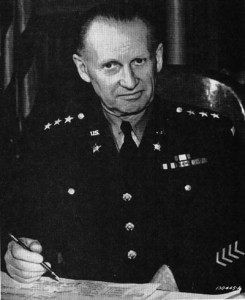
The assault on St Lo began on schedule. The fight lasted 11 days. The 30th division suffered casualty rates of 40%, with the front line rifle platoons, casualty rates reached 75%. By August 1, the German defense had collapsed. The Allies could advance west and south into Brittany.
After the battle the 30th was withdrawn from the front for a brief rest, hot showers and hot meals.
During the months of June and July, the Allied forces had advanced inland from Omaha Beach at the average rate of a few feet per day. After the battle of Saint Lo, they now moved through the French countryside at the average rate of more than five miles per day. On August 6, the 30th Division found themselves near the French town of Mortain and the village of Saint Barthelemy.
On August 2, Hitler had sent a directive ordering “an immediate counter-attack between Mortain and Avranches.” He demanded that eight of the nine Panzer Divisions in Normandy be used in the attack, and that the Luftwaffe commit its entire reserve, including 1,000 fighters. The element surprise was key. The intent was to hit the U.S. 30th Infantry Division east of Mortain, then cut through the American defenses to reach the coast.
The Battle of Mortain

The German general in command ordered the attack on Mortain to begin at 10 PM on the evening of August 6. To avoid alerting American forces to the attack, there were no preparatory artillery bombardments.
At 1:00 AM on August 7, the 3rd platoon of Company “B” of the 117th was manning a road block near Le Bois-du-Parc when they were attacked by an SS German Panzer force. The platoon was forced to pull back. From midnight to 4:00 A.M., the whole 117th Regimental area was blanketed by intense and devastating mortar and artillery fire.
The main body of German forces attacked at dawn. Aided by a thick blanket of fog, the German tanks and troops were able to strike the 117th First Battalion positions effectively without warning. The attack came in several waves. Company A’s roadblock was knocked out first. Company C’s roadblock on the right flank was able to hold position against the initial German attack, but seven German tanks and a company of infantry attacked again, penetrating their position. Company B, which was in reserve, was ordered to aid Company “C” with one platoon. As the platoon prepared to move out, the Germans’ main attack force struck the First Battalion on several different fronts.
The situation became extremely “fluid.” Company A’s main line of resistance near the town of Saint-Barthelemy was broken early that morning and by 7:00 AM the area was swarming with enemy tanks. Within a few hours the German controlled the area of Saint Barthelemy.

The 117th Regimental Commander received orders from Division to hold at all costs. The 30th with support from the 35th Infantry division were able to reestablish and hold a defensive line. To the south German forces entered Mortian but were unable to advance further as that portion of the 30th defensive line held.
The 2nd Battalion of the 120th Infantry Regiment commanded Hill 314, the dominant feature near Mortain. Although cut off, they were supplied by parachute drops. Of the 700 men who defended the position, more than 300 were killed.
By noon of August 7, large numbers of Allied aircraft appeared over the battlefield. In the afternoon, the 1st SS and 116th Panzer Divisions made renewed attacks, but the flanks of the Mortain positions had been sealed off, allowing the American Corps to contain the German advance. Although fighting would continue around Mortain for several more days, there was no further prospect of any German success.
On June 6, just before news of the D Day invasion was broadcast to the American public, Ruth Banis, Abe’s younger sister wrote him the following letter:


Tuesday June 6, 1944
Dear Abe,
How are you coming along? I hope in the very best of health. Everyone here at home is coming along just fine.
Eve & May are both home on a furlough together, they look so nice. They even have a little California suntan…I am learning to drive the car at last. Took May out [for] a spin yesterday. If I get caught though, it won’t be so nice. I’ll be spinning behind some bars.
I know that by the time that you have received this that the Red Cross has informed you of the tragedy that has come to you and the rest of us at home. That God has chosen Bill to leave us & go on to a fine resting place.
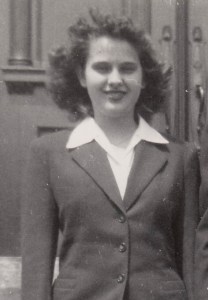
He was killed on May 14 or Mother’s Day. As yet we have received no other information about him. If we do I will inform you to the best of my ability. As I bring this to a close may I wish you the very best of health & may God be
with you always.
Good Luck & Love
Ruthie
Bill, Abe’s older brother was killed in action on May 14 near the Italian town of Monte Casino. He was cited for bravery and awarded the Silver Star.
But for soldiers in combat like Abe, mail delivery was slow and irregular. Abe would never get the letter. It would be nearly a year before he learned of his brother’s death.


Next Week: MIA
 ww2letterproject
Ron Banis recalled that his mom once told him “After the war, Dad used to dive for cover whenever he would hear a sonic boom.” I am sure Abe was exposed to artillery and air bombardment throughout June and July of 1944 but the barrage before the attack on St Lo was massive. With some of the shells falling “short” and just yards away, diving for cover might have become a quickly conditioned reflex. For those of you who are younger, in the 1950s sonic booms, caused by Air Force jets reaching the speed of the sound, were relatively common. I grew up in the vicinity of Wright Patterson Air Force Base. I recall that they were fireworks type loud and the windows in our house rattled when they occurred.
LikeLike
Just reading this a.m. and it’s hard to hold back the tears. My first wish is that I could go back and fix it all so they wouldn’t have to endure so much tragedy. But they did endure, with even more tragedy to come, to become a wonderful bunch of people.
Emily
LikeLike