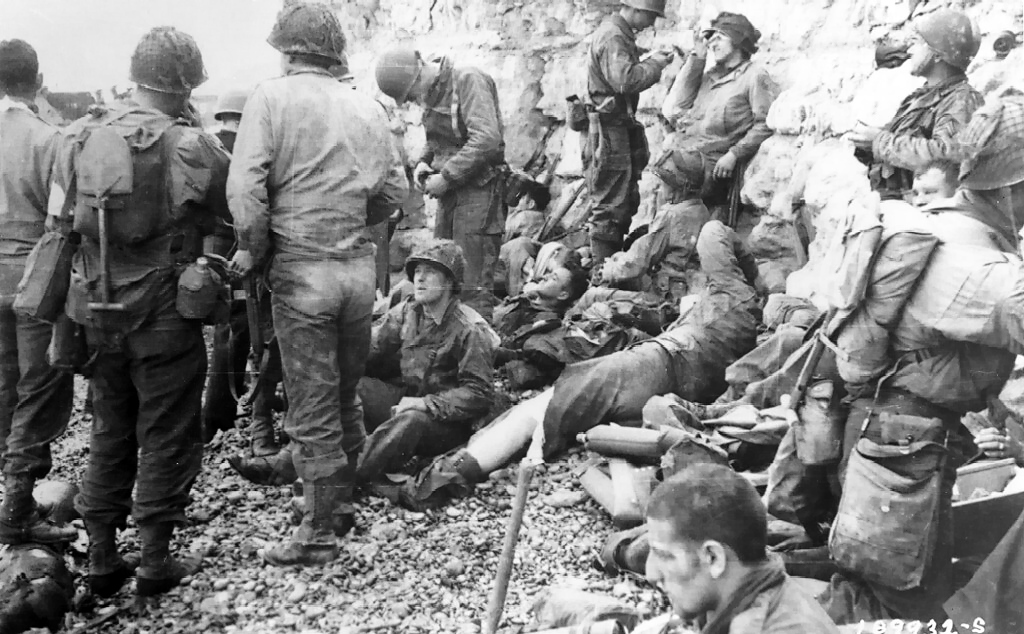
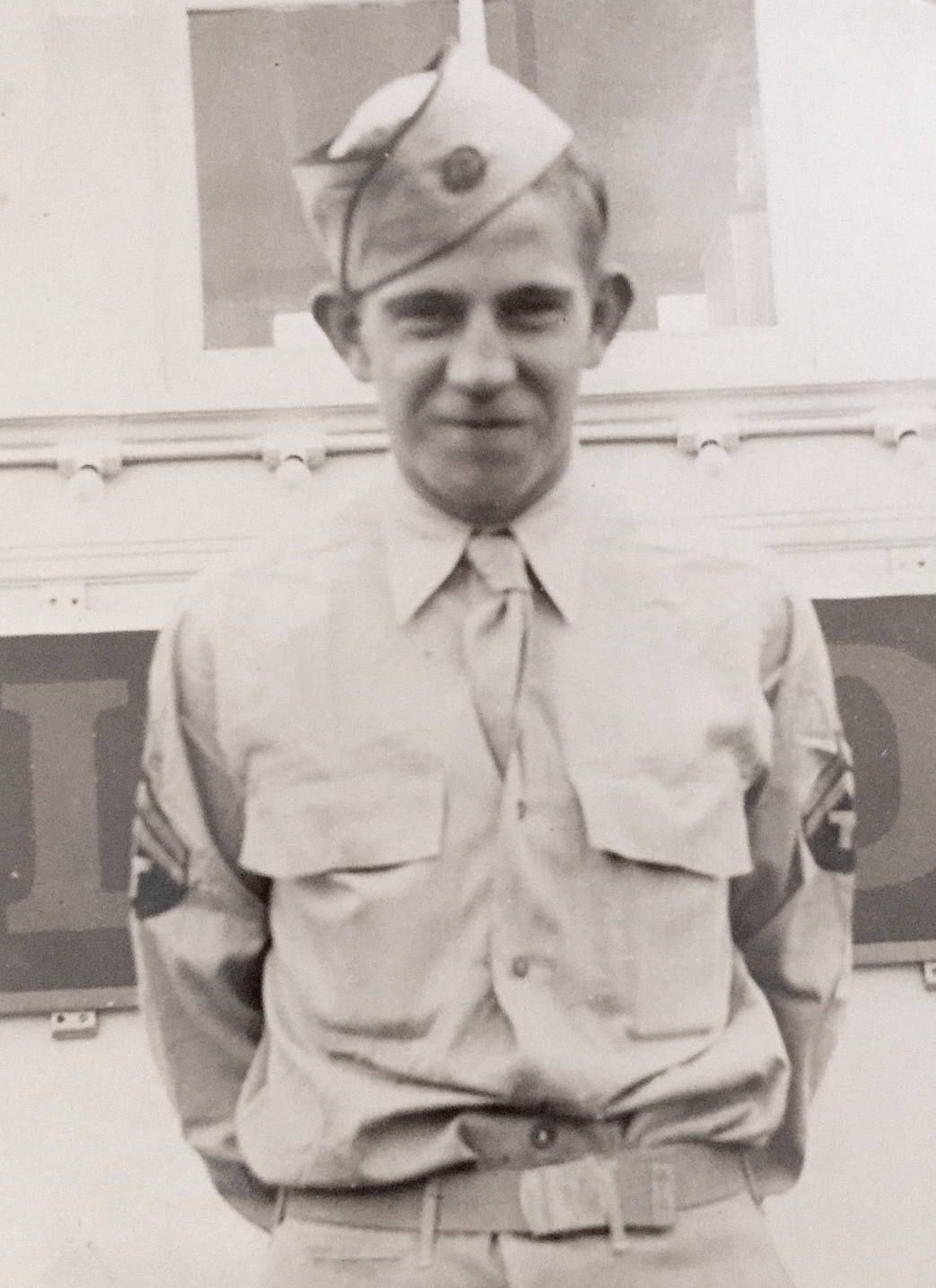
1943 – 1944
In November of 1943, the 30th Division of the U.S. Army arrived in Camp Atterbury. Abe had transferred from the 83rd Division and joined the 30th Division, 117 regiment, 1st battalion, Company A and continued training with the 30th. On February 1, 1944, the 30th left Camp Atterbury by train and arrived the next day at Camp Myles Standish located about 40 miles south of Boston.
(note: Abe was transferred from the 30th to Ft. Benning to train as a paratrooper. He was injured, left Jump School and was moved to Ft. Meade, Maryland. It is likely he left Ft Meade and joined the 30th at Camp Miles Standish).


Camp Myles Standish represented the Boston Port of Embarkation where nearly one million American soldiers were processed before engaging in the European Theater of World War II. A quartermaster was set up so that an entire US Army division (10,000 to 20,000 men) could be prepared for deployment within a day, making train traffic understandably chaotic. The New Haven Railroad yard contained 10 miles of track.
“We boarded our ship the James Parker, in Boston for overseas.”
─Abe

On February 12, 1944, the 30th left Boston Harbor and headed for Europe. Abe traveled aboard the USS James Parker, a passenger and cargo ship that had been recently converted to a troop carrier.
As one GI recalled, “We were herded like cattle, struggling under the weight of 100 pound duffel bags, packs with bed rolls, rifles and steel helmets…we…climbed the gangway…[and] followed the man in front of us through a maze of hatches and companionways until we reached our assigned area,…a forest of steel pipes supporting canvas strips stretched tightly with ropes. Each “hammock” was…strung about two feet from the “hammock” above.“
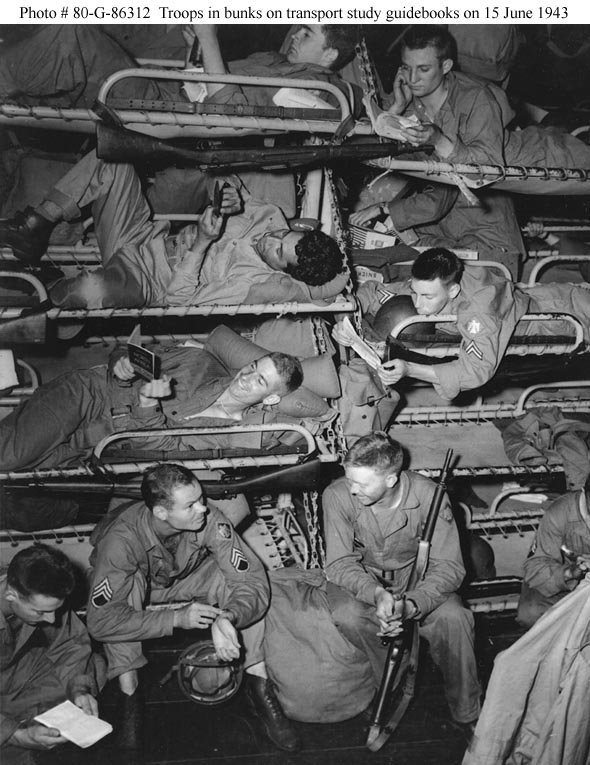
The Parker was one ship in a large convoy that carried troops across the North Atlantic.
Crossing the northern Atlantic Ocean in winter was hazardous with high wind, rough seas and frigid temperatures. Infantrymen were forced to stay below deck in bad weather, which was most of the time.
In addition there was the threat of an attack by the German navy, specifically by a German U-boat “wolf pack.”
During the early part of the war (1940), German U-boat operations in the North Atlantic were spectacularly successful. From June until October 1940, 270 Allied ships were sunk. By 1942, wolf packs consisting of 10 to 15 U-boats would attack convoys in waves. In October 1942, 56 Allied ships were sunk.
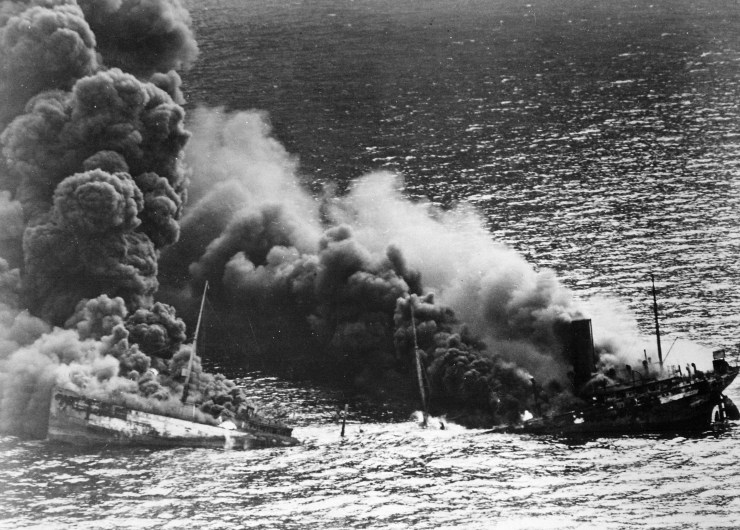
In 1943, the tide turned in favor of the Allied convoys with the use of improved sonar, radio signal interception devices, long range air support, larger convoys, and more and heavier armed escorts ships. In May, 43 U-boats or 25% of the German U-boat fleet in the Atlantic were destroyed.
By the winter of 1944, the odds of crossing the Atlantic safely had improved dramatically, but German “wolf packs” still existed and continued their attacks until the end of the war. Such attacks occurred primarily at night. Each night as Abe and the convoy moved east, there was the possibility that the Parker could come under attack. 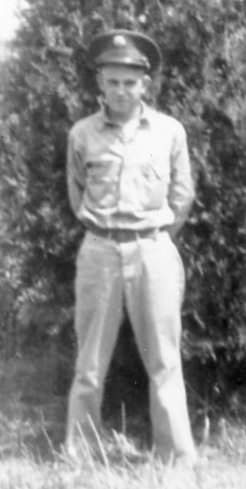 This meant that you, along with thousands of men, would be forced to scramble on to the deck and into life boats and into rough seas with water temperatures so cold that hypothermia could kill within minutes. Abe’s convoy crossed the Atlantic in 12 days.
“It was quite an experience.”
─Abe
On February 24, 1944, Abe and the 117th regiment of the 30th arrived in England. His regiment proceeded by train to the southern coast of England.
“We arrived in Liverpool…Our first camp was located at Yeovil.”
Yeovil, a small English town located about 50 miles west of the port city of Southhampton, was a center of the British aircraft and defense industry and a frequent target of German bombing raids.
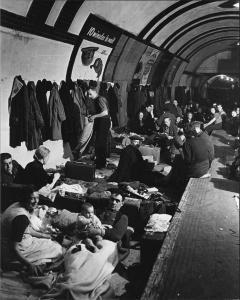
That first night in Yeovil:
“I underwent…night bombing by the Germans. We spent about two hours in an air raid shelter.”
After Yeovil, the 117th moved.
“Our next camp was Stapely, then to Bristol and then on to Wellington.”
─Abe
From late February to early June 1944, troops of the 30th continued their intense training in preparation for the invasion of France. Just before the invasion, there were 1.5 million GIs in England.
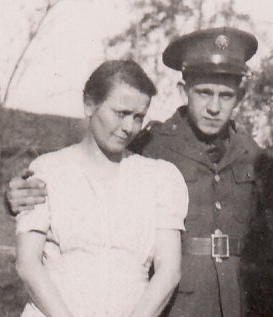
In late May, Abe wrote two letters to his mother.


England – April 27, 1944
Dear Mother and all:
Here is hoping this letter finds you and the rest in very good health. Has dad ever changed he ways yet and what is he doing for past time. That one letter you wrote about Dick I will answer that in a letter tomorrow or maybe tonight if I can find the envelope that I want to put in. There is something which you will want to know.
Mother have you heard from Bill and is he still in the same place or has he been moved. He hasn’t written but one letter since last year and when he writes then I will write him another letter.
Well mother since there isn’t anything else I can think of to say in this letter I will wait till later on. So till the next letter you receive please tell grandfather that I still think of him.
Your son
Love Abe


England – April 30, 1944
Dear Mother and all:
Here is a letter coming to you after the one I wrote the other night, and wasn’t any too good sounding. I shouldn’t have written it but did, so it is too late now. I haven’t heard from her in the last few days so therefore don’t know whether she has moved there yet or not. I told her one time to get herself a job when I went overseas so it would help keep her mind occupied, for she would worry most of the time anyway. Sure would like to see Bill come here in the same place I am for we could really have some wild times together. Just think how long it has been since we have been together.
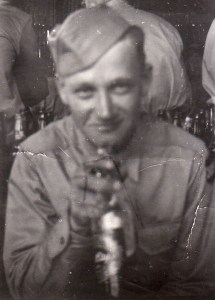
When you see Judy’s place after she gets moved you won’t know it for she has told me just how it would look when everything was arranged. She is planning on having everything [like] I would want it.
Well mother will close for this time so till later, mother.
Love to all
Your son
Love Abe
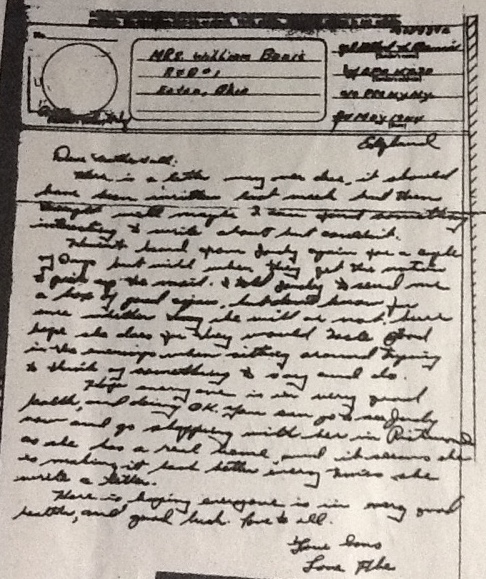
England – May, 1944
Dear mother & all
Here is a letter way over due, it should have been written last week but thought then maybe I can find something interesting to write about but couldn’t.
Haven’t heard from Judy again for a couple of days but will when they get the notice to pick up the mail. I told Judy to send me a box of good cookies but don’t know for sure whether she will [or] not. Sure hope she does for they would taste good in the evenings when sitting around trying to think of something to say and do.
Hope everyone is in very good health and doing ok. You can go see Judy now and go shopping with her in Richmond as she has a real home and it seems she is making it sound better every time she writes a letter.
Here is hoping everyone is in very good health, and good luck.
Love to all
Love you
Love Abe
On June 4, Abe and men from his company were invited to a dance held by the local community in a nearby town hall. The men marched in formation to the dance. They had just arrived when orders came to return to camp. Abe and the 30th Infantry Division were alerted for movement to France. The Units moved to a staging area in Southern England and were briefed. They moved to Southampton docks, boarded transports and waited.
D Day
Only ten days each month were suitable for launching the Allied invasion of France. A day near the full moon was needed for night-time illumination of navigational landmarks for the crews of aircraft, gliders and landing craft. The full moon also meant a low tide, exposing the defensive obstacles the Germans had placed in the surf on the seaward approaches to the beaches. A full moon occurred on June 6, 1944. Allied Expeditionary Force Supreme Commander Dwight D. Eisenhower tentatively selected June 5 as the date for the assault, but wind and high seas made it impossible to launch landing craft from the larger ships at sea, while low clouds prevented aircraft from finding their targets. On June 5, Eisenhower’s chief meteorologist forecast a brief improvement for the next day. Eisenhower ordered the invasion to proceed.
The Germans would have felt secure from invasion, due to the existing poor conditions, believing no Allied attempts would be possible for several days. Navigating the English Channel was only one obstacle for the Allies to overcome. There was Hitler’s extensive Atlantic Wall. Believing – incorrectly – that any forthcoming landings would be timed for high tide, Hitler had fortified the entire wall with tank turrets, barbed wire and mines to deter landing craft. Four German Divisions guarded the sector that the Allies attacked.
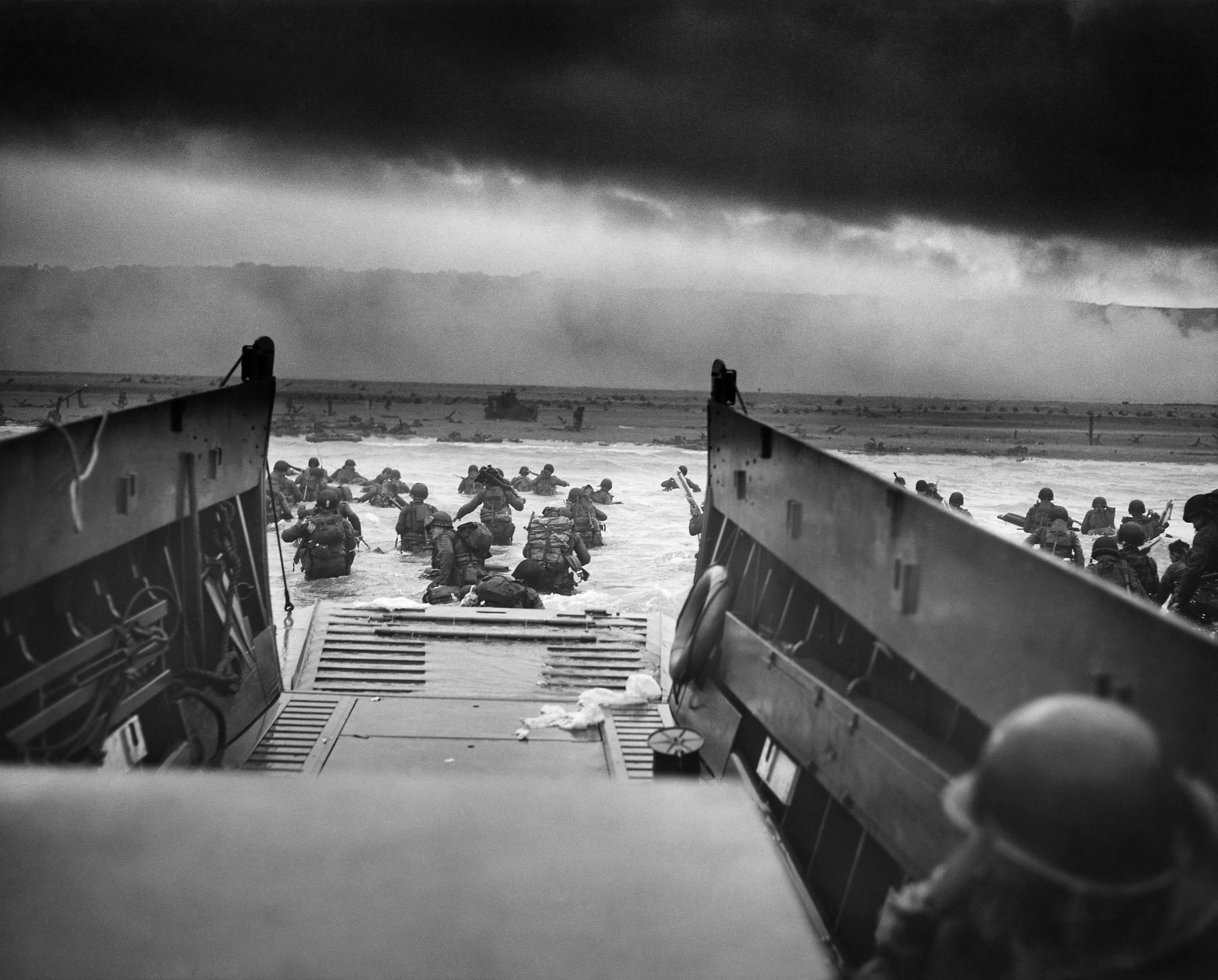
The morning of Tuesday, June 6, the sun shone from clear skies. The invasion was on.
The Normandy invasion began with overnight parachute and glider landings, massive air attacks and naval bombardments. In the early morning, amphibious landings on five beaches codenamed Sword, Juno, Gold, Omaha and Utah began and during the evening the remaining elements of the parachute divisions landed.
The total number of troops that landed on D-Day was estimated to be 130,000–156,000, roughly half were American and the other half from the Commonwealth Realms.
The total troops, vehicles and supplies landed over the period of the invasion were:
- June 11 (D + 5): 326,547 troops, 54,186 vehicles & 104,428 tons of supplies.
- June 30 (D+24): 850,000+ men, 148,000 vehicles & 570,000 tons of supplies.
- By July 4: one million men had landed.
The invasion fleet was comprised of 1,213 warships with 4,126 transport vessels.
Next Week: At the Front


I think we realized the complement about Rebecca was not from her. But here’s to her-excellent job!!!!!!! As I said earlier, the research in this project is amazing, both script and photography. And yes Dad, you should be very proud!
LikeLike
Clarification. The compliment to Rebecca comes from her dad, steve nance and was intended to be posted as my comment Not a comment of Rebeccadnance
LikeLike
Thanks, folks! I’m having fun putting it all together! xoxo
LikeLike
It is really amazing to me to have learned about all of this stuff in school but even better now that I get to read and see all this stuff about one of the best grandpas in the world he is true man of Honor
LikeLike
a compliment to Rebecca, the photo editor and builder of the site. She has a great eye for finding a banner photo which enables you to get a feel for the theme of this week’s story as soon as you open the site. Impressive. thank you.
LikeLike
These were the real heros of WWII. Dad went in on D3 day and I do not believe he had heard about Bill being killed in Italy yet. Not sure as it was before my time (lol). However, I do know that this experience effected him for the rest of his life. When you are a child you don’t realize the sacrifice your parents made to keep our nation free for a good life for their families. Dad was a hard worker, would never accept charity and passed that on to his children.
LikeLike
The research you’ve done to keep the info accurate is very impressive! I’ve read several books on WWII and of course seen many movies of that era but to put people I knew in the picture is sometimes overwhelming. This was their lives. Albert wasn’t quite as wordy as Bill which is interesting. They (Bill and Albert) must have missed each other so much.
LikeLike