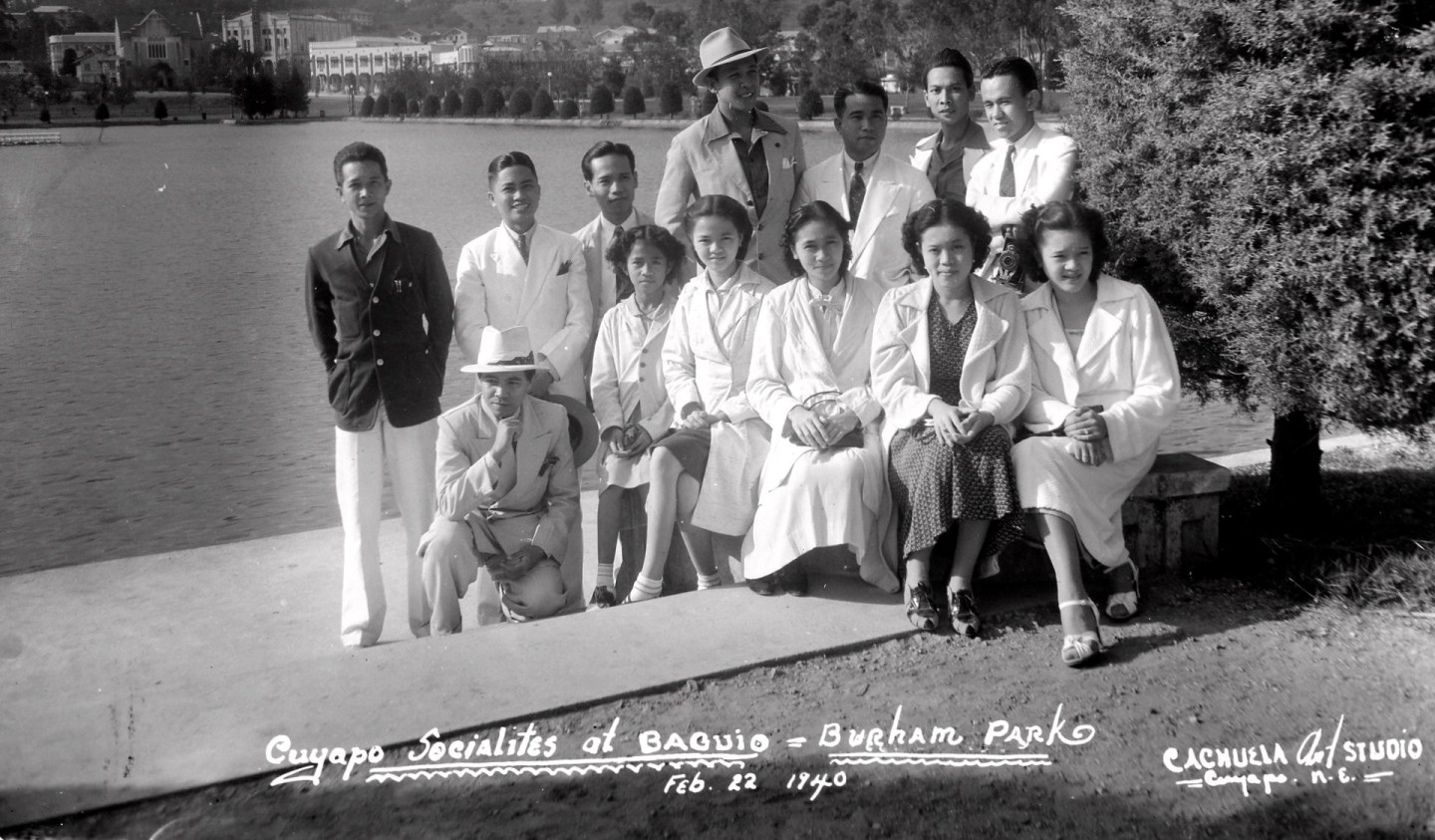

Manila was now a city of rubble. Everywhere in the central city were buildings reduced to piles of twisted steel and shattered concrete. Everywhere in the residential areas, there were homes and buildings that had been gutted by fire. Everywhere there were wandering civilians seeking food and shelter.
There was no civilian government and no local police force. Looting was common, and many GIs were among the looters. The Allied forces placed units of soldiers throughout the city in defensive positions to protect against an attack by the main force of the IJA, now located in the nearby mountains. The defending GIs were given broad police powers. Their presence alone began to quell the chaos and looting; by mid-march the city began to return to some sense of normalcy. The GI engineers cleared mines, building rubble and restored utilities. Manila Bay was cleared of the hulks of many sunken ships. There were occasional skirmishes with small units of IJA.
For the 37th Division there was now some time for R&R. Each GI was allotted four cases of beer and boilermakers became popular. Training occurred in the morning, but most of the men had the afternoons and evenings off for drinking, sightseeing, movies, dances, visiting with friends or sack time. By the end of March, many shops in Manila re-opened. GIs purchased “pets” including monkeys, baboons, and fighting cocks. Locals provided cheap laundry service and, for the first time in years, the men were wearing clean, starched and ironed clothes. There were lots of shoe shine boys and street vendors selling locally made crafts. Bars sprang up everywhere and served basi and nipa wines. GIs were required to carry a gun while on leave.
My mom lived through the Great Depression. Her family was very poor. When she was about 10 years old, her parents were unable to support her, so they placed her with a neighborhood “foster” family. She worked hard. Money was important to Mom. Money offered her a sense of security.
About 1960 Mom was hired as a full-time factory worker. It was a good-paying job. I had two full-time working parents. We moved into a bigger house and bought a new car. We were a middle-class family. But soon the “road to success” deteriorated as Dad began to drink and gamble more often. Dad was paid weekly. After his Friday work shift ended, he often stopped at a local bar to have a beer or two. Those stops grew longer and more frequent. At times, he came home many hours after his shift had ended and sometimes not until the next day. Sometimes he was without his paycheck.
My dad also lived through the Great Depression. His family was very poor. He also spent part of his youth in foster homes. He worked hard. Money was important to Dad. Money offered him a chance to play.
Where Mom worked hard and set a fast pace, by the mid-1960s, Dad had begun to lose interest in the race. Maybe it was a mid-life crisis or maybe he missed the adrenalin rush the War provided and tried to find it with each roll of the dice.
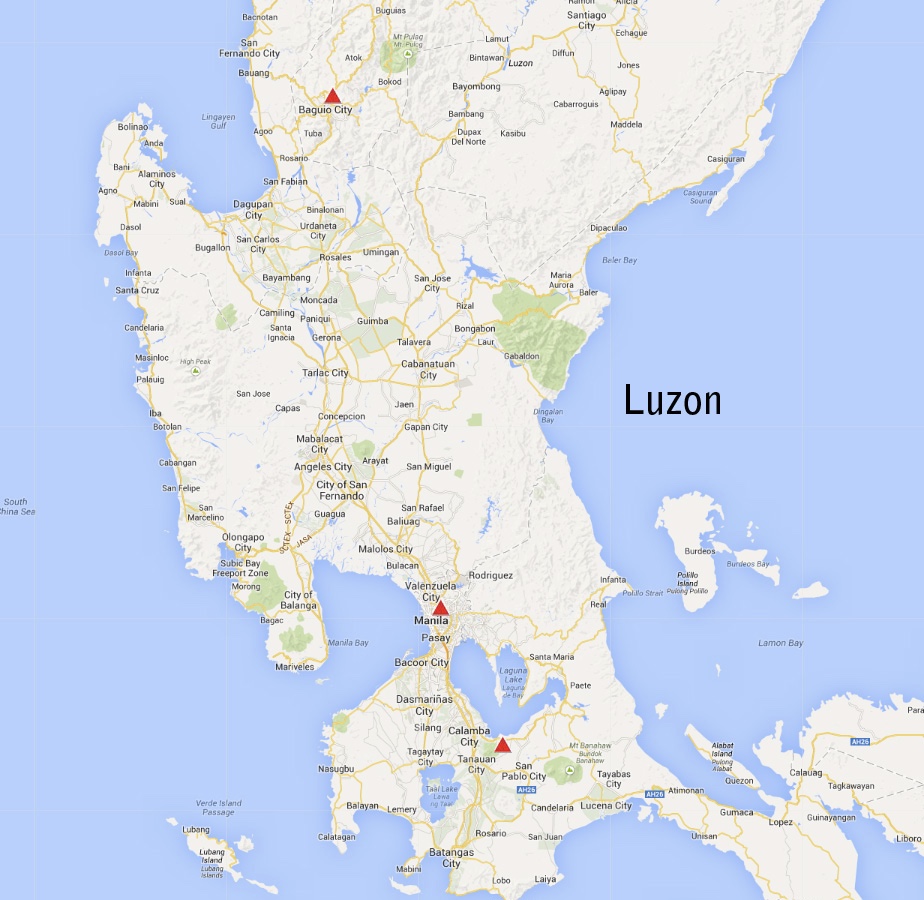
In late March, rumors spread that the 37th was shipping out to Formosa or Japan or Hawaii or etc. On March 24th, the Division received orders to prepare to move out. Passes for Manila were canceled. On March 25, the order was received that the 37th would move into the mountains toward the city of Baguio, known as the summer capital of the Philippines.
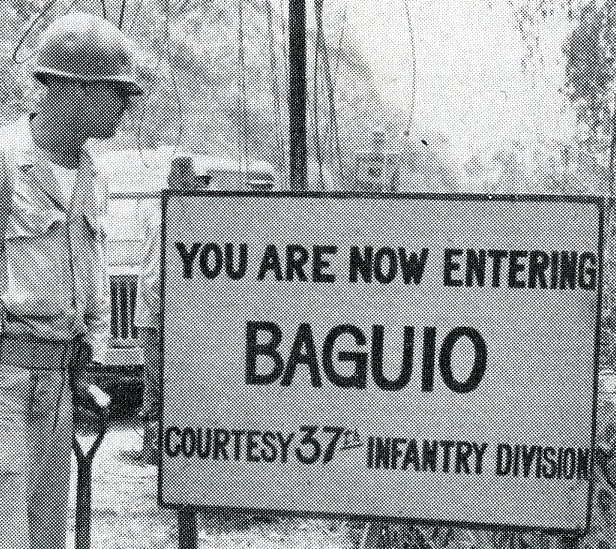
Most of the Japanese forces on Luzon had withdrawn into the mountains to the east and north of Manila. The IJA battle plan was to force the Allies to fight in rugged mountainous terrain accessible only by narrow twisting roads, limiting the use of Allied artillery and tanks. The commander of the remaining IJA forces noted, “[we will] … fight from the mountains until in future years we can return and drive the Americans into the sea.” The IJA defenses were located in fortified cave and tunnel complexes in mountains. Most of the IJA force was located at the approaches to Baguio, Balete Pass and Mount Pacawagan. By holding these approaches, the IJA controlled the large, broad, fertile Cagayan Valley and a major source of food in the form of local crops.
As the 37th advanced on the mountain roads, the Infantry soldiers positioned along the flanks of the main column were forced to climb and move along steep terrain, mostly at altitudes over 5000 feet above sea level. IJA defensive emplacements were usually encountered at sharp curves on the roads or near destroyed bridges.
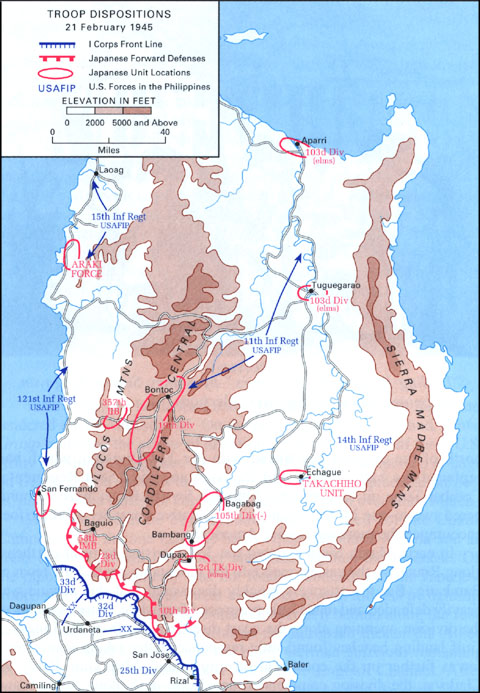
The Allies used tanks and supporting fire from US Air Force P51s to silence IJA artillery. Small but well-fortified IJA positions were often cleared with hand-to-hand combat. It was a slow and difficult process. The battle at the Irisan bridge took four days. By April 23rd, the 37th reached the outskirts of Baguio. That night the IJA launched an attack with tanks and infantry and the Allies were forced to retreat. The next day after a heavy artillery barrage, the 37th advanced into the city, where they came under fire from IJA artillery located on the mountains overlooking Baguio. By April 26, an air strike of 36 P51s combined with field artillery, including the 155mm canons of the 136th, silenced the IJA artillery.


Dad became a more active gambler in the late 1960s. He would sometimes drive an hour or so south and cross the Ohio River into Newport, Kentucky to gamble at a casino. I expect he mostly shot craps.
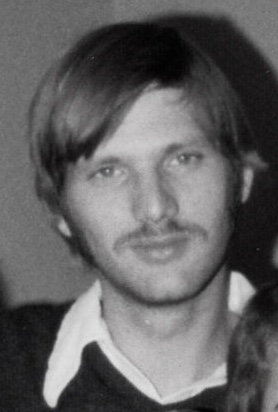
I was a college student who worked in a factory and painted houses in the summer, earning enough to cover next year’s tuition and books with a bit of spending money left over. During those years, Dad approached me several times asking for money. I recall that once Dad told me he owed money to some guys. He said they were looking for him, and that he was concerned about his safety. He was convincing, but I wasn’t sure it was true. I asked him if I could talk to these “guys” and then perhaps a payment plan could be arranged. He stared at me in disbelief, either at my stupidity or the fact that I had called his bluff. I didn’t give him the money. Time passed and I didn’t see any signs of abuse. Perhaps he had lied about the threat or perhaps he had found another source of money. I knew that he could always go to his big sister Nancy, and she would give him money or do whatever was needed to protect her little brother. He would never have asked Mom for money for his gambling debts, I believe he would have rather faced the mob.
By early May, elements of the 37th infantry joined the 25th Division and helped clear the Balate Pass. The mountains and the passes which the IJA had planned to secure for “years” had been taken in less than two months.
May 8, 1945 was VE (Victory in Europe) Day. Shortly thereafter, every GI was assigned an Advanced Service Rating Score. They earned points as follows:
- +1 Point for each month of service (between 16 Sept 1940 – 12 May 1945)
- +1 Point for each month overseas (between 16 Sept 1940 – 12 May 1945)
- +5 Points for first & each award received, e.g., Purple Heart
- +5 Campaign stars worn on theater ribbons
- +12 Points for each child (< 18 yrs), up to a limit of 3 children
Soldiers with 98 points or more, high point men, were eligible to be furloughed. PFC Bill Nance was eligible. However, none of the men of the 37th was furloughed since the 37th was still engaged in combat.
With the capture of the Balete Pass, the IJA had retreated into the Cagayan Valley. This was a broad fertile valley on the northern part of the island of Luzon. The Valley was 260 miles long and 30 miles wide, bounded by the mountains of Sierra Madre and Cordillera. Now, Allied forces quickly descended into the valley and advanced rapidly by constantly rotating fresh troops to the front. In 36 days, the 37th moved 225 miles. At this pace, the IJA was unable to establish organized strong defensive positions.
The advance moved so fast that the heavy artillery had difficulty keeping pace. They would establish a position, fire a few rounds, then have to mobilize and race again towards the front.
On June 7 at 1500, an order came for high point men to be pulled from the front lines and sent back to battalion headquarters where they were then to be moved to the rear.
On June 26th, lead elements of 37th and the 511th parachute regiment reached the coastal town of Aparri, effectively ending the battle for Luzon and the largest campaign of the PTO.
In July, the order came that all high point men would be going home.
I thought it was interesting that in researching a list of 37th KIAs, I found that on July 15, 1945, PFC Billy Nance of Company B of 148th Infantry was killed.

Allied forces now faced only occasional and minimal Japanese resistance. Most of the 37th enjoyed R and R. Food was plentiful and there was time for recreation. There were regular movies and USO shows played to full houses. GIs passed the time playing baseball, basketball, and horseshoes. The 37th Division established a rest camp along the coast within a grove of coconut trees. It offered excellent food at the largest mess hall on Luzon and a bar stocked with lots of local liquors. You could lie on the beach on soft sand or body surf or play poker in tents swept by coastal breezes. In the evenings, there were dances at the camp and women from nearby Ballasteros, a town virtually untouched by the war, attended. Some men made the trip into Ballasteros and enjoyed the cafes and bars.
There were so many fights between Mom and Dad about money. I tried to intervene. For a few months, at the age of 19, I was the family treasurer. I got Mom and Dad to agree to give me their endorsed paychecks. I would deposit them and pay the bills that arrived in the mail. That lasted a few months until we came to another of those Friday nights when Dad arrived home very late and without his paycheck.
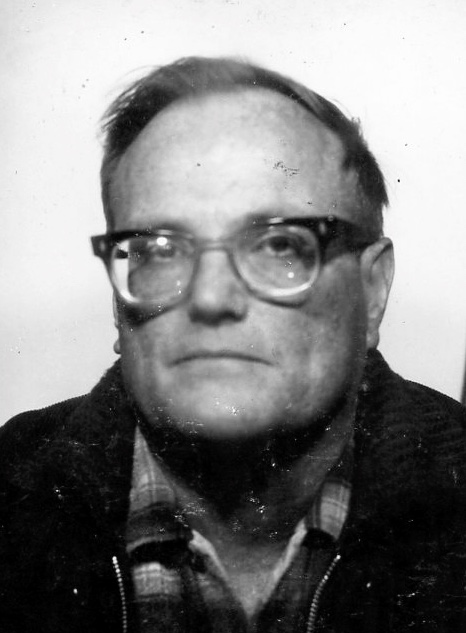
Once Dad and I were sitting alone at the kitchen table, and I asked him, “Why do you drink?” He seemed surprised at the question. I continued, “Do you like the taste of the alcohol or the effect of the alcohol, or the sense of belonging to a group (of drinkers), or are you trying to forget?” He paused, gathering his thoughts, staring off at a place faraway in time and/or space. He replied, “You know your mother and I…” He paused and then his gaze returned to the room, as if realizing he was saying too much. He snapped, “Don’t try to use that psychological stuff on me.” He got up and left the room and the conversation was over.
By the mid-1960s my sister and I were teenagers, adding more angst to a stressed household. My sister was a free spirit and rebellious. She graduated from high school in the spring of 1965, and few weeks later was married and left home. I looked upon her leaving as an “escape.”
Dad’s heavy drinking episodes increased, and there were more arguments between my parents. I became closer to my mother. We often would sit at the kitchen table with cups of coffee and have wonderful conversations about life. Dad became an outsider.
August 5th was a quiet Sunday evening when the camp radio operator received a signal from Armed Services Radio. He typed at dictation speed:
“…San Francisco… 6 August… a new and powerful… secret… bomb… was dropped… on the Japanese… city of Hiroshima… by a lone B-29… gigantic smoke and… dust clouds… rose 30,000 feet… Bomb explodes… with force of… 20,000 tons… of TNT…”
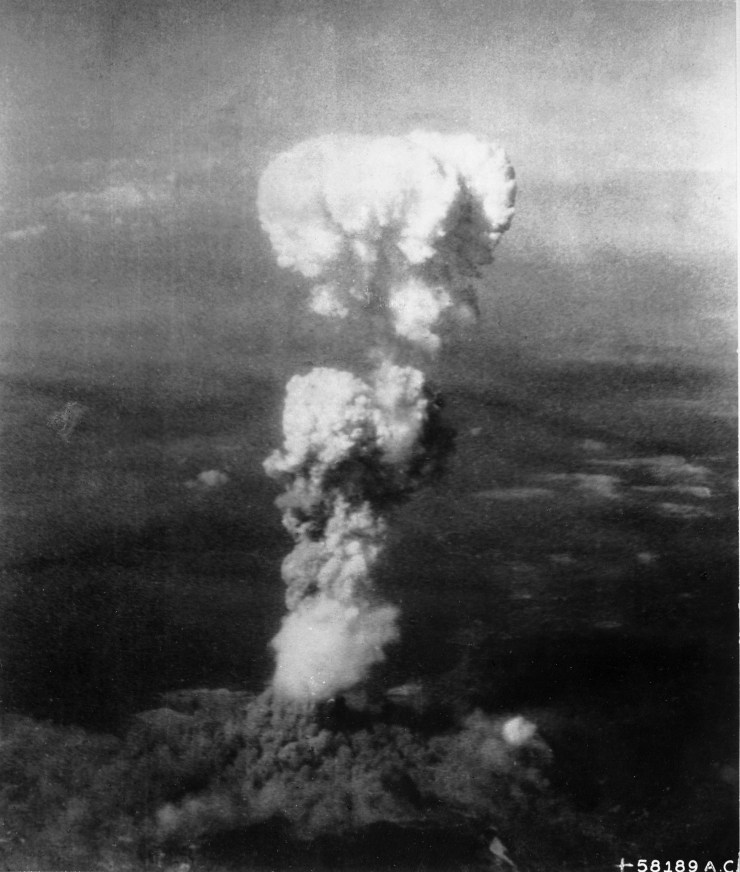
The next few days were tense and exciting. The Reveille rushed a special edition into print. Everyone was now hopeful that the war would end soon instead of lasting the recently estimated two years. On August 8, 1945, an even more powerful bomb was dropped on Nagasaki. Now hopes for an end to the war soared. Surely many of the men of the 37th would be going home soon. Or would the 37th be used as an occupation force on mainland Japan?
For most people, Fridays bring a sense of relief and anticipation of a few days of play, but in our 1960s household, Friday nights could bring a sense of dread.
It was dark outside and lights were on in the house. I was in the kitchen reading or maybe doing homework. Mom was in the living room watching or perhaps just staring at the TV. Dad was late, and Friday was payday. This wasn’t going to be good. The house seemed to grow more silent as each moment passed. Then a muffled sound. Was that a car pulling into the driveway? The tension was palpable. Then the sound of the key in the front door lock. He was home. The house held its breath sensing the upcoming explosion. I gathered my things and quickly moved past my dad and upstairs to my bedroom and the small desk in that room. I had been at this performance before; I knew the script well. It started out with low but intense voices. Short clipped comments delivered between clinched teeth. Then it grew louder and louder, yelling hateful things at and about each other. How could they hurt each other so?

I finished my undergraduate degree and enrolled in Georgia Tech. I left home in a used Plymouth, the back seat loaded with books and clothes. As I drove south, I wondered if Mom and Dad would survive. I expected they would divorce, and that thought tore at my heart. I also had thoughts that it might end worse. Mom had a temper, and I knew of one instance where her rage was so intense she had looked for a gun.
I left home. I left the combat zone. For me the war was over.
August 15th, 1945, at 0800, Japan surrendered unconditionally. Local church bells rang. Men poured from tents shouting and cheering. Whiskey bottles appeared everywhere. Patrols were called in and orders were issued that aggressive action was to cease immediately.
The War was over.


Isn’t it amazing that someone we live with so much of a part of our lives, our parents, that we think we know so much about, we really know so little about. All the assumptions we make can never really explain who they are. I guess it’s enough to know that they loved us and we were blessed enough to love them back. Thanks for all the great work, but especially for sharing your relationship with your dad. I only have good memories of him. What a pleasure this has been. Thanks again.
Emily
LikeLike
Dad rarely complained. For the most part he was an optimist. he was a good dad and a good man. I doubt if even he understood how the war effected him. The WWII vets until recently never talked about their experiences. It is hard to fathom how they were able to put aside their feelings and raise a family while being a good citizen. A lot of credit goes to the wives.
LikeLike
Bill and Al were from a different generation, silent Heroes that did not whine or complain. Dad influenced all of us boys that way and to work hard, except no handouts and stand up for yourself. They were hard men needed in hard times but they suffered inside.
LikeLike
Steve. I suspect for your dad the war never ended. I think he was in a lot of pain. I think that stayed with him throughout the rest of his life. He had lived through a nightmare; he was too much a gentleman to burden his wife and kids with it, but trying to keep it all inside ate him alive. That’s just how I saw it. But I was only a kid myself.
LikeLike