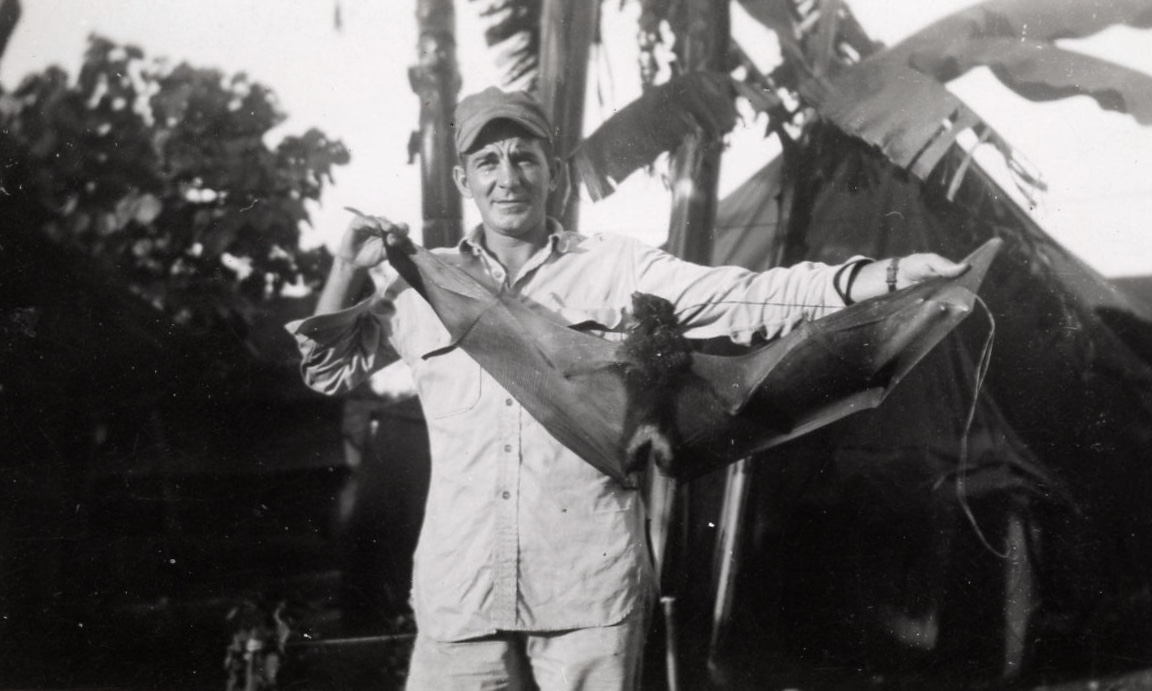

Starting in May of 1944, the 37th conducted the most ambitious training program in its four-year history. It started with assault team and tank infantry training. Also included in the training was instruction in the use of artillery and mortars to lay down preparatory fire including smoke to cover mine clearing operations.
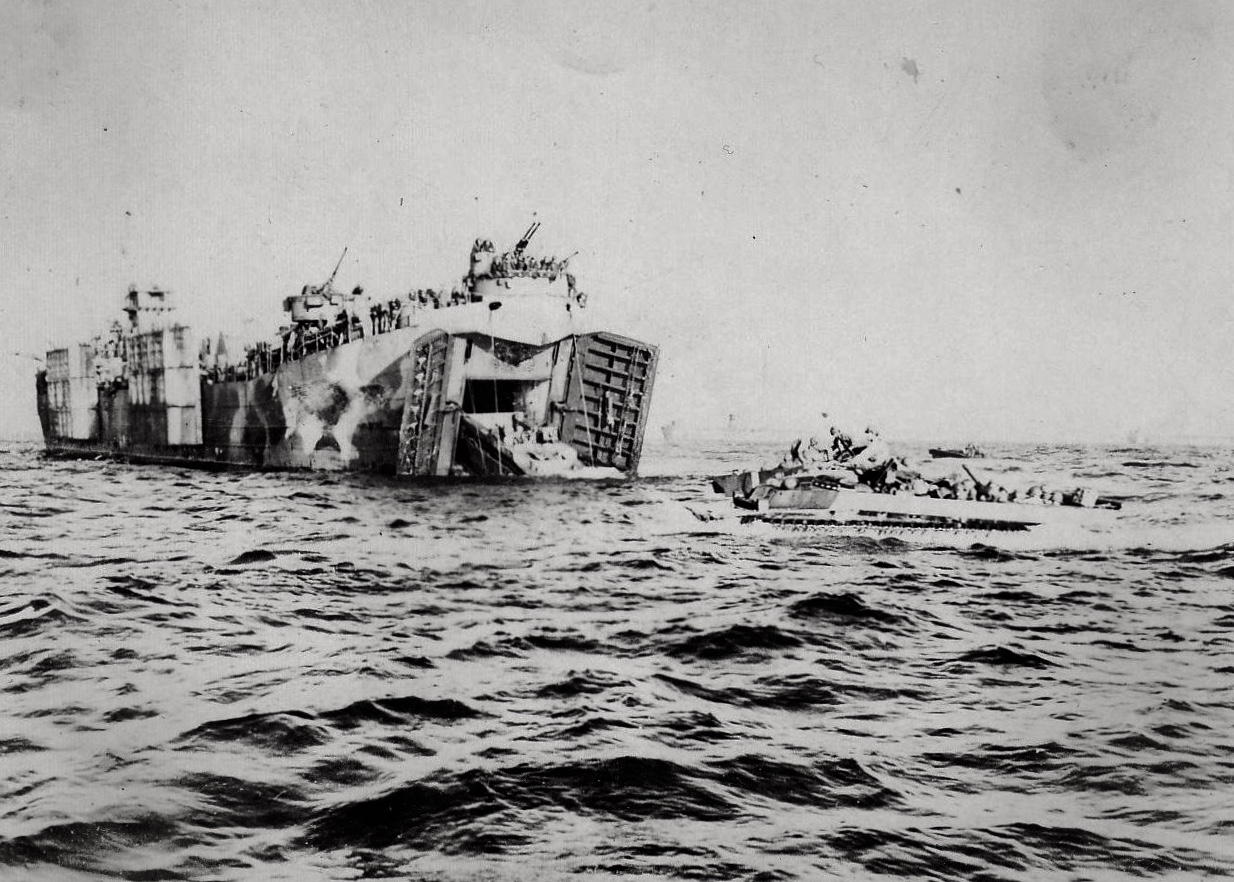
In July, amphibious training was added.
The artillery intensely studied instrument training and aerial surveying.
The 37th artillery units went on reconnaissance missions beyond the defensive perimeters of the base.
The Infantry received training with flame throwers and bazookas. They practiced mine clearing. These training sessions were made realistic with the use of live ammo which resulted in casualties and several deaths. Tanks were to be a key part of the battle plan. Infantry troops practiced advancing into combat areas cleared by artillery shelling, while shielding themselves from enemy fire by closely following tanks.

General MacArthur had learned a lot during the Allied hops along the New Guinea coast as well as from major landing tactics now being used in the ETO. The usual welter and confusion of small craft landing on the islands of New Georgia and Bougainville were to be replaced with a highly coordinated, massive invasion force.

On October 1944, MacArthur returned to the Philippines, coming ashore at Leyte Gulf. The Allied plan for the invasion of the Philippines had the 37th and other 6th Army divisions landing at Lingayen Gulf on Luzon.
Four divisions would land with a fifth division held in reserve. The assaulting force would sweep down the central plains of Luzon then take Manila. There would be more than 100,000 troops in the assault, making it the largest amphibious landing in history except for Normandy.
The IJA strength in the Philippines was estimated at 240,000, and it was expected that the landing force would encounter 100,000 IJA troops in the fight to retake Manila.
In the early 1960s, Dad and I would return to the Dayton neighborhood where he had lived before the war. The destination was a used book and magazine shop called Bonner’s, if recollection serves. This inner-city neighborhood had been on the “wrong side of the tracks” when Dad was young and had declined in the following decades. The book store’s large glass windows fronted on 5th Street, one of the several stores or offices located in rundown buildings that lined the street. Dad parallel parked along 5th and we entered through glass doors into a cavernous room. It had that musty smell that comes from aging paper. The store policy was “Trade 2 for 1.” After entering the store, I would move to the counter at the front of the store and deliver my “used” comic books and establish credit. Then I was off to the back of the store and the shelves stacked with comic books. Dad entered the “adult” section of the store. My first choice was a Batman comic, but Flash and Green Lantern comics would do. Dad and I would spend an hour or so browsing, trading and purchasing.
By the mid-1960s I discovered where Dad hid his “reading material,” and suddenly comic books seemed a lot less interesting.
The troops sensed that the departure from Bougainville was near. By December the troops knew the mission. Final inspections were held. There were lots of “farewell” parties.

In mid-December 1944, the 37th boarded ships. LSTs were crammed with three times the normal compliment of troops. The 37th loaded 28000 troops and 30000 tons of material, requiring almost 80 ships.
The 37th departed Bougainville on December 15 and 16. It was “Goodbye” to the lizards, caterpillars, centipedes, heat, rain and mud but relative safety of Bougainville, and “Hello” once again to front line combat.


Today August 18, 2017 I drove through Dad’s old neighborhood. The book store is still there. It is Bonnets not Bonners. On the front window they had the “trade two for one” sign
LikeLike
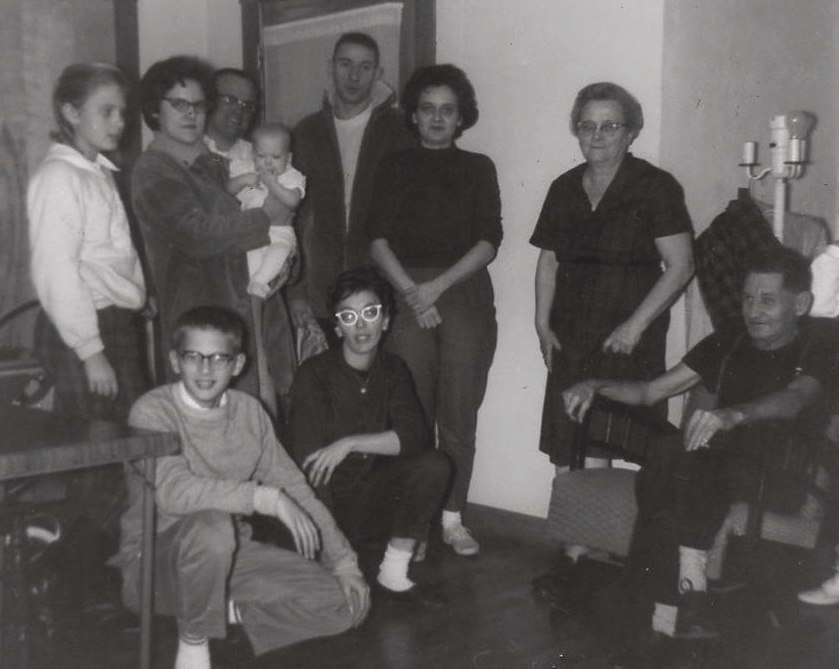
Pete’s last name was Miller. He was usually quiet around us except at meal time when he suddenly had to expectorate repeatedly! I remember your mother (Aunt Ruth) disgusted at the time but laughing along with the rest of us later.
Keep up the good work.
Emily
LikeLike
For family members who follow this blog, Pete lived in a small one room attached to the house that anna ( grandma) banis rented. He was a part of the family. I’m not sure I know how much of a part. Pete was a man of few words. He was always polite to me. He roiled his own cigarettes and I thought that was cool. I don’t know his last name.
LikeLike
Similar memories of Pete. He always seemed to keep to his room when we came around. Being a little boy, I would always seek him out. He was always very kind.
Thanks for the memory.
LikeLike
Interesting as usual. In 67/68 I helped convert a LST into the USS Satyr ARL 23 and sailed from New Oreleans to San Diego thru the Panana Canal. Left San Diego and stopped for 12 hours in Subic Bay, Phillipines to resupply. Headed to Nam and arrived after a total of 30 Days at sea. We went into the rivers of Nam becoming part of the brown water Navy. Nine months later I caught a ride from the Army to Saigon and flew back to the states. More respect for uncle Bill for surviving LST rides.
LikeLike
Love the family photo. Only you would save a picture with Pete in it!
Emily
LikeLike
I noticed Pete also.
LikeLike
Thanks for sharing – it gives me a different perspective on the Pacific war
LikeLike