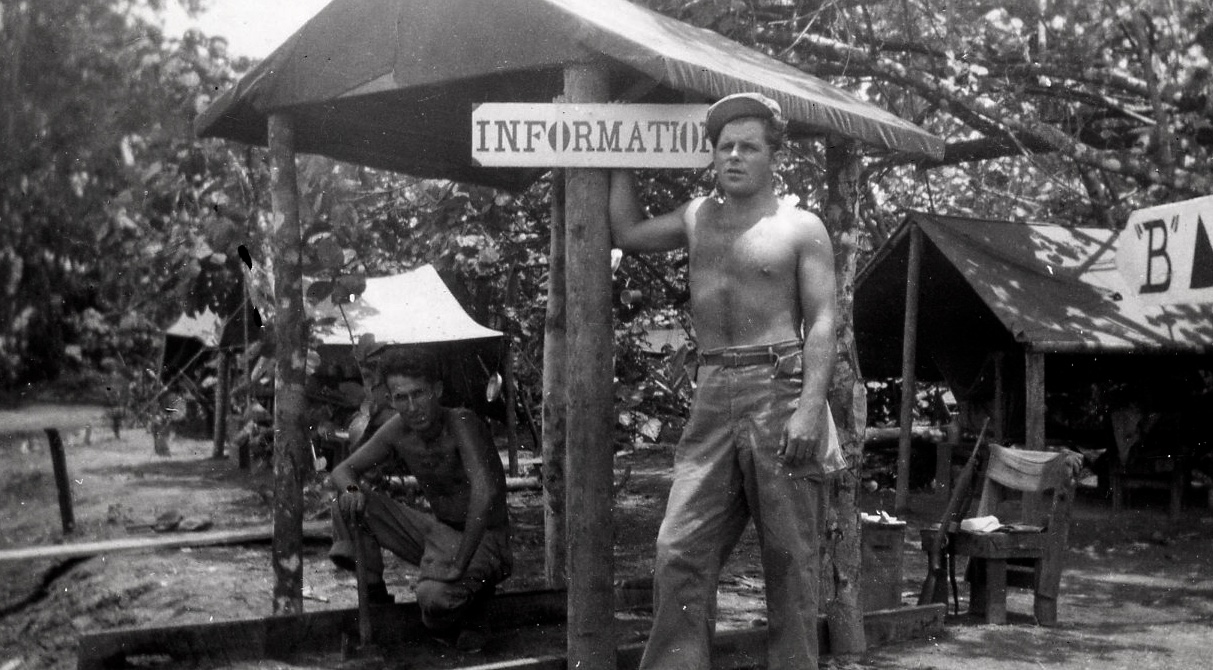

New recruits arrived in May through October of 1944. What they expected was likely very different than what they encountered when they set foot on the shores of Bougainville; they were greeted by announcements from a PA system, saw roads, theaters, athletic fields, gardens and boxing rings on raised platforms. The “locals” nicknamed the area Bougainville National Park. Local sawmills provided the timber for theaters complete with stages, projection booths and row upon row of wooden benches.

Bougainville had its own radio station, WTVI, to report on the war progress in both the European and Pacific theaters of action.
Fresh potatoes, onions, carrots, cabbage and meat replaced canned Spam and dehydrated potatoes. On occasion, there were eggs. Beer arrived in June at one case per man every four weeks. The local PX had plenty of cookies and candy from Stateside. Magazines arrived, and there was even Coca Cola. A daily pattern began to emerge involving training, athletics, patrolling, fresh food and entertainment. Even so, time passed slowly.
Baseball fields were built, leagues were formed, and the 148th regiment team won the 37th Division playoff. The game took place on Roger Young Field, named for a MOH winner from the 37th in the New Georgia campaign. (Frank Loesser wrote a song that Burl Ives recorded about the heroism of Roger Young.) The games were competitive; more than $2000 was bet on the outcome of the championship game.
Battery B of the 136th finished third. I wonder what position PFC Bill Nance played.


Another popular and very competitive sporting event was boxing. Tournaments were held in June and October. Fights were well attended and there was lots of betting.
Dad boxed while in the Army. I recall his telling me that after the war, he boxed in exhibition matches as a way to earn a few dollars. He said he used the moniker “the Candle Kid.” When I asked him why, he replied that because once he was in the ring, all it took was one blow and he was out.
September saw the finals of the ping pong tourney.
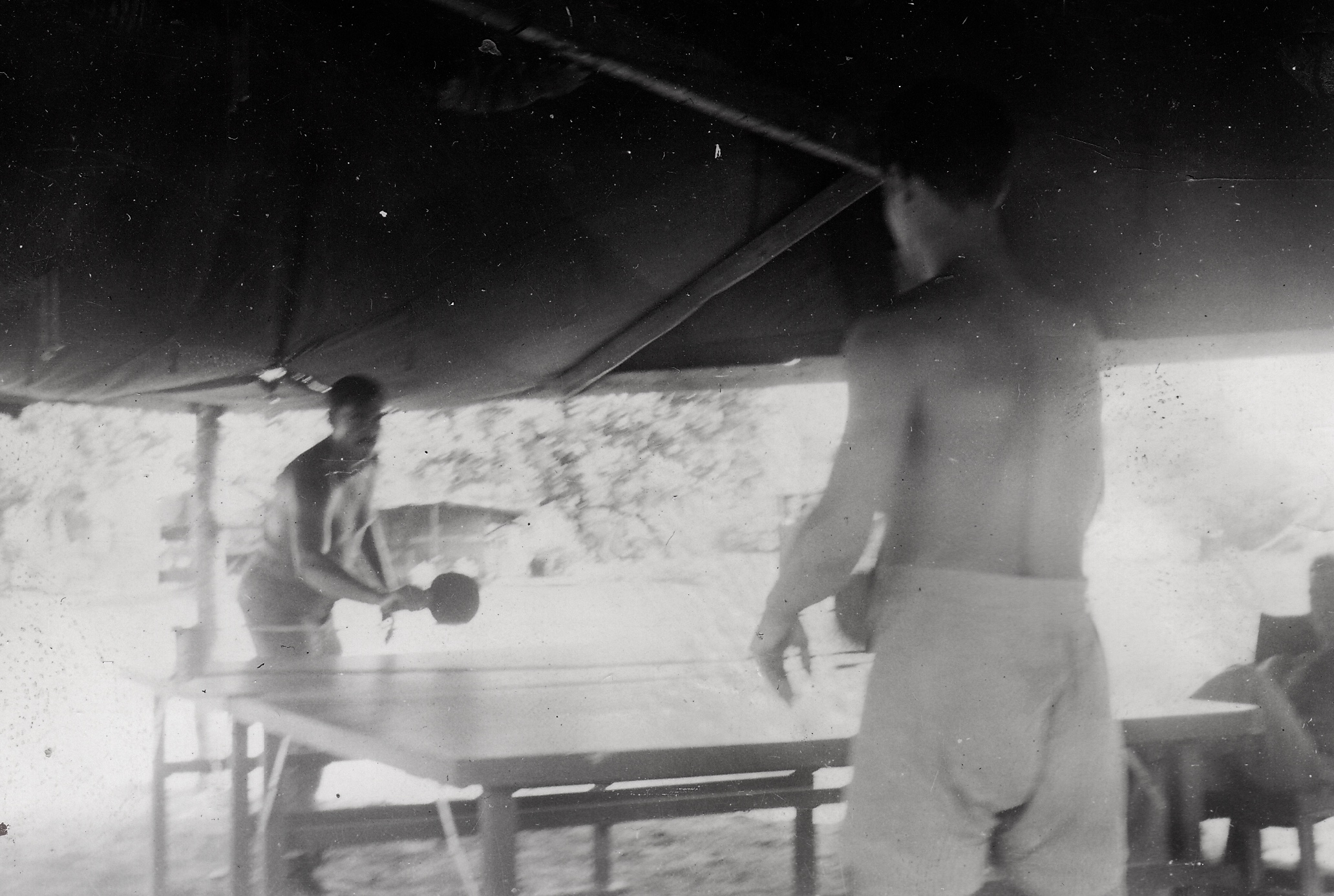
In 1960, our family moved a few miles to a bigger house in the neighborhood. Shortly afterwards we bought a ping pong table and set it up in the basement. Over the next few years, Dad and I had frequent matches. We concentrated on the game and didn’t talk much. Only the rhythmic thwap-clop, thwap-clop of the paddle striking the ball and the ball the table. It was a competition between the young son trying to best his father but usually failing. Dad was very good at ping pong, and he had a parenting philosophy that when he competed with his children he would not “let them win.” Dad believed competitions should be played hard but fairly and only then would a victory be meaningful.
Even chess was popular.
In my early teens, I became interested in playing chess. This game was right down the alley of a young, geeky, wanna-be intellectual. I studied the game and even memorized standard openings. One day, with board under my arm and a box of chess men, I confidently approached my dad. I knew my dad would play any game any time. “Do you know how to play chess?” He replied, “Yes,” and in that moment, I knew I would finally best my dad. Knowing of my advantage, I insisted he take “white” and thus get to make the opening move. He moved his King’s pawn. I countered with a similar move. He next moved a bishop. On his following move he advanced his queen to the center of the board, a terrible tactical move. This certainly wasn’t any of the openings I had studied. I felt a tinge of guilt but remembered my dad’s mantra, “Always play to win, then be a gracious winner.” I moved a piece, attacking his queen. I began to wonder if my victory would feel shallow. He reached for his queen and moved it. I watched, my eyes widening in horror as the queen came to rest. “Checkmate!” calmly announced. I silently nodded my head, suppressing any outward sense of shock or surprise, but inside my brain screamed NOOOOOO… Bested again.
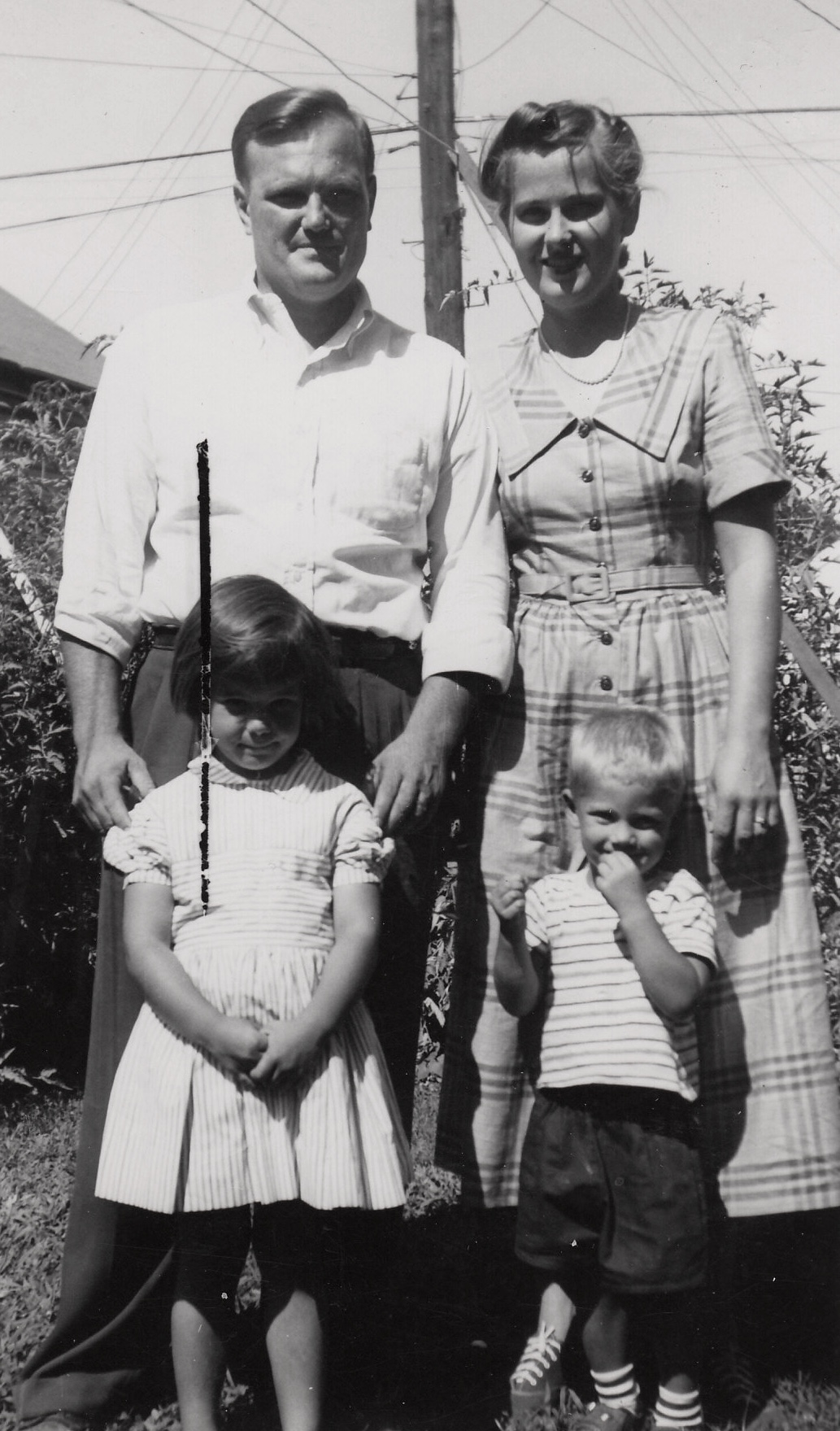
Within the next year or so, Dad would get caught drinking on the job and be suspended without pay. These were stressful times both economically and emotionally for our family. When it became obvious that the union – Dad was a Teamster – would not be able to get him quickly reinstated and perhaps never, he began to look for work. One evening as we gathered around the dinner table, I saw a look of depression on his face. I asked what was bothering him. He told me that earlier that day he had applied for a job at a local factory. A part of the application process was an intelligence test. Dad was stumped by a question involving math. Dad had a ninth-grade education but was good with numbers. He was so shocked that he couldn’t solve problem that he had memorized the question. He looked at me and said with a note of sarcasm, “Even YOU couldn’t solve this one!” There it was: that father versus son challenge. He explained the problem. Less than a minute later, I blurted out the answer. I can recall the look of surprise on his face. After I explained the solution to the problem – he had made a careless conversion error – the look of surprise turned to one of sadness. He remained silent, but I knew he was thinking, “I am so stupid.” That look of sadness and defeat was very painful to me. I had finally bested my dad, but it was a bitter victory.
In October, Aussies arrived to begin the relief of the 37th.
Also in October, the command of the 37th announced that all troops would be clothed while bathing and latrines would be screened. Rumors raced through the camp that the WACS (Women’s Army Corps) were coming. They didn’t.
On Bougainville there were nightly movies featuring recent Hollywood productions.
The 70-piece division band averaged three concerts a week. Three smaller bands formed and travelled to the outlying areas to provide jazz to the “fox hole circuit.” Groups of GIs put on shows like the Perimeter Parade and the Division Artillery put on “Cannoneer Capers,” a clever Spike Jones-like show.

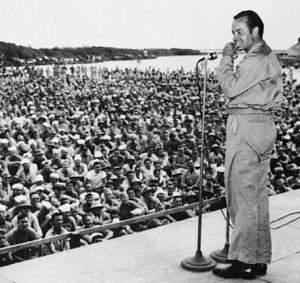
Later that month a USO show featuring Bob Hope arrived with Frances Langford, Jerry Colonna and Patty Thomas. Hope delivered comedy while the girls sang and danced.
Two weeks later Jack Benny arrived with Carol Landis. Benny held a dancing contest to see who would be Landis’s partner. Sergeant S Willet won. After dancing with Landis, Willet said, “you know, when I held her tight to me… her face was still two feet away”.
In September, there were two more USO shows; one included ballet dancing.


Wonderful story
Reminds me of dad (Al)
They all came back with problems
LikeLike
It still doesn’t sound to me like a lot of fun -but God Bless those entertainers, especially Bob Hope, who was tireless when it came to visiting the boys. Marilyn Monroe said about visiting the troops in Korea, it was the first time she had ever really felt like a star. I doubt performers could have had more receptive audiences. My friend Todd got selected to dance with someone, but I have forgotten who – The Mormon girl?
LikeLike