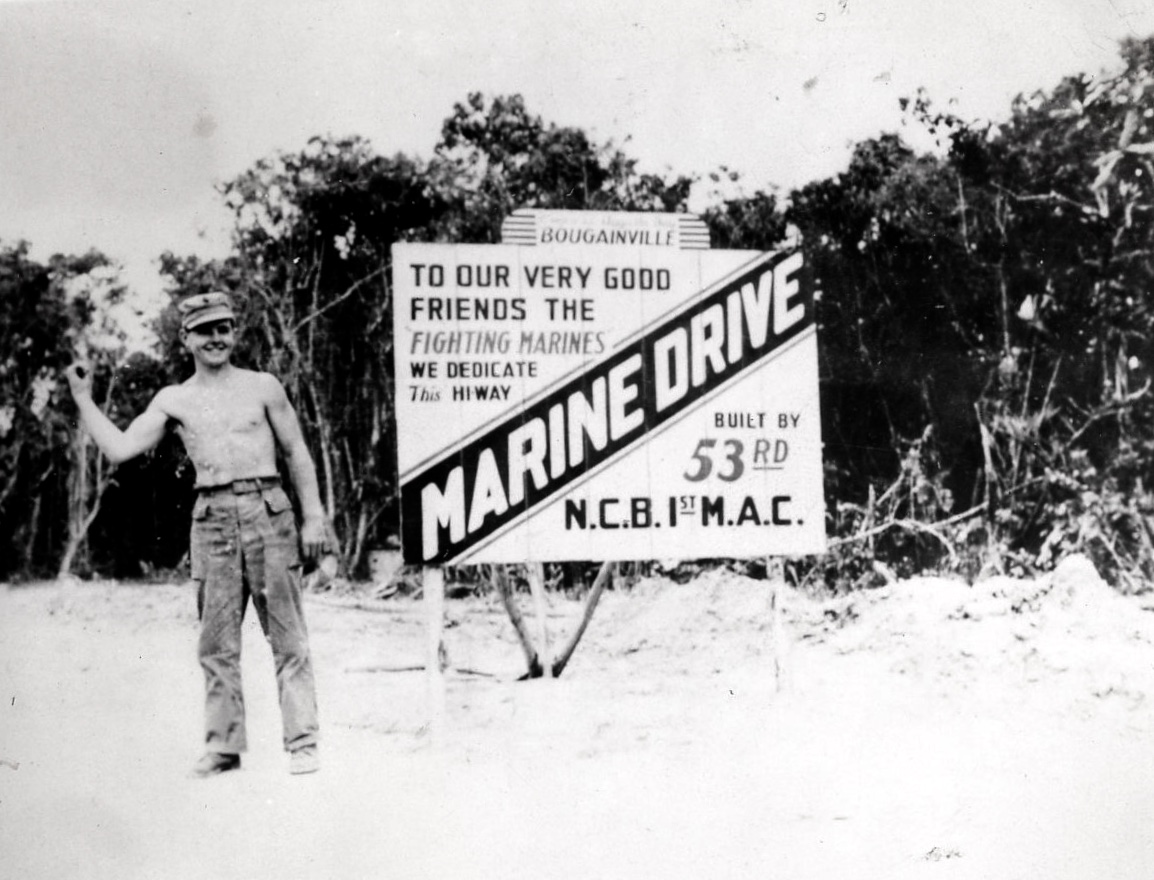
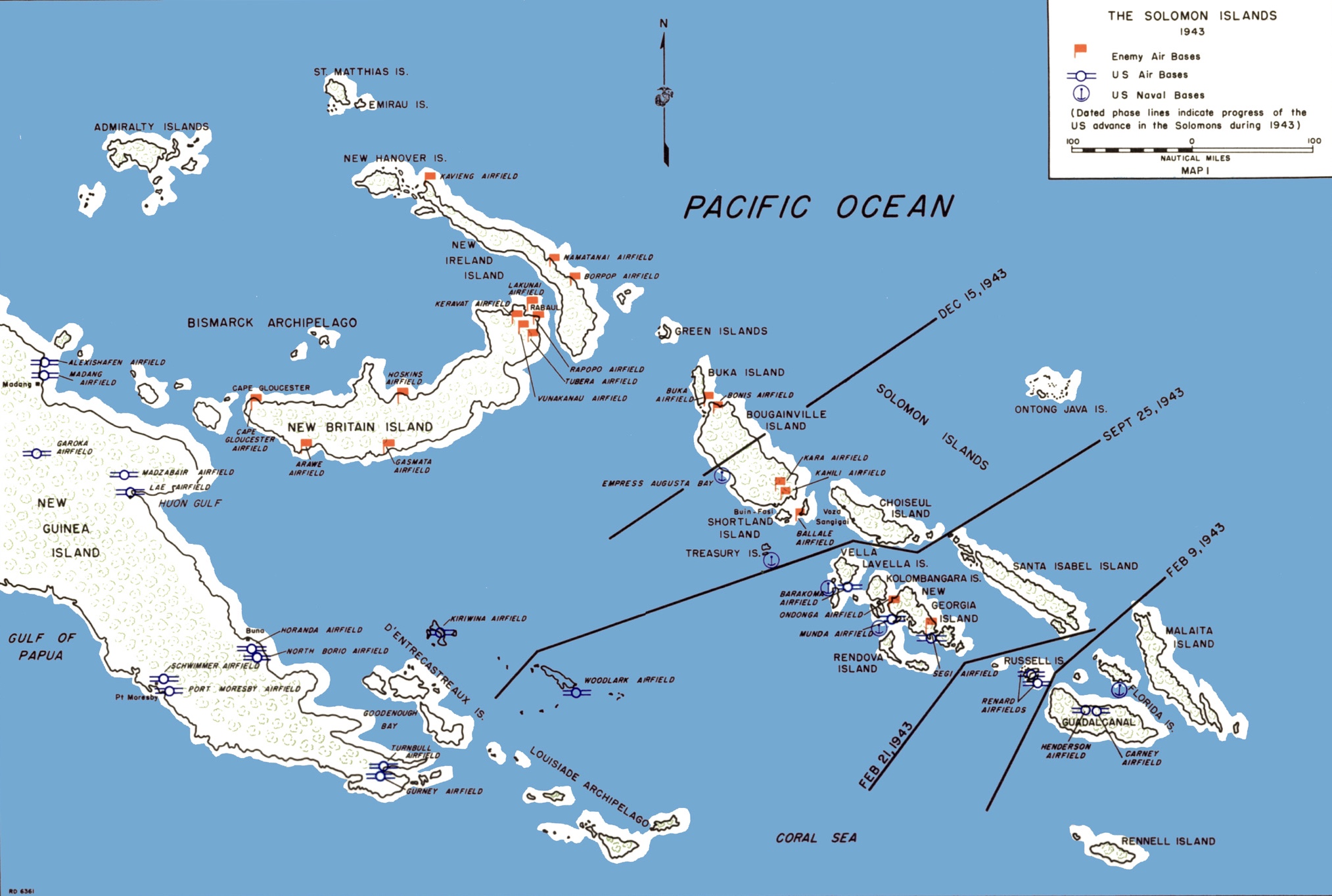
The main target of the Allied campaign was now the major IJA base at Rabual on the island of New Britain. This base had 100,000 troops, hangars for 1000 planes and a harbor big enough for the entire Japanese navy. The strategy was to bomb and cripple Japanese air fields at the islands of Bougainville, New Britain and Buka. The result would be that any long range IJA bombers leaving the airfields on Rabual with very limited fighter plane support.
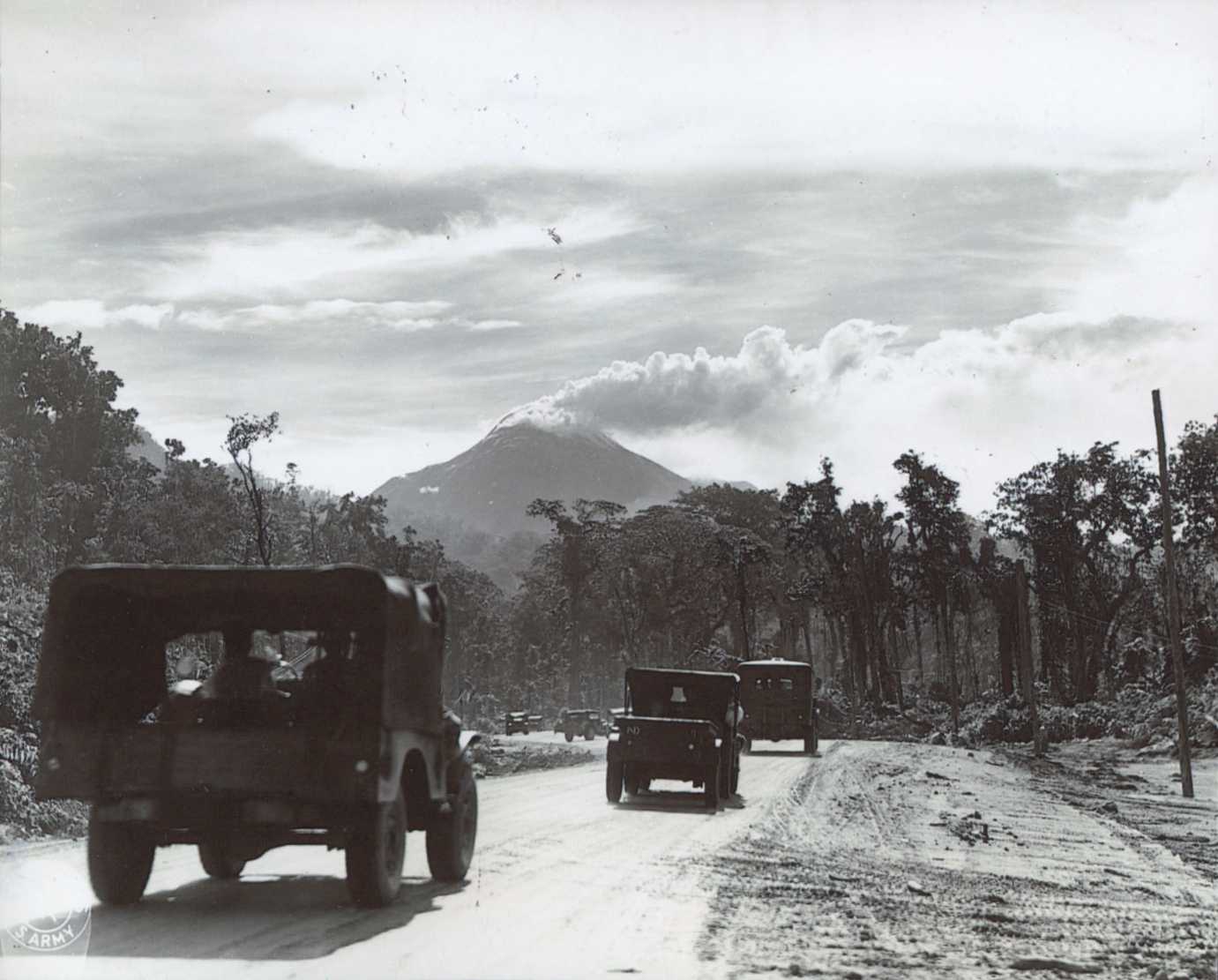
An estimated 40,000 to 60,000 IJA troops defended Bougainville. An island about 125 miles long and 48 miles wide, Bougainville is divided by the Crown Prince and Emperor Mountain ranges with elevations of 6,000 to 10,000 feet. The coastal plain is five to fifteen miles wide with many wide and sluggish rivers, swamps and heavy jungle. On the northwestern corner of the island is Mt Bagana, an active volcano.
On Friday, November 5, 1943, the troops of the 37th boarded transport ships at Guadalcanal and left the harbor. The ships were joined by escort ships. The convoy traveled west passing the island of New Georgia. Twenty-four hours later the towering mountains of the island of Bougainville appeared on the horizon. As the convoy approached the island, IJA dive bombers attacked several times.
A beach head was established on Bougainville at Augusta Bay. The artillery of the 136th arrived at Bougainville on November 17th and began unloading at 0600 from LSTs.
By late November, Allied construction began on the fighter and bomber air field. On November 24th, the office of the Commander-in-Chief of the South Pacific forwarded rumors of an IJA attack. The Japanese navy was to depart Rabaul, intending to destroy allied ships in the harbor, shell the land positions, debark troops and retake the bay. The 136th were ordered to improve their positions so they could fire seaward as well as landward. On the November 25, the 37th received a Condition Black, indicating the seaborne attack was impending. The attack never came.
Later that day, with artillery support, troops of the 37th and units of Marines advanced to the H line, the outermost defense line, located about two miles inland. During the shelling an artillery shell burst prematurely, resulting in the death of one and injuring 12 others of Battery C of 136th (likely the entire gun crew). That evening even the omnipresent rain couldn’t drench the aroma of cooking turkey. It was Thanksgiving. A hot meal was served, complete with roast turkey, mashed potatoes, cranberry sauce, hot rolls with butter, creamed cauliflower and candy for desert. Some GIs even got a can of beer.
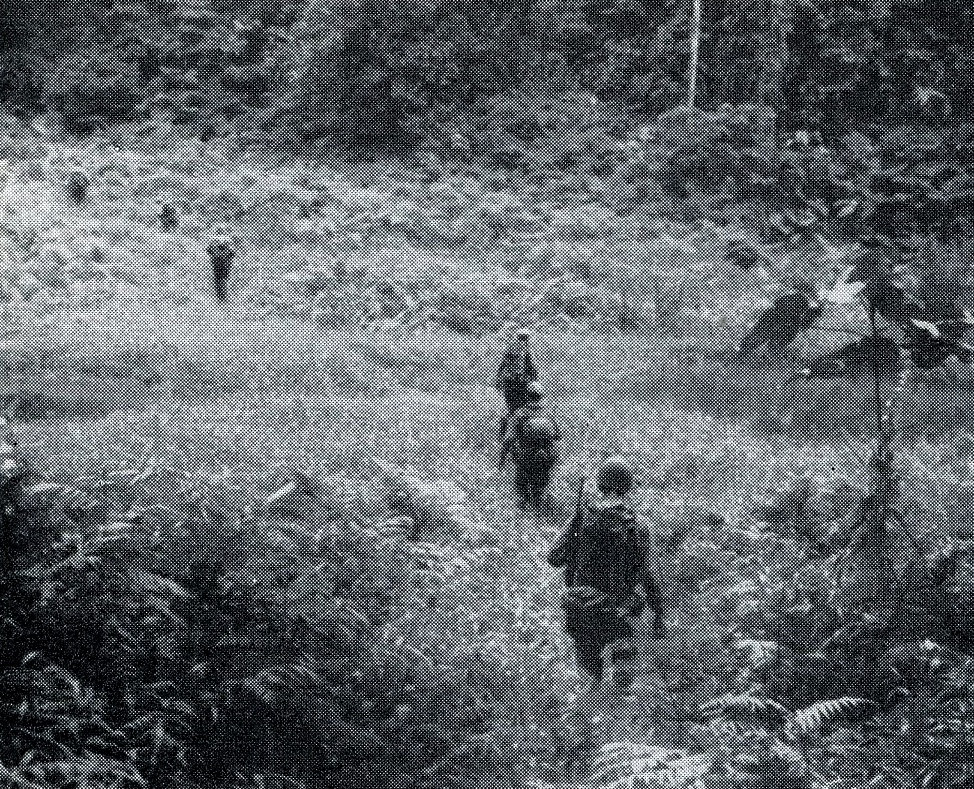
The Allies regularly sent numerous patrols into the interior of the island to reconnoiter enemy activity.
These patrols encountered hilly terrain with caves and dense jungle growth. They crossed streams that, with the changing tides, could rise by two feet in five minutes. Insects were everywhere. Some had a bite so painful that troops writhed on ground and had to be removed from action for several days.
On November 29th an advanced Marine patrol come under heavy fire. A forward artillery observer directed 155mm artillery at a range of 6000 yards to provide cover firing that allowed the Marines to withdraw under the cover of darkness.
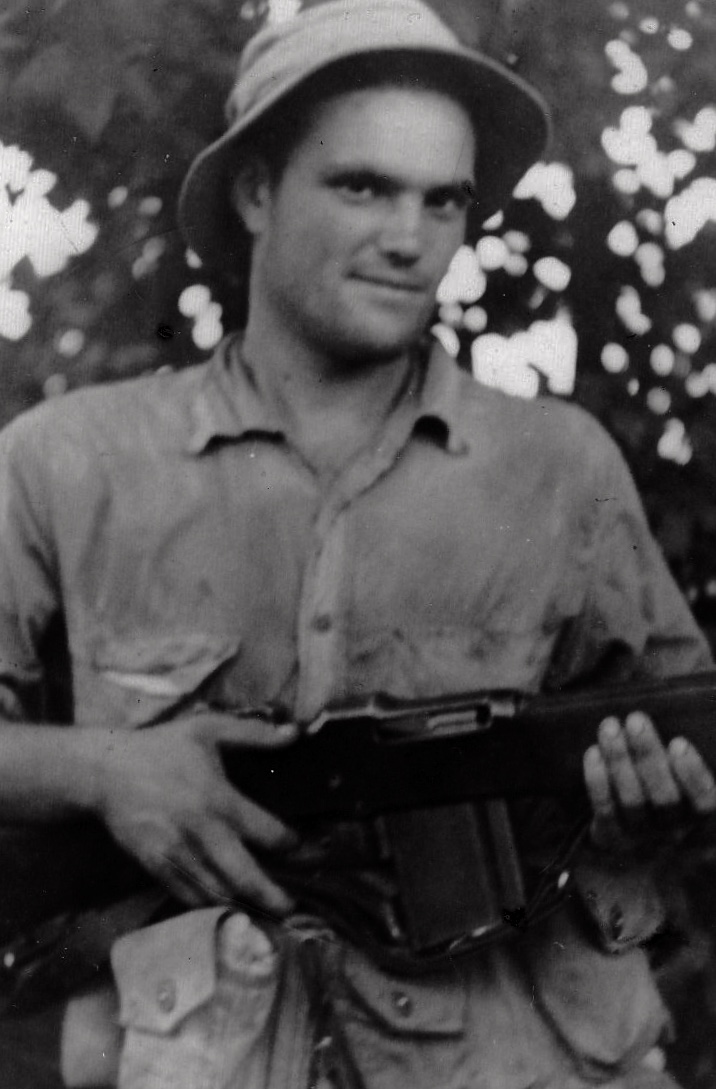
On November 29, enemy forces attacked 37th positions and the 136th artillery joined in a ten minute barrage of the area under attack. The enemy were forced to vacate their position.
On December 21, the IJA artillery placed fire on the air strip. The 136th artillery counter-fired with 478 rounds, knocking out one gun and silencing three others.
For a war front, however, there was little enemy action except the nearly constant nighttime air raids.
Near the end of the year, the Marines began to withdraw from the island. Troops of the 37th began constructing recreational and athletic facilities. They set up lumber mills which yielded over 482,000 board feet for mess halls, theaters, seats and buildings. They planted Victory gardens.
There were occasional earthquakes with tremors occasionally strong enough to knock down sand bag walls and make the Banyan trees sway. More damaging were the periodic high winds which would uproot trees and resulted in several troop injuries.
6.5 nance family crop
Dad liked baseball. I do, too. For one season in the mid-1960s, we played together on a company (REA) softball team. Dad was a catcher and a good hitter. I was a fair hitter but a poor fielder. The team tried using me as an infielder but, after several errors in the same inning, I was banished to right field.
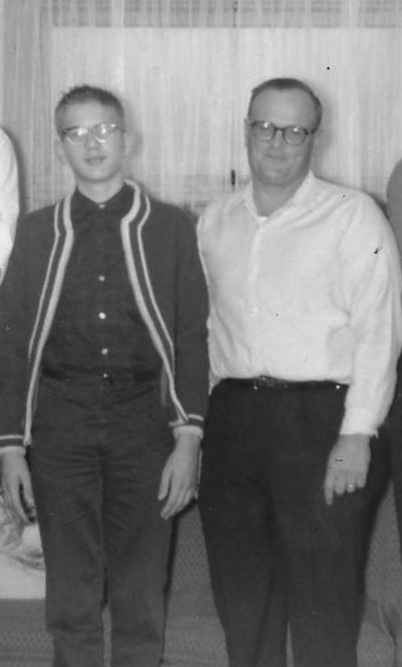
I was born in 1950, and by the late 50s was an avid baseball fan. My team was the Cincinnati Reds. In the late 50s the Reds were a successful team, and in 1961 they played in the World Series against the New York Yankees whose team had players named Mantle and Berra. Dad was born in 1921, and was a baseball fan in the late 1920s. His team was the Pittsburgh Pirates. The Pirates were successful and played in the 1927 World Series against a New York Yankees team led by players named Ruth and Gehrig.
On one of our visits to Pittsburgh when I was about 10, Dad was driving at night along narrow twisting streets in a neighborhood high above the Monongahela River. I sat in the back seat and looked down at the broad river valley filled with thousands of distant street lights. The road curved, and in a gap between the nearby houses suddenly there appeared brilliant lights – almost like a super-nova amidst the city lights. I asked aloud to no one in particular, “What are those bright lights?” Dad’s voice replied “That’s Forbes Field; the Pirates must be playing a night game.” A few seconds later the road turned and the lights were gone. It was the only time I saw Forbes Field. When I moved to Pittsburgh decades later, it was gone.
I wish I could sit with Dad on a warm and clear summer’s afternoon at Forbes Field. We would sit in the bleachers with a hot dog and a beer and stare out at the game being played on an expanse of green grass. We would be surrounded by the murmur of the crowd. We would talk. I would ask him about his war experiences. Then the conversation would be about sports, and I would say, “Hey, Dad, tell me about when you were a kid and what you remember about the 1920s Pirates.”
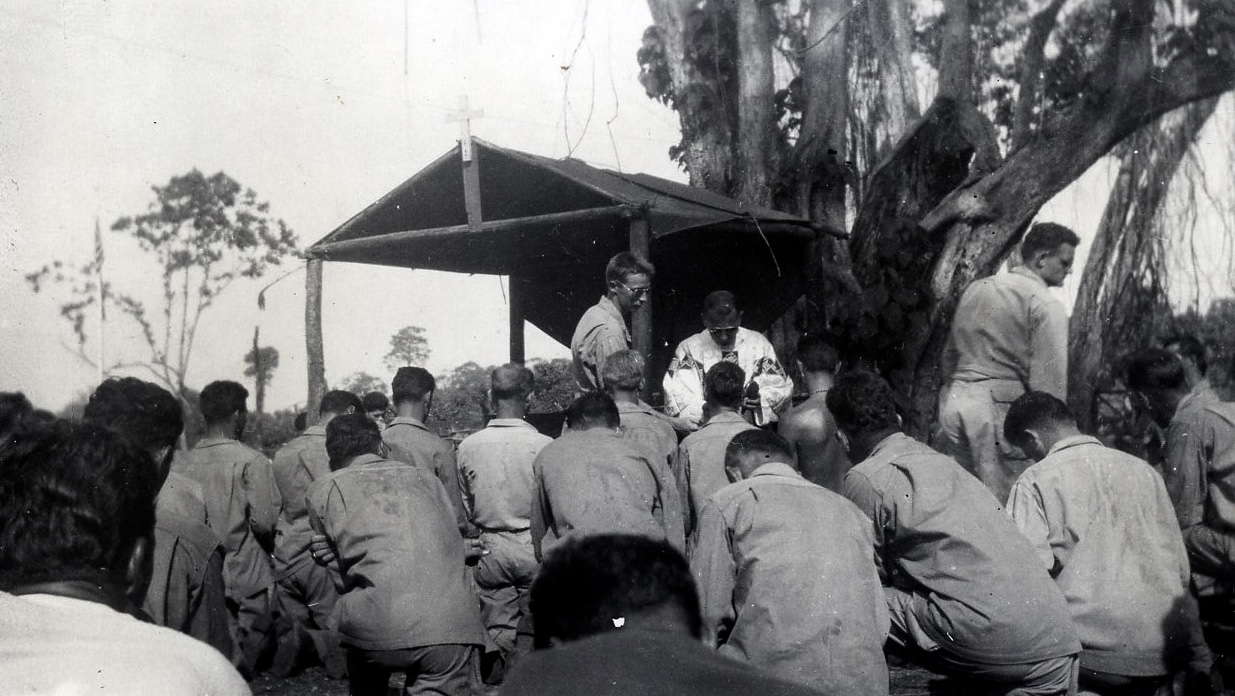
Then it was Christmas of 1944, the second in a row spent in the South Pacific. A year earlier it was spent on the Fiji Islands. Now the 37th was farther from home and definitely not in a tropical paradise. On Christmas Eve an earthquake rattled the 37th position on Bougainville. Christmas dinner was a repeat of the Thanksgiving meal with roast turkey and the fixings. Foxholes were decorated with mini evergreen trees. The mail was delivered and with it, food from home. There were special church services and the men sang carols.
 ww2letterproject
I need a good email address for Steve, have sent two to old business one and no reply
Ron
LikeLike
Excellent telling of the life of uncle bill
LikeLike
I loved my brother in law, but even as a child I knew he had come back from the war a haunted man. In those days there was no help for these broken souls; they were just expected to “man up.” Bill did, but the war and his experiences in it had taken a dreadful toll on his spirit. Still, whatever troubles he had, he remained always a good man. He was kind to me, at a time in my life when not so many were (I was very fortunate in the men that my sisters married; my brother-in-law Don Kisling, sister Fanny’s husband, was also a terrific big brother to me; I think my life might have been very different, and not for the better, without those two men in it.
LikeLike