


In the campaign for control of the Solomon Islands, the Allied Forces targeted New Georgia Island as the next objective in their “island hopping” campaign. This military strategy bypassed heavily fortified Japanese positions and instead concentrated the limited Allied resources on strategically important islands.
The objective was to land on New Georgia and drive inland from the sea to Munda Airfield. With the airfield under Allied control, the next “hop” would be to the island of Bougainville. The New Georgia campaign would mark the first major Allied land battle of the Pacific campaign against a large Japanese force in an established defensive position. The 43rd Division was assigned as the main attack force with the 37th Division in reserve. The 136th Artillery was attached to the 43rd in June for training. The 43rd began landing and establishing bases on islands offshore of New Georgia on June 30th. On July 4, 1943, the 136th landed on the island of Kokorana at 1400. While they were unloading, the 136th came under attack by 16 IJA bombers.
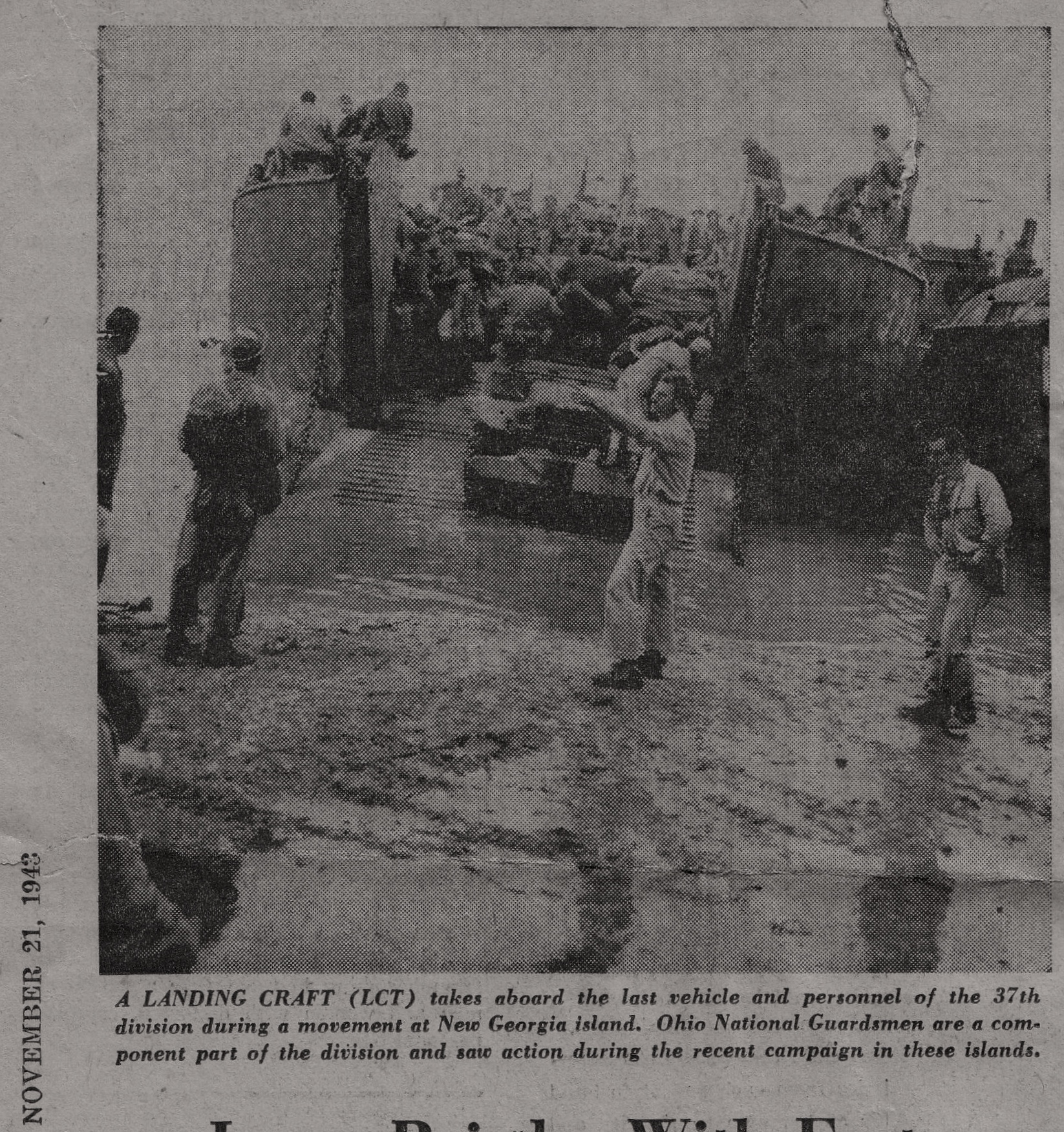
Kokorana was described as 84 acres of slimy, viscous mud and coral with lots of coconut trees. The 136th set up their batteries on the edge of the island to provide clear lines of fire. This however, exposed them to counterbattery fire and made them an inviting target for IJA aerial bombing.
The 43rd began the invasion of New Georgia in early July. The 136th artillery supported the invasion, pulled its first lanyard on July 9, and continued firing every day and night through August 4th
The Navy heavily patrolled the sea lanes near New Georgia Island in an effort to prevent the Japanese navy from supplying IJA forces on the island. Those patrols included PT boats. On August 2, 1943, PT 109 commanded by Lt. John F Kennedy was struck and sunk by a Japanese cruiser near the island of New Georgia.
Dad was 22 when his artillery unit began shelling New Georgia. He was 5’7” trim and a well-conditioned 160 pounds.
I mostly remember my dad as a short round guy sometimes weighing well over 200 pounds. But I also experienced “diet” Dad, where he would shrink to about 160 pounds for a short while before quickly surging above 200 pounds again.
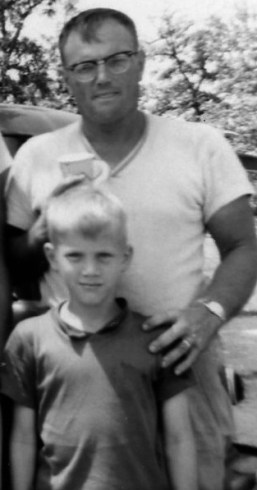
Mom told the story that when they first met, Dad would impress her by doing a back flip. Dad never smoked and didn’t drink until after the war ended. I recall that he was good at baseball, basketball and probably all sports. Mom’s younger brother, Sam Banis, recalled that shortly after the war ended and during visits to the Banis family farm, Dad would wrestle with a teenage Sam and other family boys. Dad liked wrestling.
In the 1950s wrestling or “rassling” was very popular and often on TV. I recall frequent “rassling” bouts between Dad and me during the 1950s. The ring was our carpeted living room floor. The room would fill with squeals (mine) and laughter (ours). The matches ended quickly with my being pinned and then subjected to one of Dad’s two signature moves:
The scissors:
Dad positioned my midsection between his legs. Then he lifted his legs and squeezed while aggressively shaking me. The result forced air out of my lungs and a groan which became a staccato, “sto… sto… sto… sto… stop!” until I was out of breath. He held me for a few more seconds then released. I dropped to the floor, gasped in air, then dove on top of him and started again.
The beard rub:
There was a rassling move that was worse than the scissors. It was the dreaded beard rub. Dad would take me to the mat and pin my arms to my sides. He moved over me until his face hovered a few inches above mine. I felt his breath. I groaned, knowing what was coming. He pressed his cheek against mine, shaking his head from side to side while maintaining contact; it felt like sand paper being dragged across my cheek. He lifted his head slightly and dragged his stubble across my other cheek. He repeated the motion several times. It wasn’t painful, but there was an uncomfortable prickly feeling. The degree of discomfort depended on how recently Dad had shaved. One day’s growth wasn’t too bad, but two day’s growth… ouch.

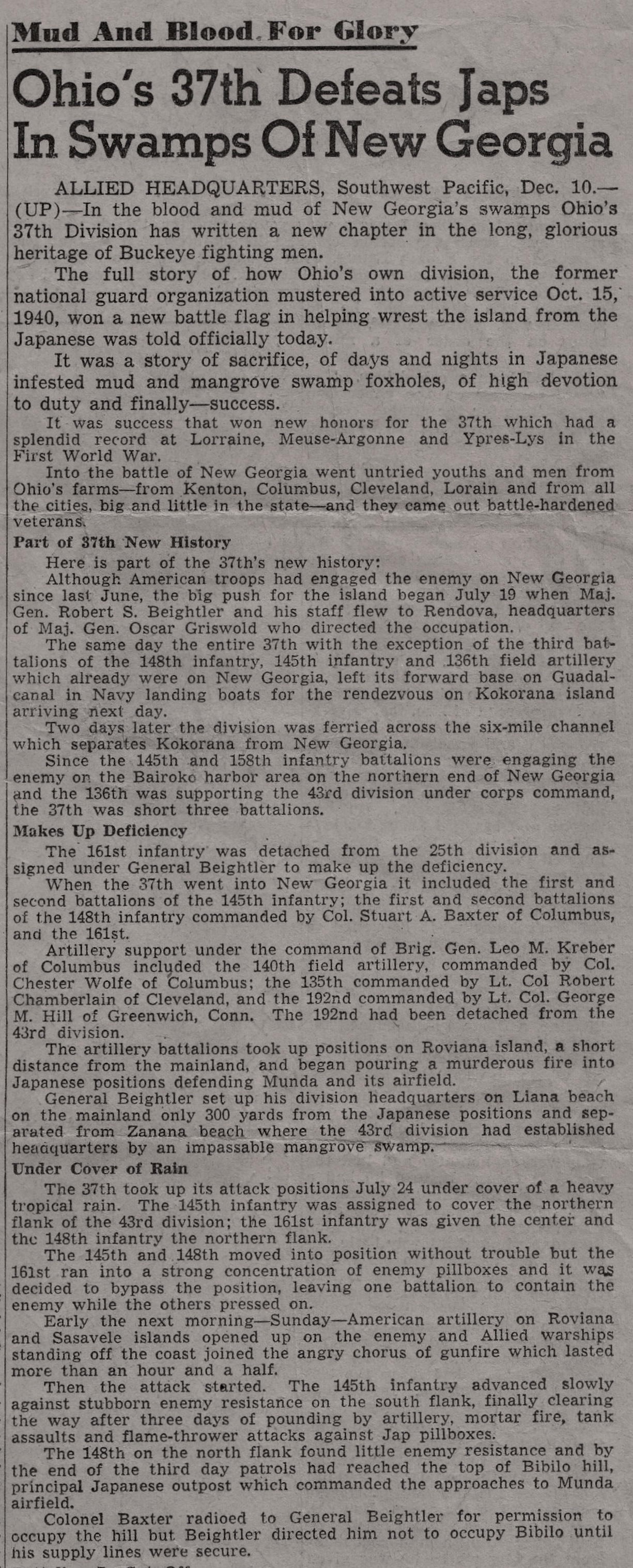
The 43rd began advancing towards the targeted air field. In the dense jungles, the lines quickly became disorganized and supply lines were long. Still far from the air field, there were no defined enemy lines. The Japanese were masters at jungle warfare. They could attack at anytime and anywhere. Their nighttime raids were especially effective. No area was secure. They would attack litter bearers, engineering units, supply depots, even medical evacuation areas. It seemed that there were Japanese snipers everywhere. By mid-July the 43rd was bogged down on its drive to the air field, and the 37th began sending units to replace and support the frightened and demoralized units of the 43rd. It was the 37th infantry’s introduction to jungle warfare.
On July 17, fifty-seven Allied wounded soldiers including a captain, were moved far from the front lines and prepared for evacuation. PFC Nova of the 37th remembered the situation:
“…All day long the Japs had been active… firing at us and plopping… mortar rounds in our direction… As it grew dark we hid casualties in holes and covered them with… undergrowth… some were too sick to be moved… they laid on litters above ground. [At] about 2000 they [the Japanese] came at us, shrieking and hollering… it was pitch black… I really didn’t see anything… I knew the Nips were all around but there wasn’t anything to do except stay in our holes and shoot anything we could see. I could tell these Nips were bayoneting our wounded. I heard our boys cry and try to fight back. The next morning… seventeen of our men including the captain had been tortured and killed… The captain… wounded in the neck had his bandages torn off [and] his … mouth [stuffed] with mud and stones… Lots of the dead had their heads crushed… and all had bayonet wounds.”
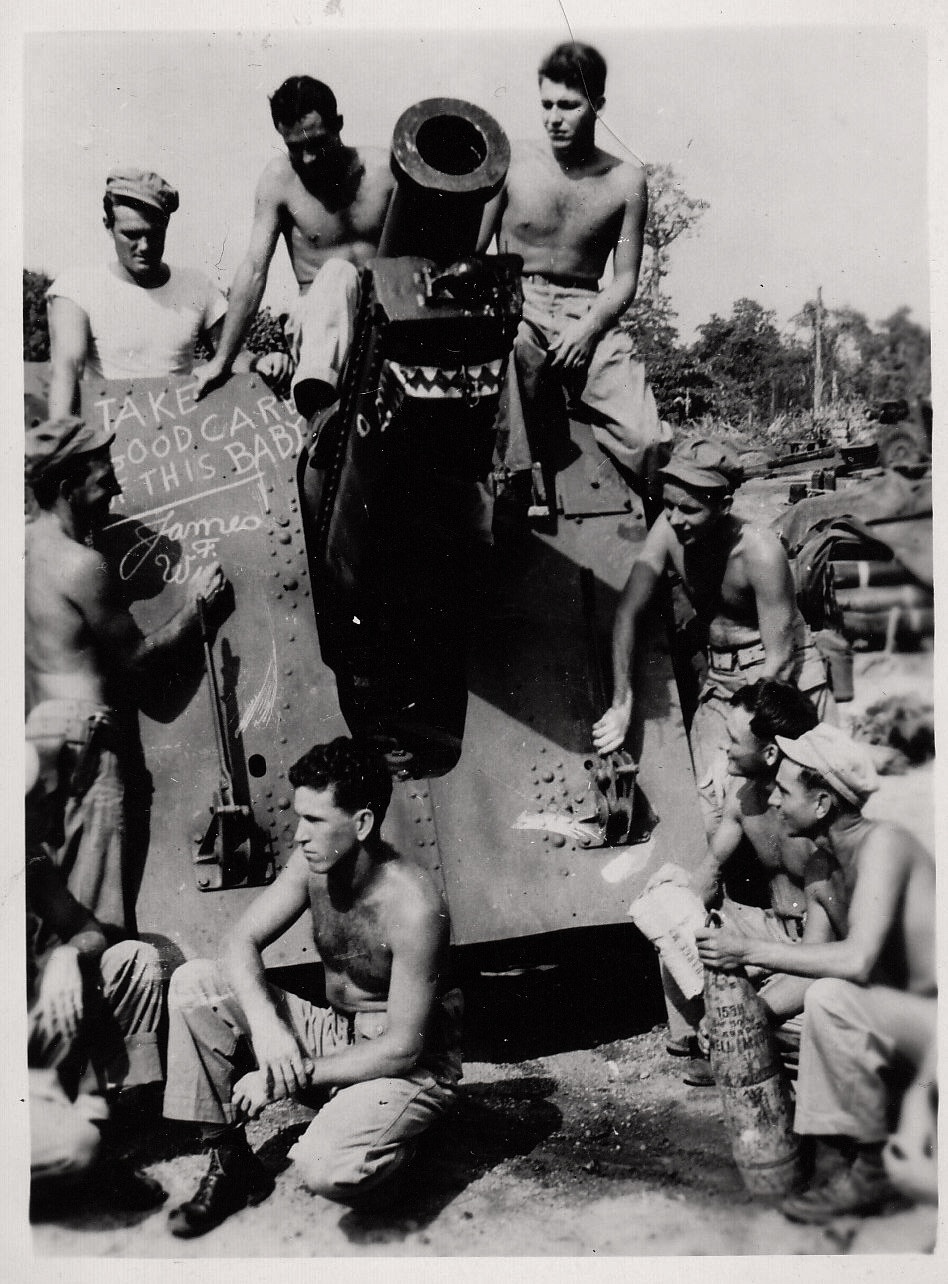
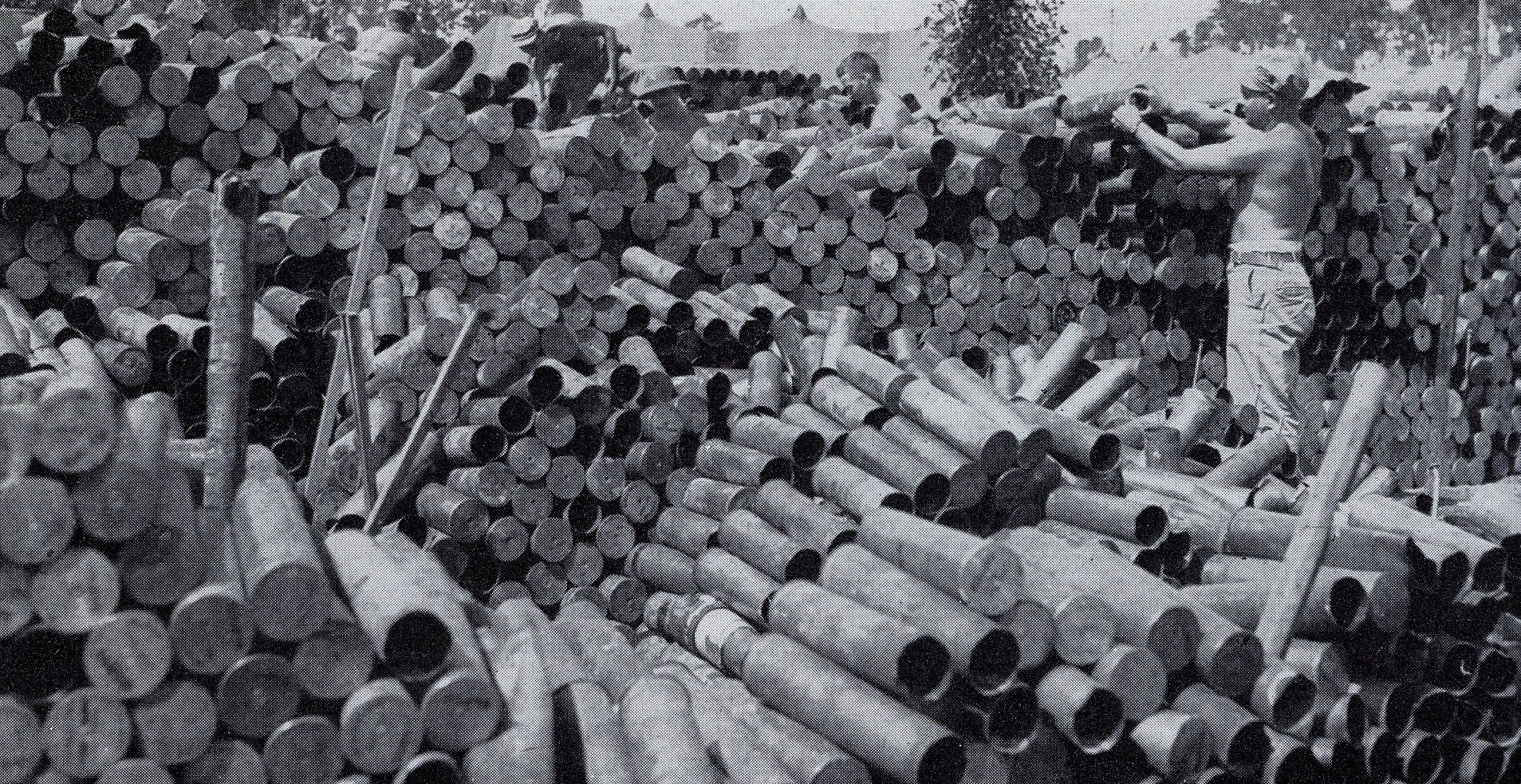
On July 18th, a Japanese infantry unit came out of the jungle at night and attacked the lightly defended 43rd command post at Zanna beach. As they fought off the attackers, the GIs called in artillery support. The 136th laid down covering fire around the perimeter all night long and were so effective that Brigadier General Barker made a personal visit to the 136th the next day to thank them for “saving my life.”
On July 19th the 37th went ashore in force. On the beach they passed the harassed and fatigued GIs of the 43rd whom they were replacing. The soldiers of the 37th realized that to be effective they would have to handle the fear caused by jungle warfare.
The 37th continued to advance towards Munda Airfield. With forward observers in place, the 37th artillery began shelling near the Munda Airfield on New Georgia.
For the next several days, the GIs slowly advanced towards the airfield. The battle was mostly a series of small force engagements in dense jungle. The GIs were constantly subjected to high temperatures and humidity, bugs and enemy snipers. Often a unit lost contact with adjoining units and became isolated. In the dense jungle there were no defined battle lines.
Sight lines stretched only a few feet. At any time and from any direction a unit might come under attack by screaming enemies and find themselves surrounded and unable to evacuate the wounded. Each GI thought, “Don’t get taken prisoner.” At dusk the units stopped and everyone dug a foxhole and crawled in, but there was no sleeping. At night, listening to the sounds of the jungle, no one smoked or talked. Sometimes the enemy were close enough to be heard in conversation. Sometimes, at night the Japanese would call out American names and mock the GIs. Finally, at daybreak you crawled out of your foxhole and your unit continued its advance through the dense jungle. Each GI got one canteen of water per day.
The Quartermaster built a huge bakery on Kokorana and on July 24th delivered coffee and donuts to front lines as they prepared for a major assault of the Munda airfield. It was the first hot “food” since Guadalcanal. On July 25th eight USN destroyers began a 25-minute bombing with five inch shells at 0400 on the Munda area. At 0630 came a wave of dive and torpedo bombers, followed by B 24 bombers. Last, the artillery laid down a fierce barrage within 400 yards of the front line. At 0700 troops of both the 43rd and 37th began the final assault of the airfield.
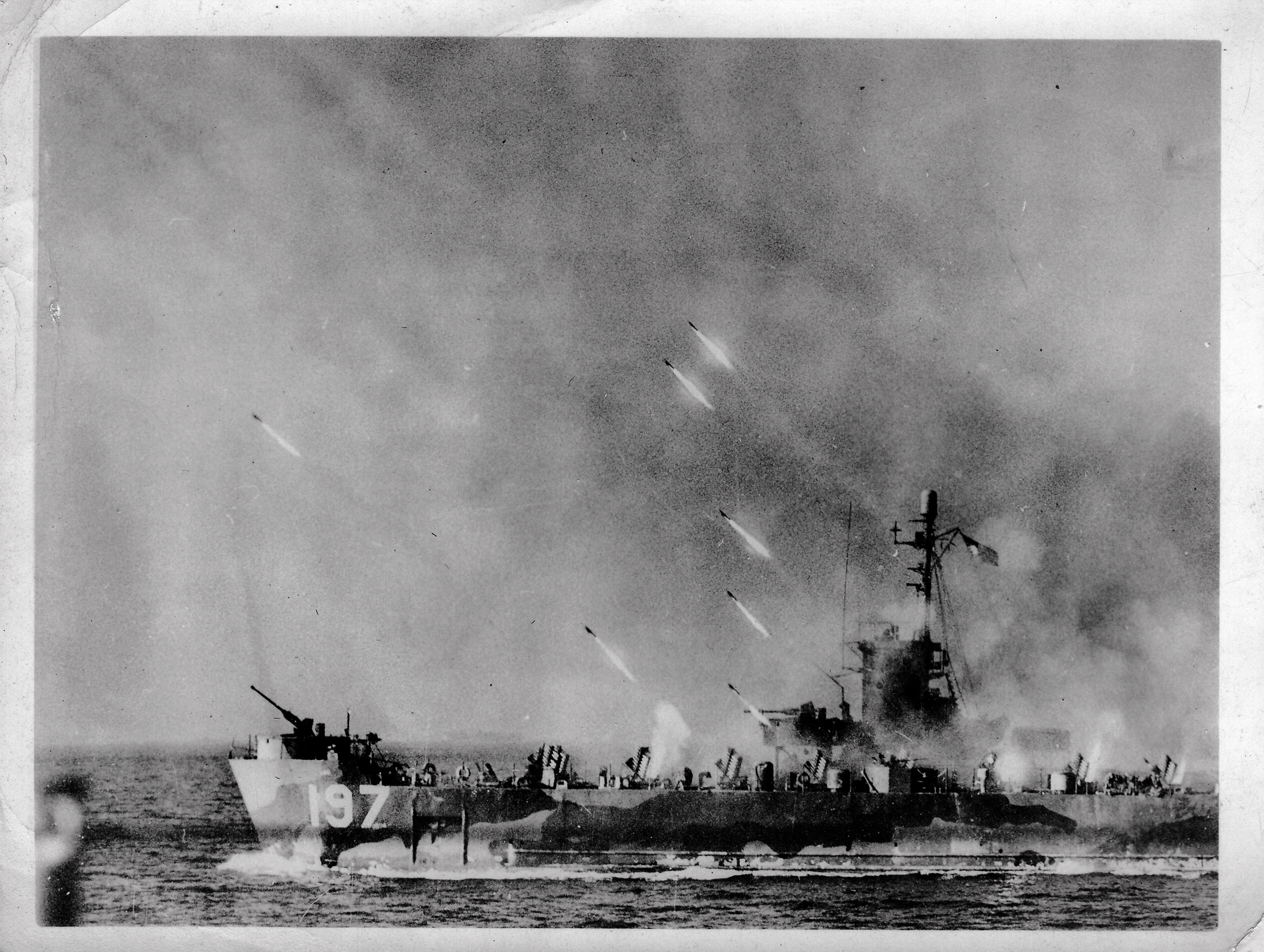
Finally, the troops came in sight of the Munda Airfield where the jungle was cleared. The open ground, however, meant the Japanese troops were in fortified pill boxes and there was lots of machine gun fire. The pill boxes were cleared using flame throwers and grenades. On July 30th there was a major Japanese bonsai attack. The GI lines held. On August 2nd the IJA began to withdrawal from the island by sea.
The battle for New Georgia was over.
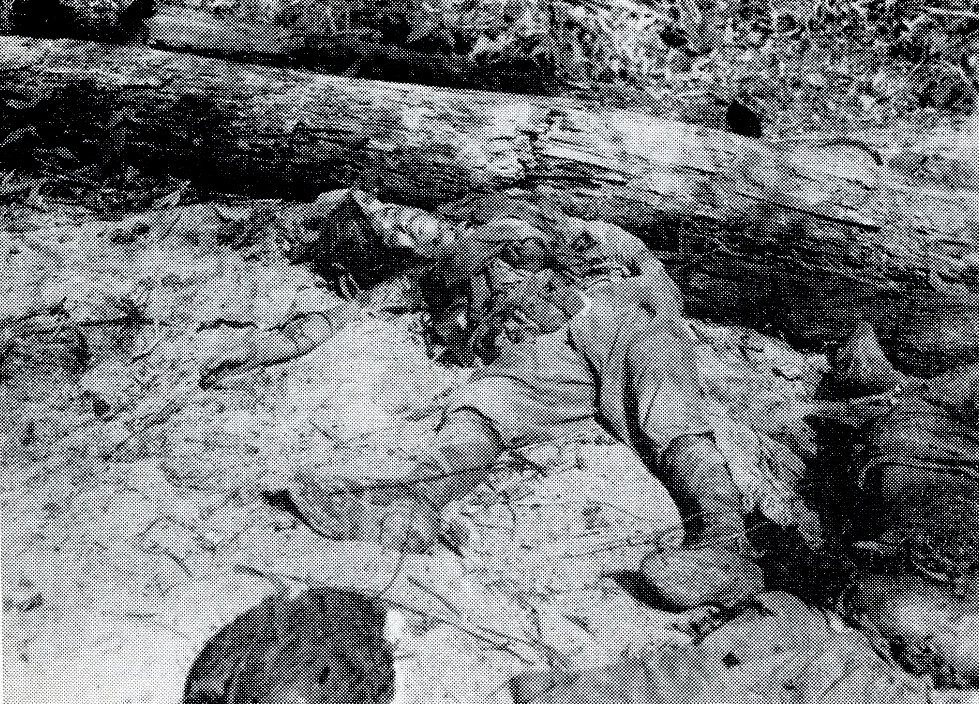
Troops of the 37th reached the sea and were able to bathe, their first bath or shower in three weeks. They collected war souvenirs from the enemy dead: flags, photos, money and gold teeth.
Dad rarely talked about his experiences in WWII. He kept a large stack of black and white photos taken during the war in an unmarked shoe box. I believe he had a friend in the 37th who was an US Army photographer. I was about ten years old when I first saw the photos. I think they were his way of answering my question, “What did you do in the war, Dad?” There were a few photos of Dad, but I clearly remember the photos of the dead bodies of enemy combatants. One photo of a large pile of darkened bodies lying on a white beach surrounded by a few uniformed GIs staring at them. Another photo was of a body lying in the sand in an unnatural position. Sometimes I would flip to the next photo and be confused unable to understand what I was looking at. Slowly I realized it was a charred torso or part of a torso.


In the shoe box there was also Japanese money and some photos of Japanese soldiers and families. Surely these came from dead IJA soldiers. I expect being a member of an artillery unit limited his contact to recently killed IJA soldiers and the opportunity to plunder their bodies. Perhaps he bartered or purchased from some infantryman these war trophies. It was common for GIs during the War to search the pockets of recently killed enemies.
 Years later we were visiting my mom’s family in Eaton, Ohio, for Thanksgiving. After the meal, some of the men went hunting but Dad declined. I was surprised; it seemed kind of unmanly, and it bothered me. I asked Dad why we wasn’t hunting. He looked at me with sadness in his eyes and replied, “I didn’t go because… I really don’t care to hunt. I’ve seen enough killing.” Only years later would I understand what he meant.
My mom recalled that for years after the war, Dad suffered from nightmares about the war. I expect as time went by, the images in those troubled dreams began to fade, but in that shoe box was a clear reminder that “war is hell.”
When the Munda campaign ended, the 37th casualties included:
217 enlisted men and 19 officers killed
34 officers and 976 enlisted men wounded in action.
The IJA lost an estimated 1426 and there were 20 prisoners.
The 37th artillery fired 24781 rounds.
There were an estimated 126 Japanese air raids.
On August 13 Munda Airfield was returned to action by the USAF.
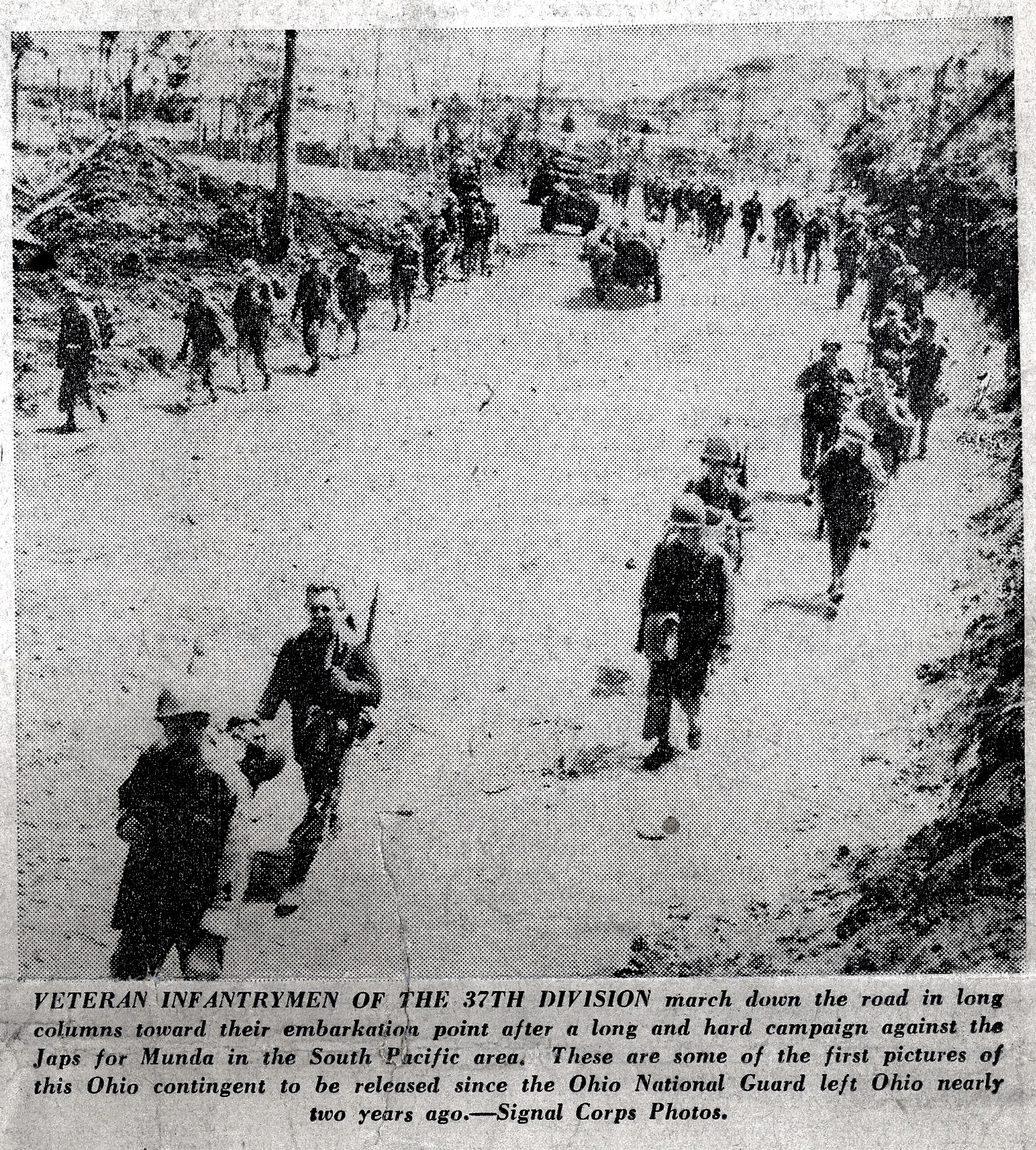
During the New Georgia campaign, men of the 37th earned two Medals of Honor, 13 Distinguished Service Crosses, two Distinguished Service Medals, and 161 Silver Stars. Near the end of September, the 37th withdrew from New Georgia Island and returned to Guadalcanal for R&R and to prepare for another island assault.
 ww2letterproject
My sister recalls that dad would also wrestle with her and she too was subject to the “beard rub”. Kind of nice to know that dad wasn’t gender biased when he wrestled with his kids
LikeLike
Heartbreaking
LikeLike
I’ve read quite a bit about the war in Europe but hadn’t really studied much about the Pacific theater. I can’t thank you enough for all the hard work you’ve done to present this. It’s hard to fathom the hardship these men endured when we can hardly get through an hour without a beverage and air conditioning. Your dad must have been grateful every day that he survived.
Emily
LikeLike
Excellent reading, well written and reminds me of what unsung heros we had in our extended family.
LikeLike