On Monday, December 8, 1941 millions of Americans gathered around a radio and listened as President Franklin Roosevelt began to speak…
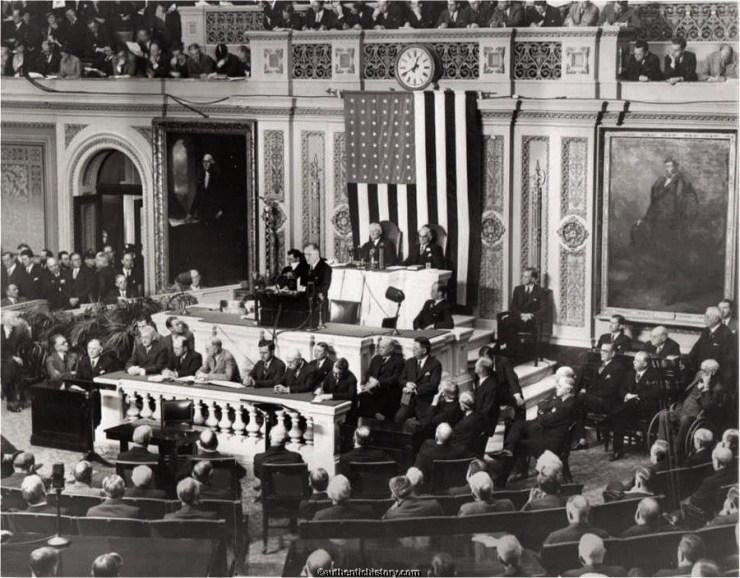
“Yesterday, Dec. 7, 1941 – a date which will live in infamy – the United States of America was suddenly and deliberately attacked by naval and air forces of the Empire of Japan…”
Thirty-three minutes after FDR finished his speech, the US Congress declared war on Japan.
For the men of the 37th training took on a different meaning. Christmas passes were limited to 25% of the men. Christmas trees sprang up in tents and gifts arrived from home. The wearing of civvies off hours was prohibited. The 37th was one of the few US combat ready divisions. In December, their commander was informed that the 37th would be headed to the Philippines. However, when Manila fell to the Japanese later that month, a decision was made to send the 37th to the European Theater of Operations.
In February 1942, the 37th boarded troop trains and traveled east to Indiantown Gap Military reservation near Harrisburg, Pennsylvania. They were assigned an APO of NY, NY fueling rumors among the GIs that the 37th was headed to Europe.
The Indiantown Gap military reservation was a modern military camp with heated barracks, paved roads and theaters. On February 20 and 21, USA Production’s Razzle Dazzle Review with Deanne Durbin of Universal Studios came to the camp.
US bases at Gilbert and Marshall Islands had fallen as had the British stronghold at Singapore. Japanese troops were on the Philippine Islands and controlled Manila. On the western front, Germany and its Axis allies now effectively controlled all of Europe except, for the British Isles, and had advanced into Egypt.
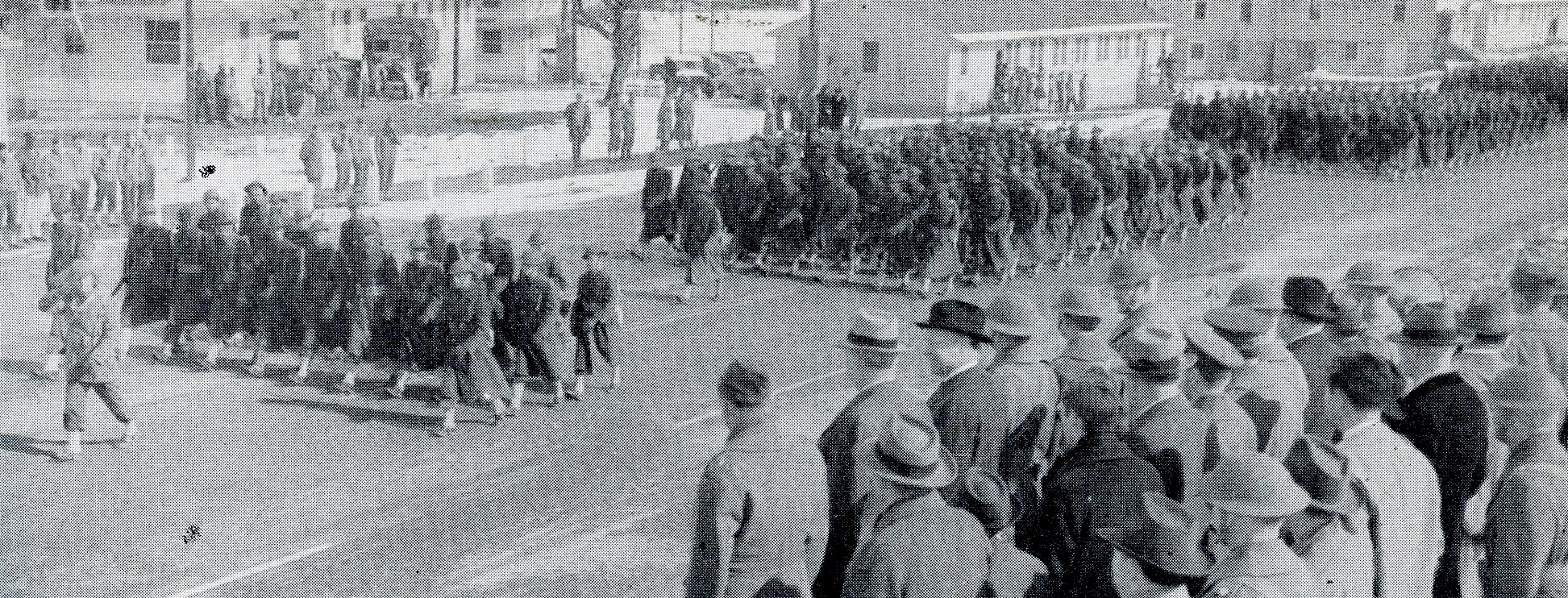
The 37th made a full-dress parade at Indiantown Gap on March 3, 1942.
Early in 1942 during a conference between Churchill and FDR, it was decided to send two American divisions to the South Pacific in an effort to stem the Japanese tide and save New Zealand and Australia. At that time, there were only two American Divisions that were combat ready, and the 37th was one of them.

In March 1942, the Imperial Japanese Army (IJA) had landed in the Solomon Islands and had begun building an air field on the island of Guadalcanal in preparation for air strikes on Australia. The US Armed forces entered the Pacific Theater of Operation facing an experienced, savage and formidable Japanese Army and Navy.
In April 1942, Bataan fell. Approximately 70,000 US and Filipino Armed forces surrendered and were forced to march more than 60 miles to a POW camp. The march was characterized by severe physical abuse and wanton killings by the Japanese Army. An estimated 5,000 to 18,000 Filipinos and 500 to 650 American GIs died during the march.
In April 1942, the 37th APO was changed to San Francisco. Beginning on May 5th the troops of the 37th boarded trains. Twenty-nine trains heading west pulled out of camp between May 5-8. Someone later recalled the eerie quiet of these passenger cars filled with mostly 18 to 22-year-old boys as they began their journey.
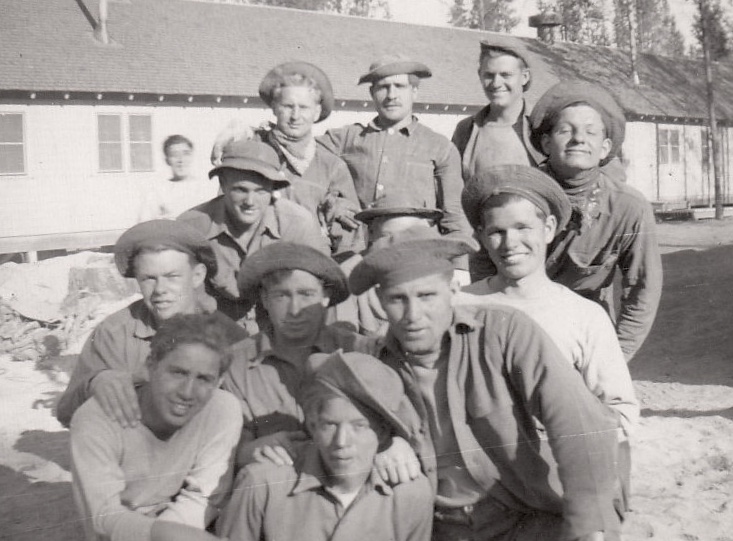
PFC Bill Nance must have stared out the window of his train as it passed through the barren winter farm fields of western Ohio and thought of his mother, father and sister only a short distance away. He also likely was thinking about a similar train trip he had made three years earlier in the winter of 1939 when he joined the Civil Conservation Corps (CCC) and left his home in Ohio and traveled to Oregon.
In the mid-1960s our family, without my sister, took a trip to California to visit my mother’s older sister, Eva and her younger brothers, Victor and Sam and their families. Like Dad’s CCC trip we travelled west from Ohio and then across the northern plains states. It was my first trip west. Like my dad had over two decades earlier, I would stare out the window in awe at a country so different than western Ohio.
Dad was a truck driver and had a limited number of days of vacation. This meant he was willing and able to sit behind the wheel and drive for hours and hours with only an occasional stop. There was a standing family joke that it was best to begin dehydrating yourself several days before vacations, since asking Dad to make a restroom stop might be met with disdain or ignored, in which case you sat with your
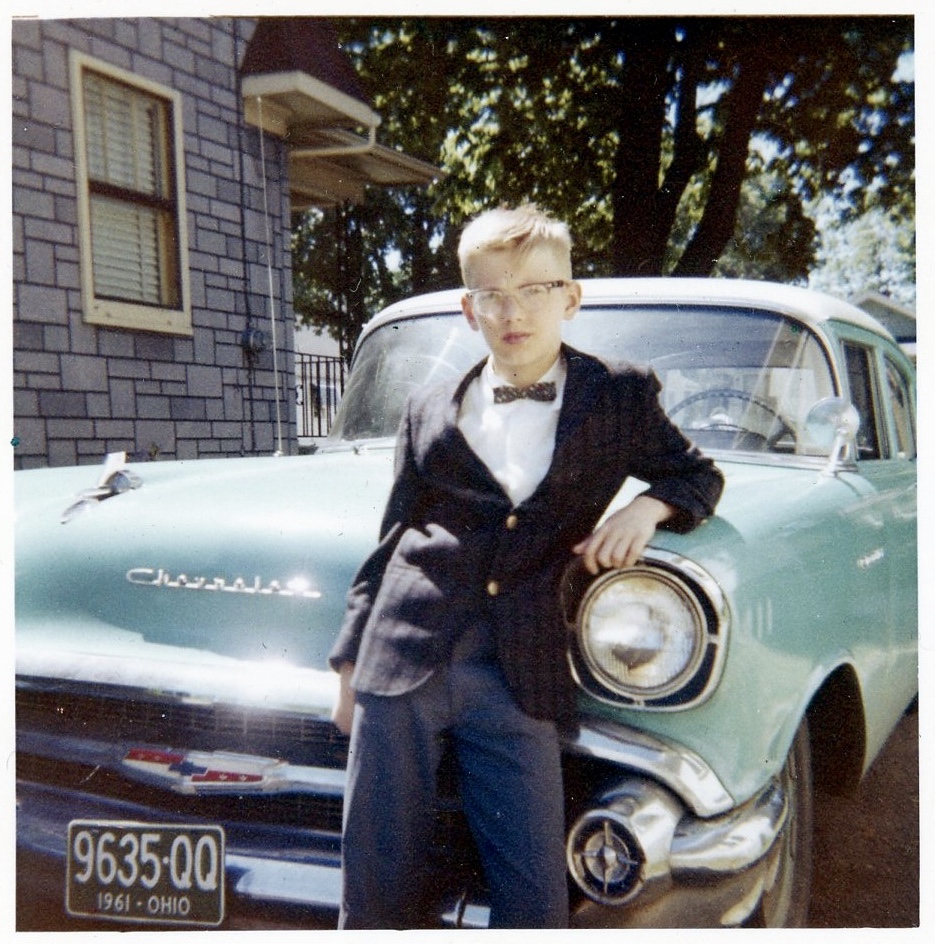
legs crossed and stared at the car’s gasoline gauge wishing it towards “empty.”
We left Dayton, and several hours later neared Chicago. It was predawn. I was in the front seat having traded places with Mom at one of our infrequent pit stops. Occupying the front passenger seat meant I was the designated navigator. I was thrilled to be entrusted with such an important task. I studied the folded map carefully and often, frequently checking road signs to confirm we were following Dad’s preplanned route. He warned me that if we left the route, then we would find ourselves lost in the large metropolis of Chicago in the middle of the night, and perhaps we would never find our way out.
I stared out over the dash of our car at the white dashes defining the traffic lanes as they rhythmically appeared at the leading edge of our car’s headlights. No other cars were near. There was a sense of isolation as the darkness enveloped the car. Soft snoring sounds came from the back seat. Then slowly the line of white dashes began angling to the left. I glanced over at Dad’s face, dimly illuminated by the soft lights from the dashboard. I saw Dad’s head snap up. He shifted his body and his hands tightened on the wheel. I could feel the car pull left. The white dashes returned to their familiar position. Only a few seconds had passed. Was it possible that Dad had fallen asleep at the wheel or was it just my imagination? Minutes passed by silently. Should I say something? Would he think I was criticizing his driving skills? Dad was a proud man. I decided to do something at which I was always good: I decided to talk. “Are you a fight fan?” I asked my dad.
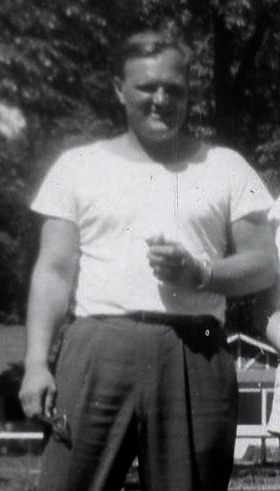
My words had broken the stillness and he seemed surprised. He paused considering the question and then the conversation began. We talked on and on into the night. A father and son sharing a moment. How good was Mohammed Ali? Could he beat Joe Lewis? Dad talked with pride about Billie Conn, the kid from Pittsburgh, describing in detail the night the kid had come so close to defeating Joe Lewis and winning the heavyweight crown. He talked about his memories of the Dempsey versus Tunney fight and Sugar Ray Leonard.
Sometime later he noticed a highway sign and commented that that we seemed to be on the wrong highway. Startled, I searched the map and a moment later realized we had missed a turn and were on a highway heading into Chicago. How could I have made that mistake? He had trusted me as the navigator. I had failed. I softly told him we had missed a turn several miles back. I slumped in my seat. I think he sensed my angst. In a matter-of-fact manner stated it was “OK and not a problem” we would just turn around and go back. We had wasted time on the road, and I knew that was a precious commodity to Dad, but he seemed to be in a good mood. We found the correct road and continued our trip. Our father and son conversation continued through the night.
There would be many other conversations with my dad, some friendly, some angry and a few confrontational; however, I believe that night was the only time that just the two of us shared a conversation that lasted for hours.
When you are young, you think there will always be another opportunity. Life is made of moments. I wish that I would have taken more moments and talked with my dad. There is so much about him I do not know and so many questions I would like to ask.


The trains arrived in San Francisco five or six days after leaving Pennsylvania. Units of the 37th scattered throughout the Bay area. The 37th artillery was located in Daly City setting up a tent camp in Crocker Park. During the next two weeks, lots of passes were issued. The men attended medical lectures about tropical diseases were inoculated for Yellow Fever, Cholera, Tetanus, and Typhoid. May 17 was declared “I am an American Day” and the 37th was entertained as Jeanette MacDonald sang “America.”

On May 24 at 1215 a general alert was sounded. Lunch was calves’ liver and lima beans. Dinner was thin steak and potatoes. Over the next two days, the men of the 37th began boarding six converted ocean liners. The last of the troops boarded the SS President Coolidge at Pier 42. At 1207 on Tuesday, May 26 the ships slipped their moorings and eased into the channel. They were joined by the USS San Francisco (cruiser) and two destroyers.
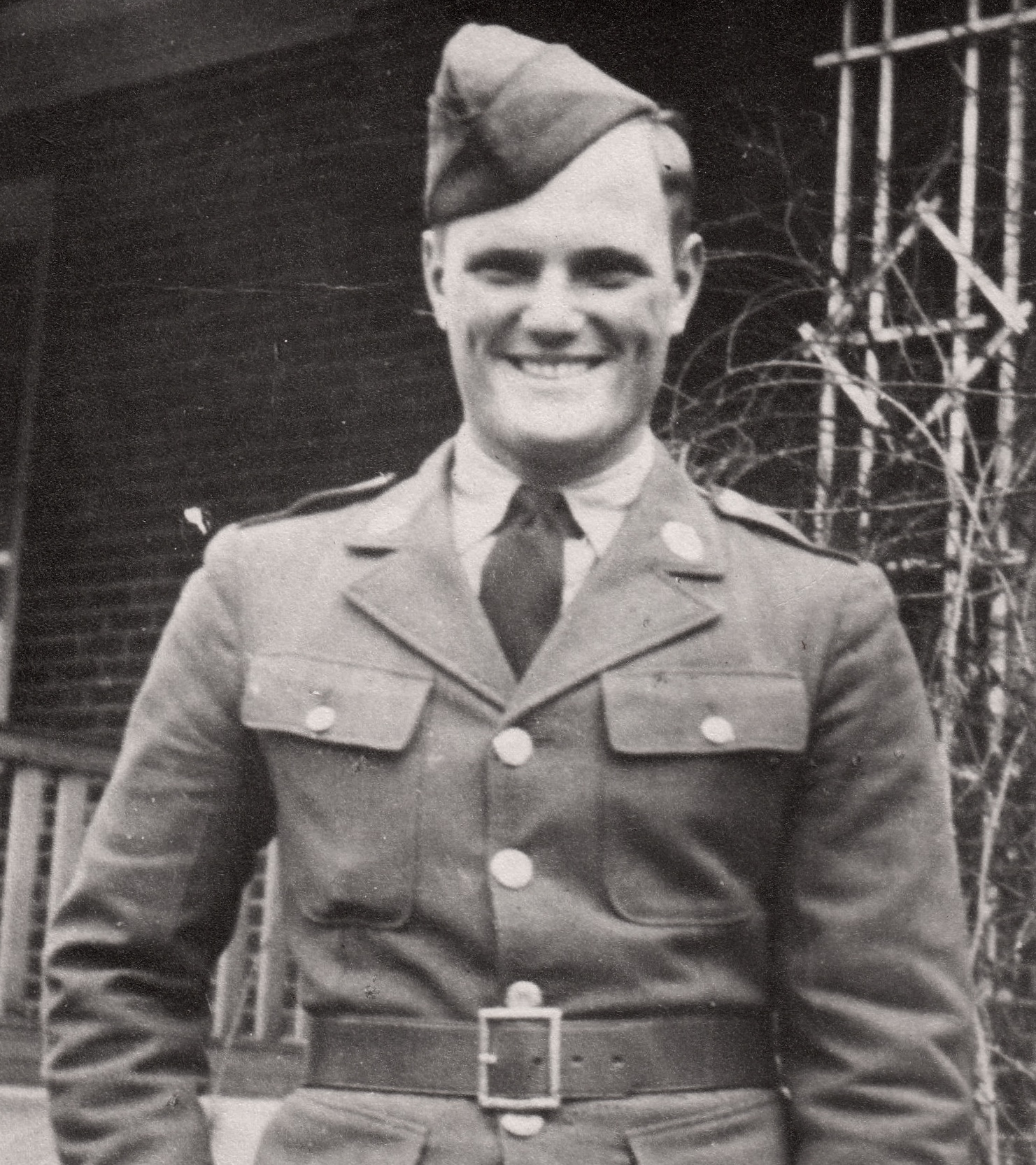
The convoy made for open sea. The men of the 37th put on and tightened life belts. Overhead circled an anti-sub Catalina flying boat.
The destination of the convoy was still unknown to all but a few high-ranking officers.


Really a great story you have done.Dad was sure a good looking guy when he was young and not to bad when he was older.
LikeLike
Great reading
LikeLike
Steve-
Your personal inserts are so poignant. How true that we look back on so many missed opportunities to know those we thought we “knew so well”. Now when I think of your dad singing “Misty” during one of my summer visits it occurs to me that your dad could have become embittered because of his war experiences, but instead was able to “sing”! (And what a beautiful voice.)
Emily
LikeLike