Stalag III-C
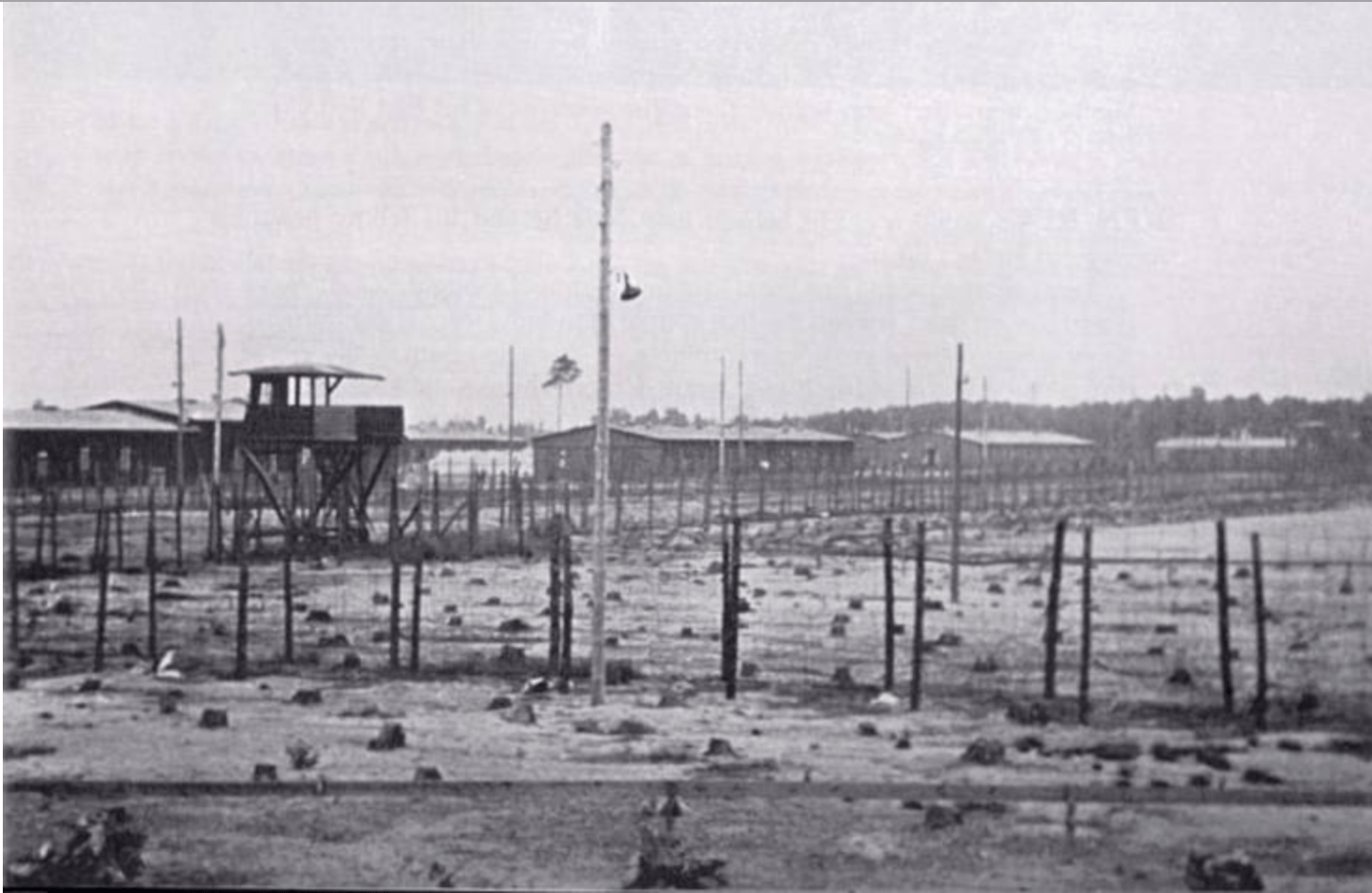
Stalag III-C was a German Army World War II POW camp for Allied soldiers. Located on a plain near the village of Alt Drewitz bei Küstrin about 50 miles east of Berlin, it initially served as an internment camp for soldiers and NCOs from Poland, France, Britain, Yugoslavia and Belgium. Starting in 1944, soldiers from the US were kept there also.
 By early December of 1944, the camp roster totaled more than 38,000 prisoners. This included 2,036 Americans; 631 Belgians; 1,416 British; 17,568 French; 1,046 Italian; 2 Polish; 1,591 Serbian; and 13,727 Soviet prisoners.
Sixteen million Americans served in World War II. Of these, 93,941 Americans lived out part of the war behind barbed wire as prisoners of war (POWs). In a series of camps spread over Nazi-occupied territory, American POWs spent their time “waiting on winning,” as one POW newsletter described it. As a signatory of the Geneva Conventions, Germany generally adhered to the measures outlined for the humane treatment of prisoners of war.
Article 4 of the Geneva Convention protects captured military personnel. It applies from the moment a prisoner is captured until he or she is released or repatriated. One of the main provisions of the convention makes it illegal to torture prisoners. It also states a POW must be:
- Treated humanely with respect for their persons and their honor
- Able to inform their next of kin and the International Committee of the Red Cross of their capture
- Allowed to communicate regularly with relatives and receive packages
- Given adequate food, clothing, housing, and medical attention
- Paid for work done and not forced to do work that is dangerous, unhealthy, or degrading
- Released quickly after conflicts end
- Not compelled to give any information except for name, age, rank, and service number
In addition, if wounded or sick on the battlefield, the prisoner must receive help from the International Committee of the Red Cross.
Of the nearly 94,000 American held in German POW camps, nearly 93,000 would return home. Ultimately, wartime circumstances and the leanings of individual camp leaders dictated the fates of those held captive in Europe. As prisoners of the Germans during World War II, life was difficult, boring, and uncertain.

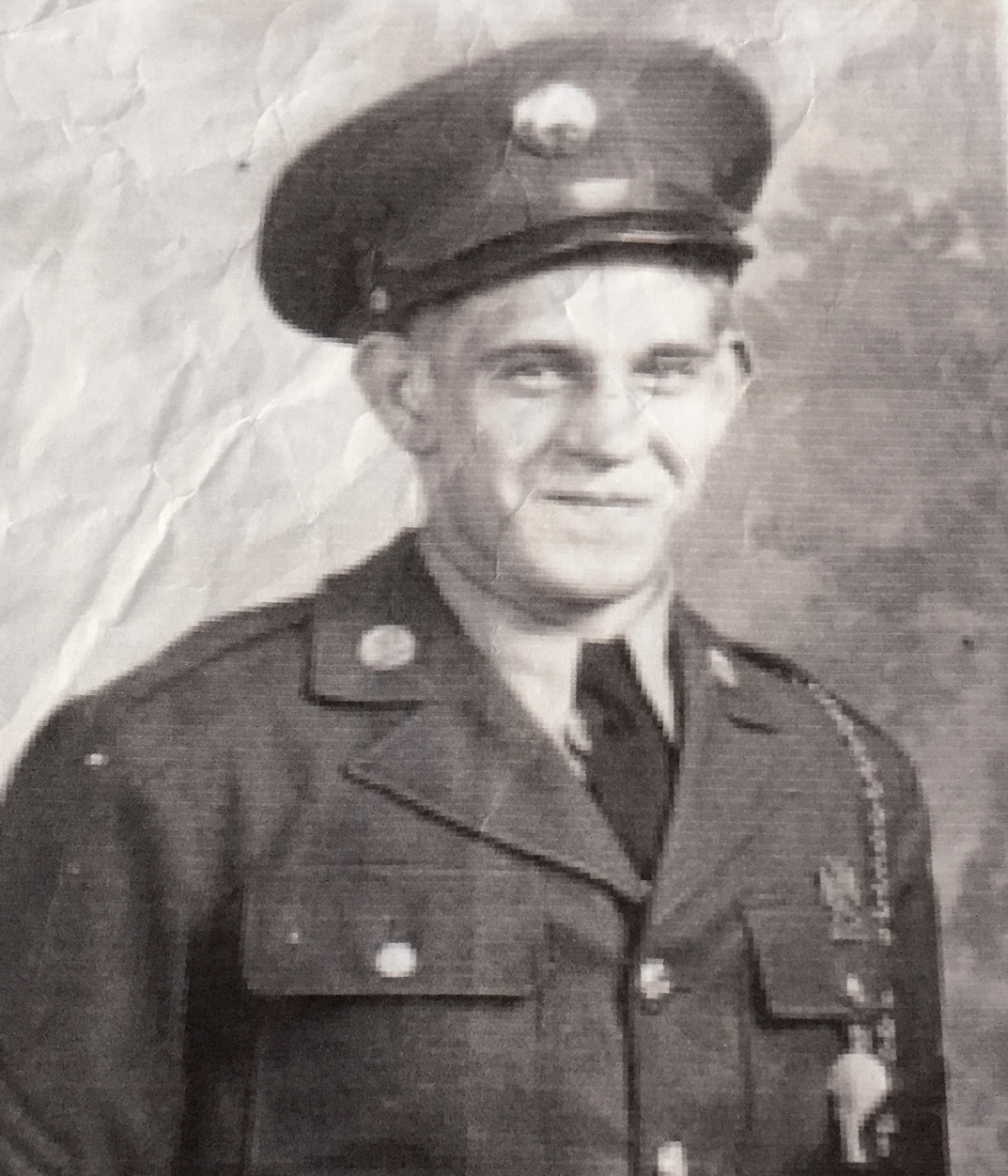
Abe arrived at Stalag III-C in August 1944. He was given a prisoner number and a POW ID tag. Abe may have gotten his POW ID when he crossed the German border.
The prisoners at Stalag III-C were separated by nationality. Abe was housed with other American POWs. The POWs were housed in primitive wooden barracks that were poorly constructed. Some recalled the paper thin walls and the stench of men who hadn’t bathed for months (taken from Hidden Hell by Robert Miller).
Outside of the barracks, there was barbed wire everywhere. At strategic locations there were guard towers with machine guns. At the perimeter of the camp, there might be two 12-foot high barbed wire fences separated by 20 feet. The guards patrolled with German Shepherds, Dobermans and Mastiffs.

Days 1-17 : August, 1944
Stalag Weather:
The average daily high temperature is 73 degrees Fahrenheit; the low, 54. Fifteen days of rain is normal in August. The average monthly rainfall is 2.6 inches.
On the War Front:
- Florence, Italy is liberated by the Allies
- Plotters in the bomb plot against Hitler are hanged and their bodies hung on meat hooks
- The Red Army reach the East Prussian border
- The Japanese are now in total retreat from India
- Paris is liberated; De Gaulle and Free French paraded triumphantly down the Champs-Élysées (The German military disobeyed Hitler’s orders to burn the city)
Under the provision of the Geneva Convention of 1929, the International Red Cross was able to ship packages containing food, tobacco and personal hygiene items to Allied POWs in German prison camps. These packages were often critical in supplying needed food to the POWs whose daily camp diet was meager and deficient. Some of these packages contained items such as playing cards, journals and writing implements. Deliveries of the packages were erratic due to supply logistics and, in some cases, the whim of the camp commandant. To every POW, the arrival of a Red Cross package was a special event.
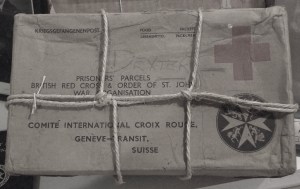
“The boys used to sit around and wait hopefully for the Red Cross packages. When they came we were like kids at Christmas. They meant so much… We didn’t get the number of Red Cross packages we were supposed to receive.”
-Abe
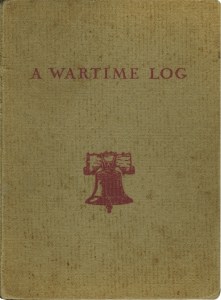
Abe kept a POW journal that was likely supplied by the Red Cross.
The Red Cross packages were so special that Abe took the time to record in his journal the contents of one such package:
 “Red Cross parcels – 1 or 2 bars of soap Cayla or Swan; 1 can jam 6 oz.; 1-lb marg; 1 can corn beef; 1 can spam or pork loaf; 1-2oz or 4oz coffee; 1- ½lb. box of sugar; 2 large D bars or Herseys; 1 box crackers; ½lb. box cheese; 1lb can powdered milk; 1 box raisins or prunes. Substitutions – roast beef, beans, peanut butter, preserved butter, can orange juice.”
-Abe
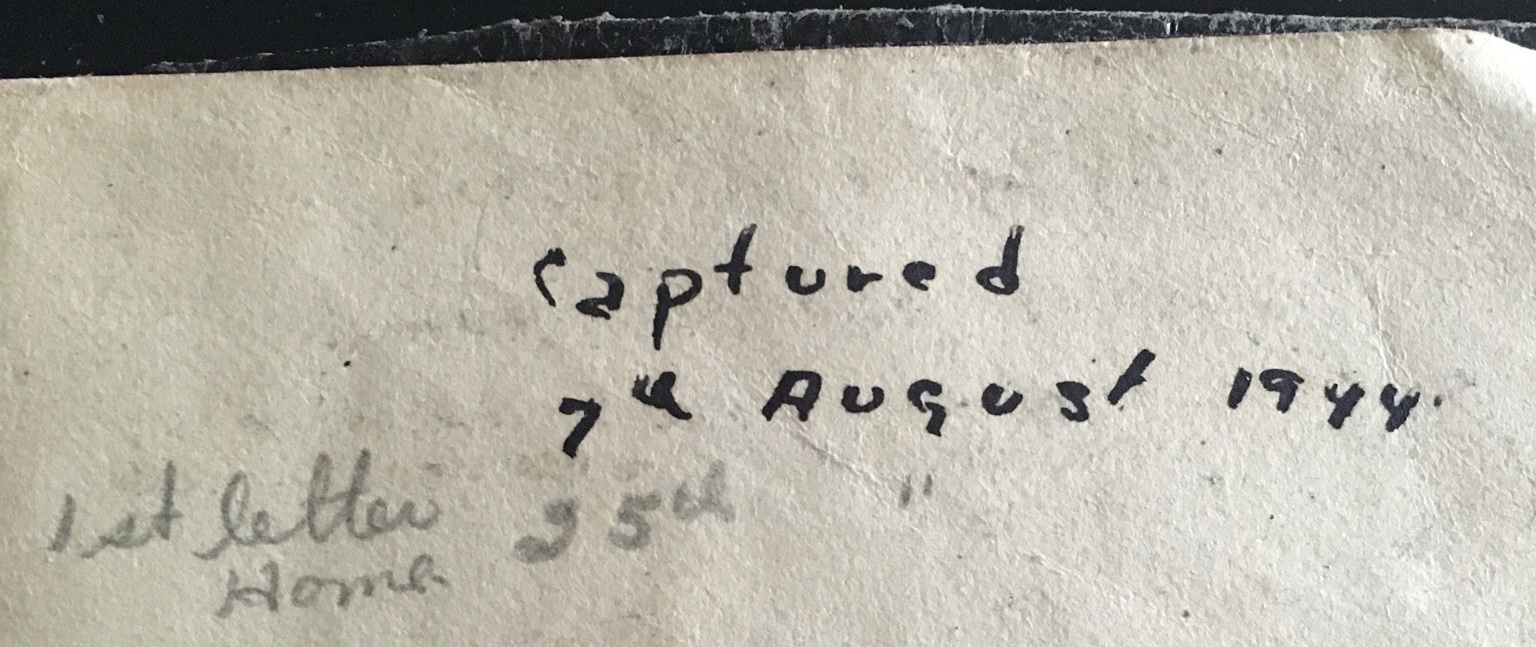
Abe had few personal items other than the uniform he was wearing. He did, however, have a small pocket sized Christian Worker’s New Testament.
Inside the cover, he wrote, “1st letter Home August 25 1944.”
Life Behind Barbed Wire:*
Nathaniel G. Raley:
“…on occasion, they’d have identification roll calls, and on the roll call was a head count. You know, “One, two, three.” “Ein, zwei, drei,” like that. Every once in a while, they’d have an identification roll call…(using your) picture on a little card, and they’d call out your name, and you’d come up to a desk or table, and they’d look, make sure that’s you, and then you’d go up to the other side to make sure that everybody matched up. They’d do that perhaps once a month, unannounced.

“We occasionally did get a Red Cross parcel, which was a box that was, oh, golly, maybe 20 inches by 20 inches and four or five inches deep. And they’d have cigarettes…a can of butter, some chocolate, sugar, you know, things like that. And there were literally people who would barter food for those cigarettes. And, you know, they’re starving themselves to death, but they would rather smoke than eat.”
*Interviews of American soldiers who spent time in WWII German POW camps by the Library of Congress: Veterans History Project: http://www.loc.gov/vets/
Tomorrow: Days 18 – 48
*banner photo courtesy of https://wallyswar.wordpress.com/pow2/
 ww2letterproject
Wow! The numbers alone tell a story. TH
LikeLike