1930-1932
The stock market crashed in the fall of 1929. Consumers and businesses panicked and withdrew their money from banks. Banks were uninsured and effectively unregulated. In 1930, more than 1300 banks closed. Factories began to close. Within a year the US unemployment rate nearly tripled, reaching almost nine percent. There was no compensation for the unemployed, and many lost their savings when the banks closed. People stopped earning and stopped spending. The consumer driven economy of the 1920s had begun a rapid downward spiral toward recession. The Great Depression had begun.

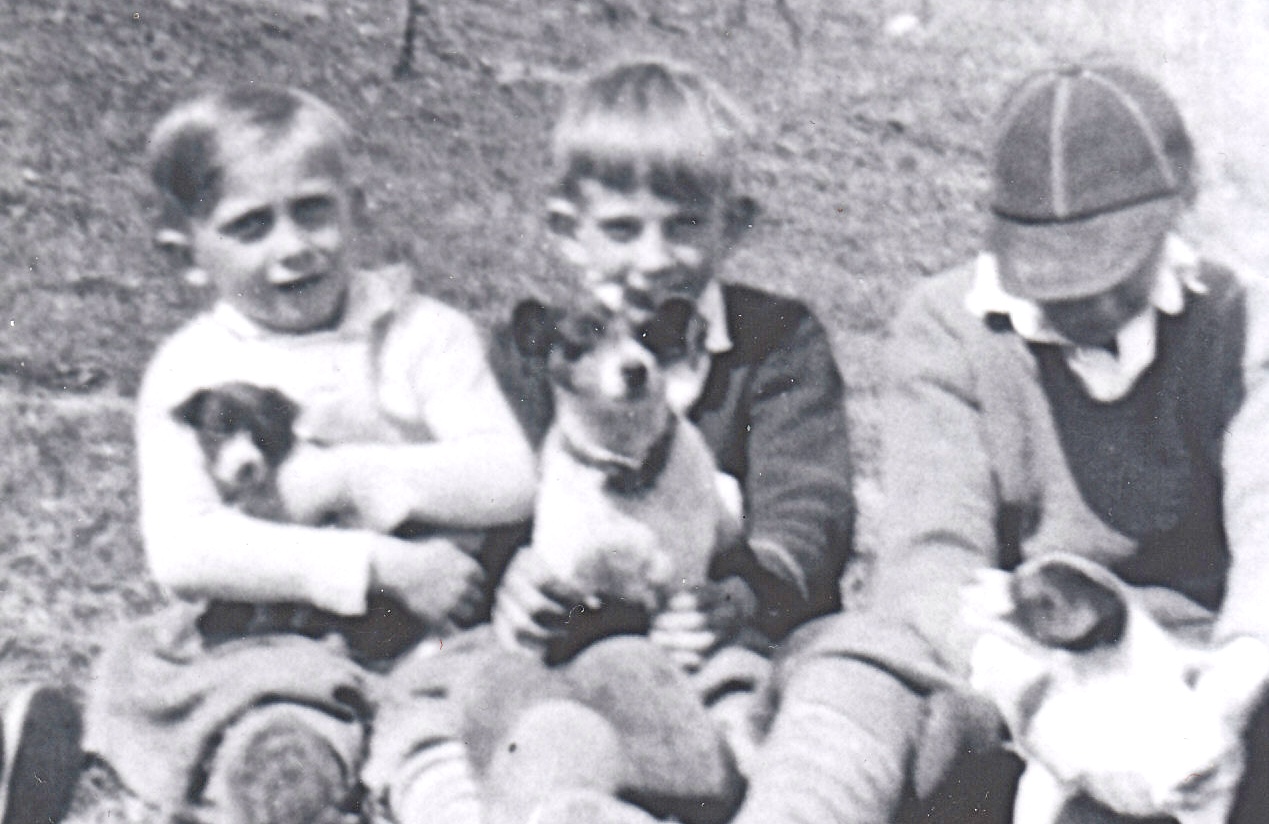
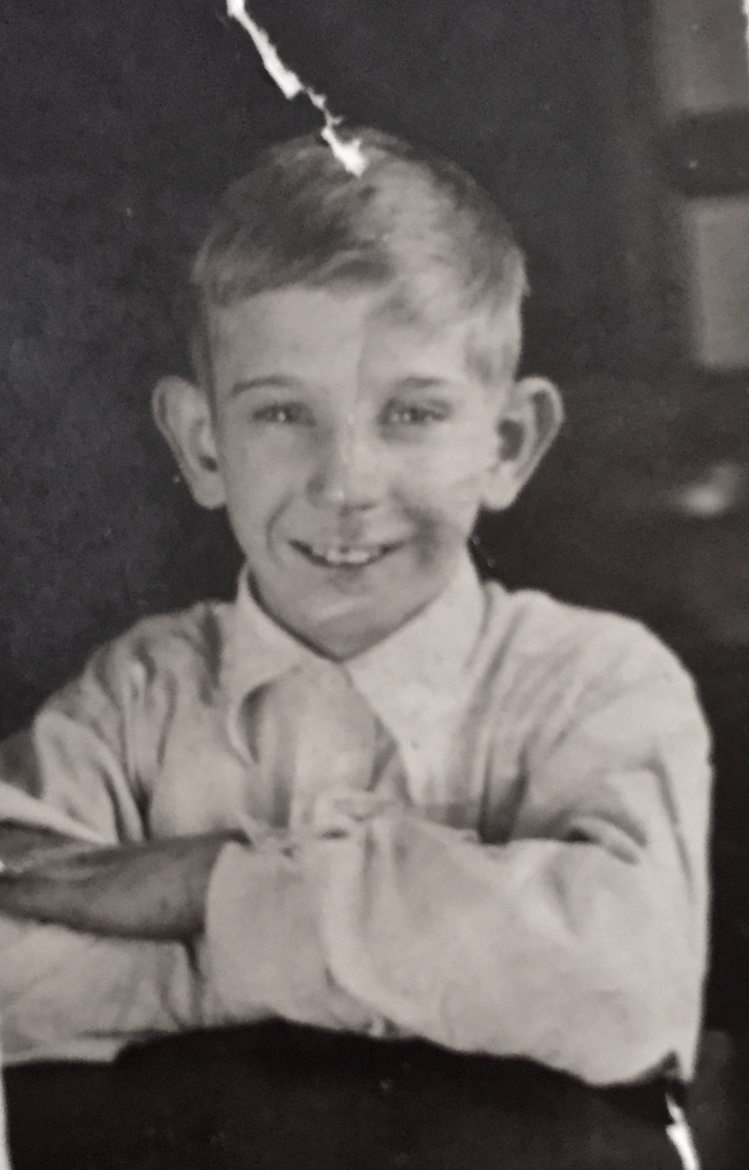
In 1930, the Banis family fortunes took a significant turn for the worse when Abe’s father lost his job at the Ford Motor Plant. He quickly found other employment but likely at significantly lower earnings. The family had been through this before. The small southwestern Ohio town of Seven Mile was home, the family having lived there for nearly six years. Abe went off to school joining brother Bill and sisters, Eva and May. His younger sister, Ruth and infant brother Dick were at home with Mom, Anna.
One day as the Banis kids rode the bus home from school, Eva recalled, “We got off at the crossroads. We could walk up the hill and down the other side, and we would be home.” As they began their walk, “the fire engine went clanging by us.”
“We topped the hill close to home, we saw the house was on fire and by the time the fire department could get there the house had burned to the ground leaving us with only the clothes we had on.”
─ Abe
The family escaped unharmed but essentially lost everything else. Once again, it was time to move. The Banises relocated from Seven Mile to a house near West Elkton, close to eight miles away.


“The house had a sense of intrigue about it. One night after I had gone to bed, needing a drink of water, I asked Mother to go with me. She said, ‘get it yourself.’ As I started down the steps, I saw an object in front of me. I followed [it] down the steps and into the back yard where it disappeared. I went ahead with my drink of water and returned to bed.
“The story was told that a party had been murdered in the house and no one knew where the body had been buried.”
─ Abe
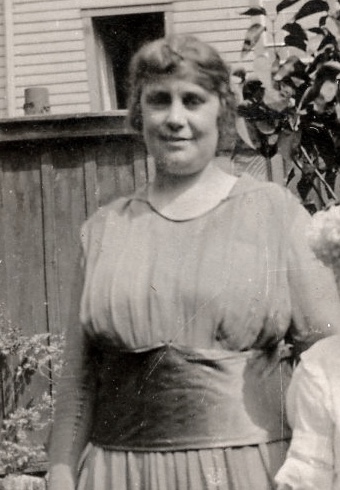
Anna was pregnant again. In January, 1931, another girl was born, Fanny, named after her father’s sister, who was a colorful outgoing character and on occasion liked a stiff drink.
The economy worsened, and the national unemployment rate almost doubled from the previous year as it rose to 16%.
Abe’s father was unable to find suitable employment; the family moved again. This time they traveled over 550 miles to St. Clair, a small town located within the anthracite coal fields of east central Pennsylvania where Abe’s father, William, was born and raised. William’s younger brother Victor’s (1898) family still lived there.
“On the way to Pennsylvania, we traveled in an old Ford Touring car. As it didn’t have the power to pull itself up the mountains, Dad would have to back up the mountains and then go forward down. At the bottom of the hill, he would have to adjust the clutch bands before going up again.”
—Abe

Victor Banis began work in coal mines at the age of 13. When the US entered WWI in 1917, a 19-year-old Victor enlisted in the US Army in July, serving with Company B of the 112th Infantry in France, achieving the rank of
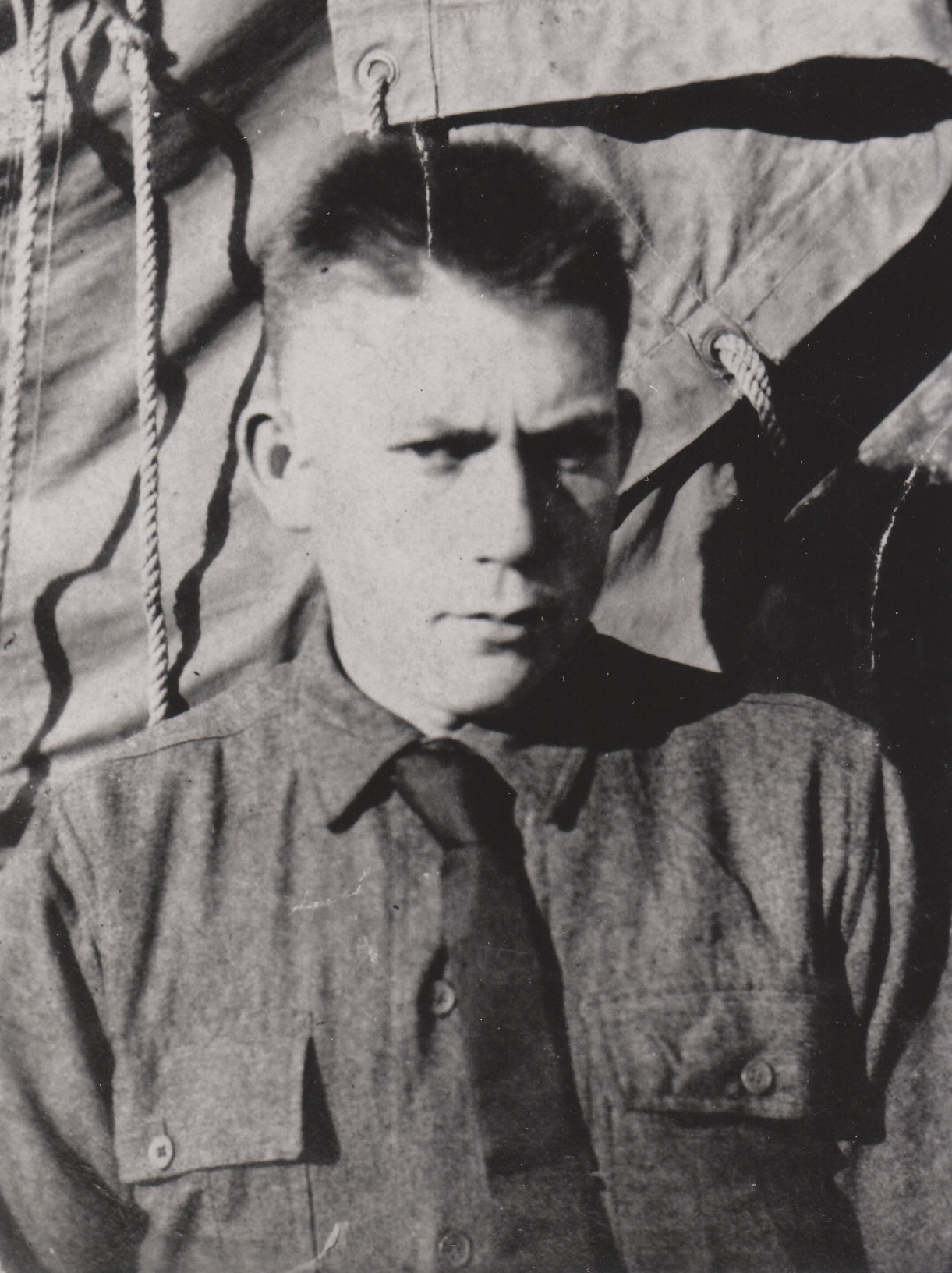
corporal. Victor fought in the Battle of the Argonne Forest, the largest offensive in United States military history, involving 1.2 million American soldiers. In this battle 26,277 lives were lost and 95,786 were wounded, making it the largest and bloodiest operation of the war for the American Expeditionary Forces.
Victor was discharged from the army in May of 1919. He returned to Pennsylvania, and by the end of the month, he was again working in the coal mines.
By 1930, Victor was married and had three children. On the evening of July 20, 1930, Victor was struck by a train near the town of Coaldale, Pennsylvania. He lingered a few days before he succumbed to major injuries. Reports of the incident suggested that Victor may have committed suicide, but his family suspected foul play. Victor had been a gambler and was often successful. 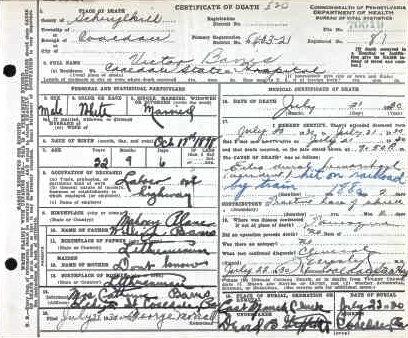 The family thinks that he may have become the target of a robbery after a successful night of playing cards.
When Abe’s family arrived in St. Clair,
“We met his widow and her children. Staying but a short time.”
─Abe
Again Abe’s family moved on. As Abe’s younger sister, Ruth recalled, “Daddy had connections to some people in central Pennsylvania that he thought could help him find work.” So Abe and his family turned west traveling as far as the small town of Alexandria, Pennsylvania.
Now far from any relatives, Abe and his family faced the worst years of the Great Depression.
1932-1936

In 1933, Franklin Roosevelt (FDR) was sworn in as President. The same year, Adolf Hitler was appointed chancellor of Germany. Shortly after taking office, FDR launched his New Deal. A series of US Government programs enacted to provide relief for the unemployed and poor, the New Deal was created to stimulate the economy and reform the financial system. Meanwhile, the unemployment rate increased to nearly 25%. The Midwest suffered a record drought that by 1935 resulted in the “Dust Bowl” and the migration of millions of Americans to the west coast.
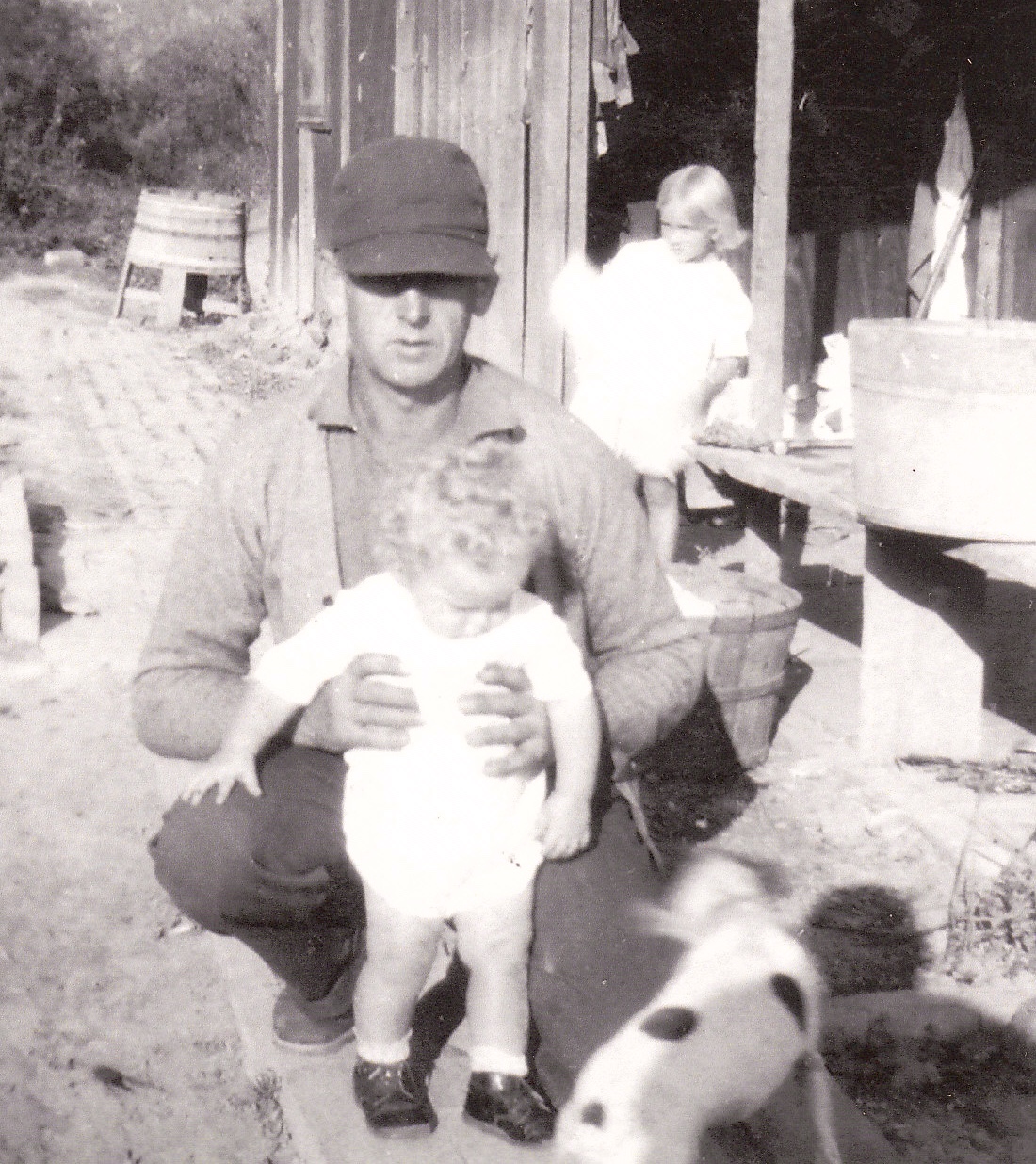
Alexandria is located in the mountains of central Pennsylvania. The family moved into a rented three-room “shanty” on the outskirts of Alexandria. There was a kitchen with an eating area, a bedroom for Abe’s mother and father, and a bedroom for Abe and his brothers and sisters. That room was big enough for two beds, placed on opposite sides of the room: one bed for the three boys and one for the four girls.
There was no electricity. Oil lamps provided light, while a single wood burning stove furnished heat and a place to cook. There was no plumbing, and water had to be carried from a nearby spring. Clothes were washed by hand using a washboard. The family had no car.
“The house was covered with tar paper, and in the winter time the tar paper would crack and the snow would come in through the cracks.”
─Abe

It was a hard scrabble life. Abe’s mother and father were able to earn money to keep the family fed but just barely.
Abe and his brothers and sisters were a resilient lot. Having to wear homemade clothes and occasionally being hungry were little more than inconveniences. They had to go to school but, when asked about these times, Abe’s younger sister Ruth mostly recalled these years with fondness:
“During the summer we played in the woods and fields. We swam in the streams and in a pond on a nearby farm. We played cowboys and Indians. We shared one bicycle, and it had no brakes. We played baseball, and on some Sundays, Daddy would play with us. The fall meant a daily walk of about a mile to school and making apple butter with the neighbors where the kids got to stir the pot. At Christmas time, Mom made candy. In the winters the neighbors’ pond would freeze, and we took turns skating using our one pair of skates.


“One winter we found an old metal sign and used it as a toboggan. In the spring we harvested dandelions and took hikes into the woods, sometimes with Daddy leading the way to pick huckleberries, raspberries and elderberries. There were lots of berries and lots of snakes. Mom used the dandelions as (vegetable) greens and made jam from the elderberries, while Daddy made dandelion and elderberry wine. There was always a garden and beds of flowers. In spring we also hunted mushrooms.
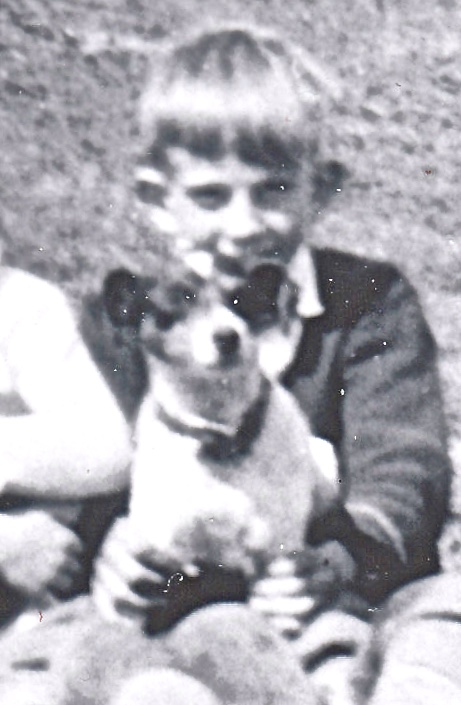
We had a small radio and would listen to news and baseball. The boys hunted. We had a dog.”
To survive the Great Depression, the family needed help. Living far from their families, they turned to neighbors. Always one of the best ways to fit in as a newcomer was to join a local church. As Ruth Banis Nance recalled, “On most Sundays we attended an Episcopal church, St John’s, in Huntingdon. The minister would pick up our family and drive the several miles to Huntingdon.”
Even Abe’s father, who was raised in the Roman Catholic Church and rarely attended services with Anna and the children, joined St. Johns.


Ruth remembered that on some Sundays the family would go to the minister’s house after the service and eat dinner before being driven home.
Even when faced with extreme poverty, the family continued to grow. Abe’s brother Sam was born in 1934. In 1935, his sister Annie was born.

With the new additions, Abe’s parents were no longer able to provide for the entire family, so they arranged for Abe and his sisters Eva and Ruth to live with other families in the area. Abe’s older brother Bill dropped out of school after completing the eighth grade and likely he worked at odd jobs to help the family finances.
In February of 1936 Anna’s mother died. Unable to afford the trip to Ohio, Anna missed her mother’s funeral.
As the Great Depression wore on, the family abandoned the Pennsylvania experiment and planned to move again.


Great job that you and Becca have done
LikeLike
IT HAS BEEN WONDERFUL HEARING ABOUT THE BANIS FAMILY HAVE ENJYED IT SO MUCH ALBERT (ABE) WAS MY FATHER IN LAW HE WAS THE SWEETEST MAN ALWAYS TREATED ME WITH RESPECT 2 THINGS I REMEMBER ABOUT HIM IS USED TO LET HIS GRAND DAUGHTERS STYLE HIS HAIR SO SWEET BUT HE HAD AN ORNERY SIDE TO. LOVED HIM SO MUCH
LikeLike
Growing up with Granny around, she always referred to them as Albert and Judy. I’m not sure what she called him when she actually talked to him. But for us it was always Albert and Judy, Ruth and Bill, Annie and Bob, Eva and Skeets, Fanny and Don. An interesting aside is the names some of them had that they didn’t really use–Dick was really Robert Eugene, Pat is James Patrick, Annie is Mildred Anne. Steve, didn’t Aunt Ruth actually change her name from something to Ruth? Albert was called Abe in the letters to and from Bill and Granny, so maybe it changed while he was in the service. More questions for Steve to answer. Hop to it! Ha, ha.
Em
LikeLike
My Mother, Ruth Banis Nance recalled that when she was a teen (?) she needed her birth certificate for an application of some sort. She acquired a copy and was shocked to learn that the name on the certificate was not Ruth Lucille Banis but Viola May Banis. Apparently one of the mid-wives (probably a relative) filled out the certificate shortly after mom’s birth and thought the name Viola May was a better choice. Mom had to file paperwork to officially change her name to Ruth Lucille.
LikeLike
Fyi: Ihave never heard anyone ever call my grandfather “Abe”. Always Al or Albert. Is it his brothers and sisters or parents who did this?
LikeLike
During a recent family reunion, my cousin Karen Kisling, gathered stories from several of Abe’s brothers and sisters about childhood experiences. From the stories, written by my mother, Ruth Banis Nance, she recalled that the house in Pennsylvania was located on a weed, choked dirt lane bordered by crabapple trees. The house was apparently built into the side of a steep hill. There were three rooms. The first or lowest floor contained the kitchen. The floor above was Abe’s parents, William and Anna’s, bedroom and also was likely the nursery for the youngest family members. The top floor served as a bedroom for Abe and his two brothers and four sisters.
LikeLike
My mother, Ruth Banis Nance recalled the day the house caught fire. She was at home, five years old and not yet attending school. Also home was her younger brother, Dick. Ruth recalls that her mother, Anna, read stories to her children as they huddled near a hot stove. After the stories they all began to nap. They awakened to find the house on fire. Anna got the kids outside as the fire spread quickly. She sent Ruth to a neighbor’s house where there was a telephone so a call could be made to the fire department. Ruth ran to the neighbor’s house and found the neighbor on the phone. When Ruth started to speak the neighbor scolded Ruth for interrupting her while she was on the phone. Ruth finally delivered the message. It likely made little difference. The fire quickly consumed the entire house.
LikeLike
Hi!
I am Albert’s granddaughter. Ron, his third child’s, oldest daughter.
I really enjoyed following bill’s story and am enjoying my granddad’s as well.
It’s weird to hear him referred to as Abe. Our entire lives (the grandchildren), we heard him referred to as Al or Albert.
Grandma (Velma) called him Al. His lodge buddies called him Al.
When I first shared the blog about our granddad, some of my cousins asked “who is Abe?”
It might be helpful at some point to mention that in his older years, his friends called him Al.
Also, did you ever hear his story about hearing chains rattle in the middle of the night the night before he was captured in WWII?
Thanks for taking the time and effort to tell his story. Can’t wait to read the rest of it
Regina
Sent from my iPhone
>
LikeLike