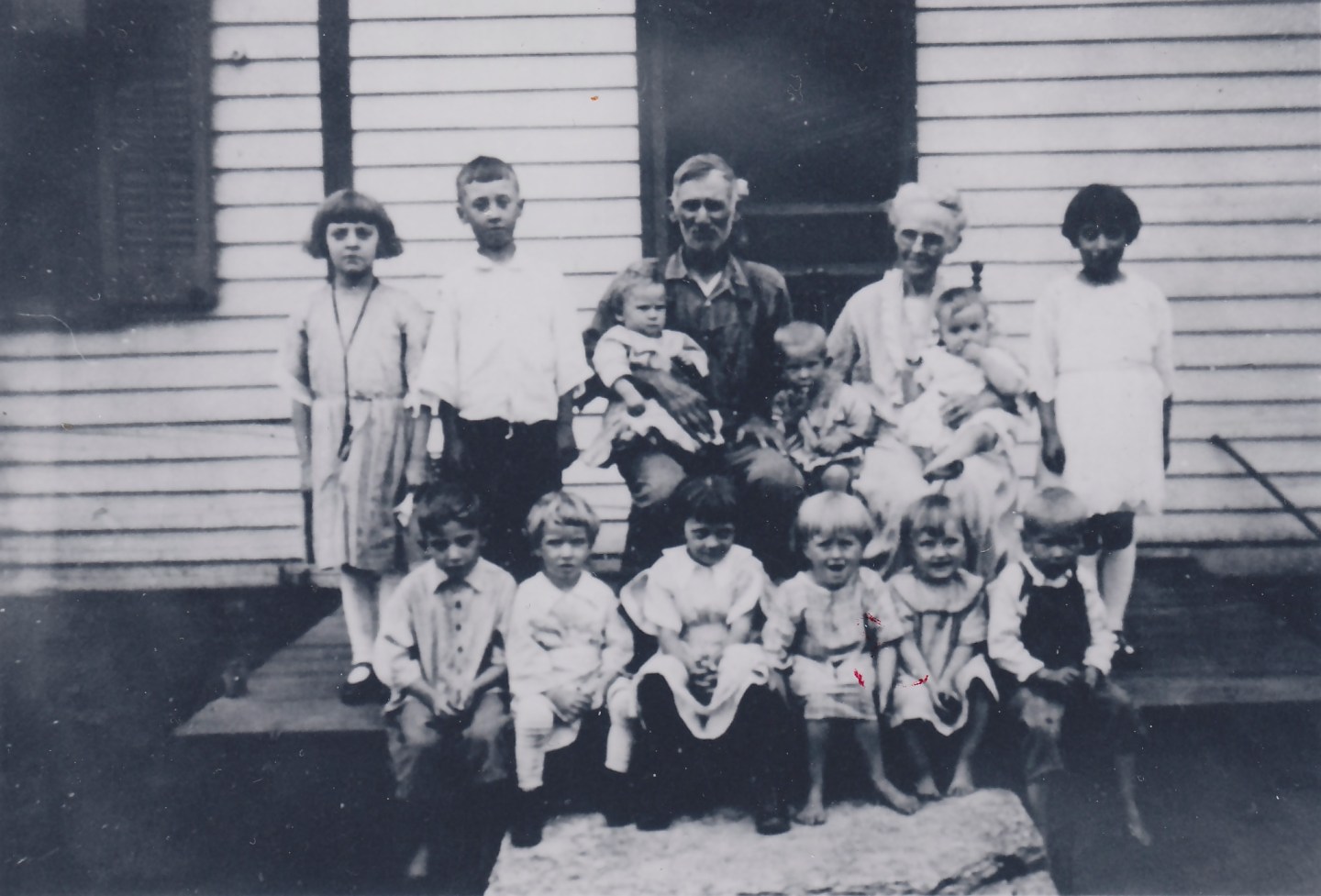


Pre-1920
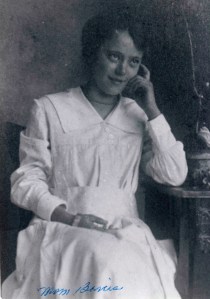
Abe’s mother, Anna Wing, was born December 8, 1899, near Rush Run Lake in southwestern Ohio where her family had lived since the early 1800s. Anna was the second youngest of nine children born to Evanna Shauer, born 1867, and Henry “Val” Wing born 1864.
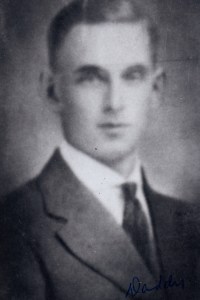
Abe’s father, William Banis, was born July 4, 1885, near Shenandoah, Pennsylvania, about 50 miles southwest of Scranton, Pennsylvania, one of four children. His work on the railroad took him from Pennsylvania to southwestern Ohio.
Abe’s younger brother Victor once asked his father, William, how he met their mother. William answered that “ …he had been walking down a country road and saw her, and she was so pretty he just threw over his shoulder and carried her off. He laughed when he told the story, but it might have been true. She was tiny and certainly pretty enough.”
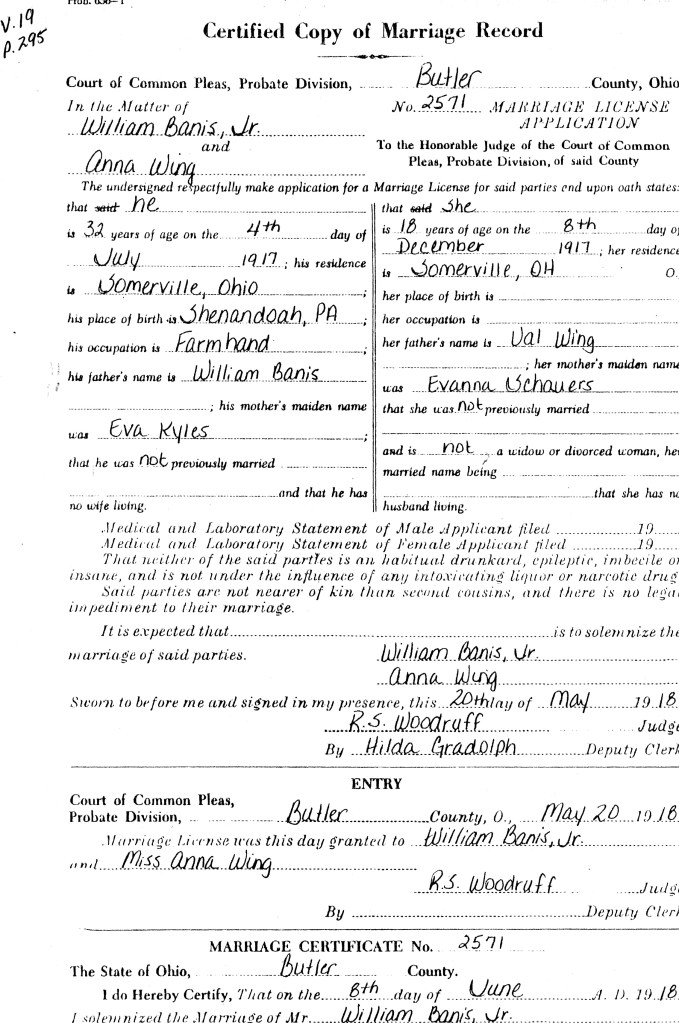
William Banis and Anna Wing were married June 8, 1918. She was 18; he, 32. They lived near Anna’s family. Their first child, a girl, Evanna (Eva) was born in 1919.
1920-1929: The Roaring Twenties
The 1920s were an age of dramatic social and political change. The 18th and 19th amendments to the US Constitution were passed, prohibiting the manufacture of alcohol and winning women the right to vote.

More Americans lived in cities than on farms. The nation’s total wealth more than doubled between 1920 and 1929. Americans had money to spend on consumer goods. Sears Roebuck opened its first retail store in Chicago; Coco Chanel created the famous and iconic “Chanel No. 5” perfume; Macy’s held its first Thanksgiving Day Parade.
#/media/File:KDKA_microphone_on_display.JPG)
Pittsburgh’s KDKA, the first commercial radio station in the U.S, hit the airwaves in 1920. By the end of the decade, there were radios in more than 12 million households. People went to the movies, with three-quarters of Americans visiting a movie theater every week. Walt Disney’s Mickey Mouse appeared for the first time in “Steamboat Willie.”
American author F. Scott Fitzgerald published “The Great Gatsby.”
The economy of automobiles was born. Cars were mass produced. In 1929 there was one car on the road for every five Americans. Service stations and motels sprang up to meet drivers’ needs. Route 66, a major U.S. road running from Chicago to Los Angeles, opened. The Ford Model T cost just $260 in 1924.
There were advances in medicine. Insulin was mass-produced for the treatment of diabetes. Alexander Fleming discovered penicillin and introduced the world to antibiotics.
It was a decade for great achievements and discoveries. Lindbergh flew “The Spirit of St. Louis” nonstop and solo from New York City to Paris. Howard Carter opened King Tutankhamun’s Tomb.

For most Americans the 20s were a decade of growth, opportunity and good times. WWI had ended and “happy days are here again.” The unemployment rate was 3%. The future looked bright and promising.
In 1921, William and Anna Banis gave birth to their first boy, William (Bill), and within a few months, Anna was pregnant again.
“I was born the third child of William and Anna Banis …on the 12th day of August, 1922, in the town of Collinsville.”
─Abe
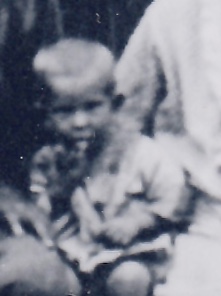
Shortly after Abe was born, the family moved from Collinsville to Hamilton, Ohio. In Hamilton, Abe’s sister, Lorena (May) was born in 1923.
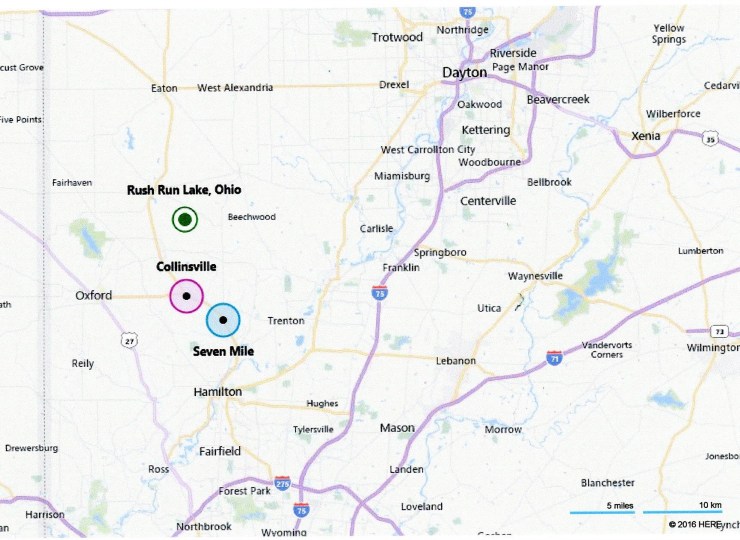
In the spring of 1924, the family moved again, this time going north to the small Ohio village of Seven Mile.
Abe’s oldest sister Eva remembered the trip, “We rode in a car, but a truck moved everything.” Arriving at their destination, “Mother looked around with absolute horror, no flowers no grass just trees, mud and us.” But before long, “Mother turned it into a happy home with flowers and a garden. We all liked each other and had great times.”


In 1924, Abe’s younger sister, Ruth was born.
Abe’s maternal grandparents lived about 15 miles north in West Elkton, Ohio. Many family gatherings were held in nearby Rush Run Lake, where Abe’s mother was born.
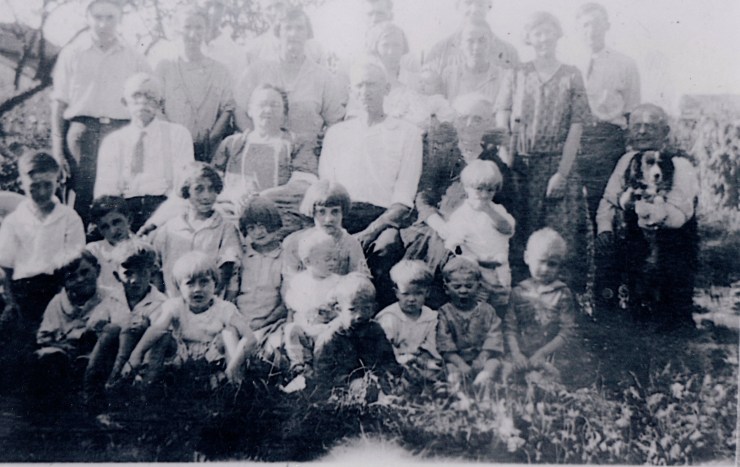
As Eva recalled, “The most thrilling picnics were in Rush Run… There were games and wading in the water and climbing the hills.” Most of the gatherings ended with music. Abe’s maternal uncle Harold (called Russ) played the banjo and guitar, and several of the others in Wing family played musical instruments. Russ later formed a band, “The Wing Rocky Mountain Express,” who performed throughout the region and on local radio programs.
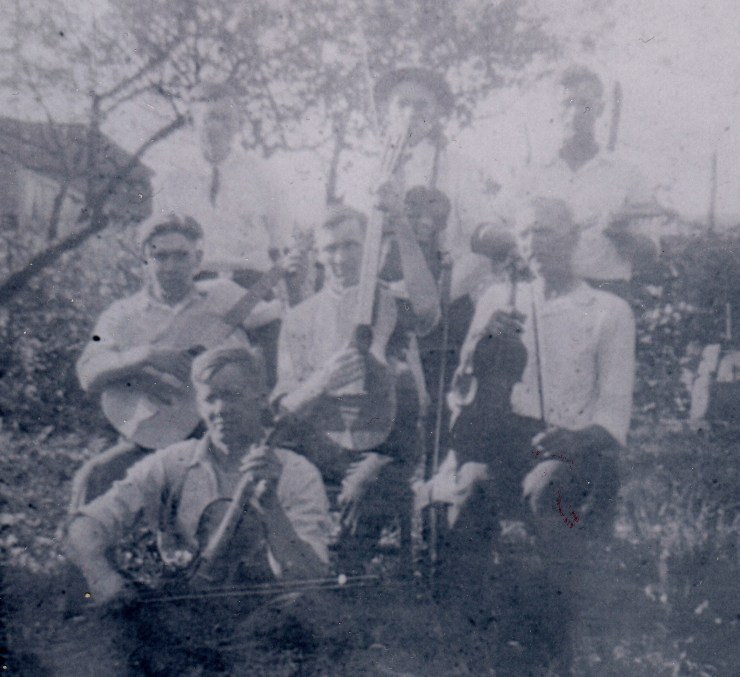
Nearly 80 years later when asked about such gatherings, Abe’s sister, Ruth, would instantly smile, recalling those gatherings with fondness, “We would all sing gospel and hillbilly tunes.”
Every 4th of July there was a party. Eva recalled, “We celebrated Daddy’s birthday. Friends and family and lots of fun and food. It was so much fun.”
In the 1920s, Abe’s father found work at the Ford Motor plant in Hamilton, Ohio. It was a huge plant where 1500 employees worked in three full shifts. The plant manufactured tractor and Model T parts until 1927 when it began making parts for the recently introduced Model A motor car.
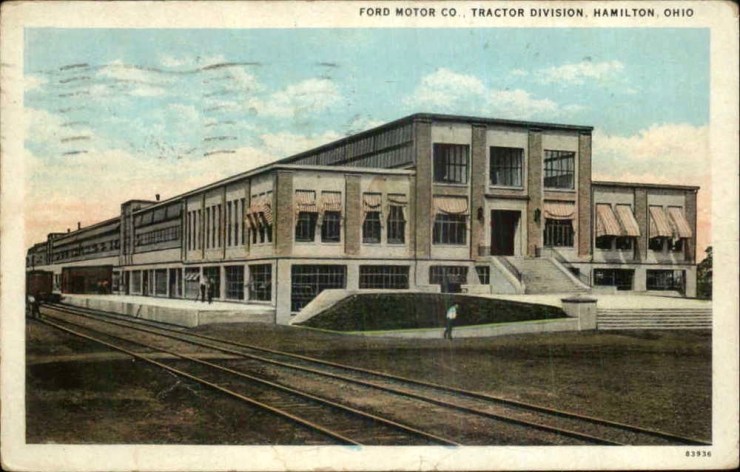
By 1926, Ford had established the 40-hour-work week and a minimum pay of $5 per day or an annual rate of about $1200. It was good pay.
In 1927, the family grew to eight when Abe’s brother, Robert (Dick) was born.
Abe began attending school in the fall of 1928, joining his older sister Eva and older brother Bill on the morning school bus ride. During his summers off from school, Abe played in the hills, streams and woods with his brothers, sister and his many cousins who lived nearby.
Life was good at the end of the summer of 1929. Dad had a job that paid well. The family was settled, having lived in the same house for several years. Grandpa and Grandma Wing lived nearby, and Abe was looking forward to those “most thrilling picnics” with the family and the great food and the great music.
In fall of 1929, only a few months later, the stock market collapsed. Life for Abe and his family would undergo a dramatic change.
*Photo by Djembayz (Own work) [CC BY-SA 4.0 (htto://creativecommons.org/licenses/by-sa/4.0)], via Wikimedia Commons
**Public Domain, https://commons.wikimedia.org/w/index.php?curid=5138785
 ww2letterproject
Still living in this area, I sometimes think about all the family history that has gone right around me. Of course things have changed quite a bit. Eaton is no longer the sleepy little town that Grandma and Grandpa knew. Commercial development has homogenized us quite a bit. But when I go by one of the places where they lived or play, Seven Mile creek, the farm on 726 or driving through Seven Mile or Collinsville on the way to Hamilton, I sometimes picture what their lives must have been like. Thanks for making the picture more vivid. Good job!
LikeLike
So delighted to have a continuation of your WW2 Letters project. Love reading the stories and so glad that your family has this archival and oral history to share.
LikeLike
I remember very little about my grandfather, William Banis. He died when I was four. I have a few vague images of him at the farmhouse. Our family usually visited the farmhouse on weekends. We lived about an hour’s drive to the east. I recall him dressed in dark pants, a long sleeve shirt and wearing a broad brimmed hat (a fedora?). I don’t recall that I ever talked to him. He seemed stern and unwelcoming. Now I realize he was in very poor health at that time. I recall one visit. I was probably four years old. I was on the porch and there were wasps buzzing near the entrance door. They were huge, dark, menacing shapes. I was frightened, bolting when one came near but Grandpa seemed unbothered by them, using his hat to swat them away. I moved toward the door and felt a sharp pain behind my ear. I wailed. My mother, Ruth Banis Nance protected me from additional attacks and moved me inside. My head was throbbing. I laid down on a bed. Some home remedy was applied to the sting, the window shades were drawn and I was left alone. I seemed to lay there a long time as the pain gradually subsided. The windows were open. I could hear my sister, and my cousins playing outside. It was a hot, sunny day. After many visits by my mother and probably some kind of treat (ice cream?), I realized that I could no longer sustain myself as a “center of attention” so I fully recovered and went outside to join in the play.
LikeLike
I remember the old farm house well as I used to visit there probably every week while we lived in Eaton. I loved going there and would play throughout the whole house, outside and watch them gather eggs from the chicken coop. I skipped the butchering of the chickens. Grandpa was a hoot and prankster as he was always sitting in his chair on the porch by the water pump and as we ran by he would spit tobacco juice at our feet to hear us scream in disgust as the juice would splatter all over our feet if it managed to make contact. He always managed to trick me into believing he was actually going to give me a coin and when I would finally go to him, he would slap a used cud of tobacco in my hand and bust out laughing as i would throw it down in disgust that he had lied and tricked me once again. I am with you Steve that as a child none of us small grandkids knew how sick he was. He would still till his garden and do what he could. Grandma said dad (Al) was just like his father and after looking back over the years I could see a lot of resemblance. They were born in hard times and were hard men from necessity but the don’t make many like that anymore. I still remember Grandma coming and telling the family that Grandpa had passed as she was driving him to the doctors and attending his funeral.
LikeLike
Family reunions into the fifties were always fun and enjoyable, food was great and seeing relatives was special
LikeLike
Something you may not know (re: Rush Run.) In those days, a “run” was a creek, a small one, So Rush Run could be translated today as Rush Creek.
Good stuff, as usual. Thanks for this blog
LikeLike