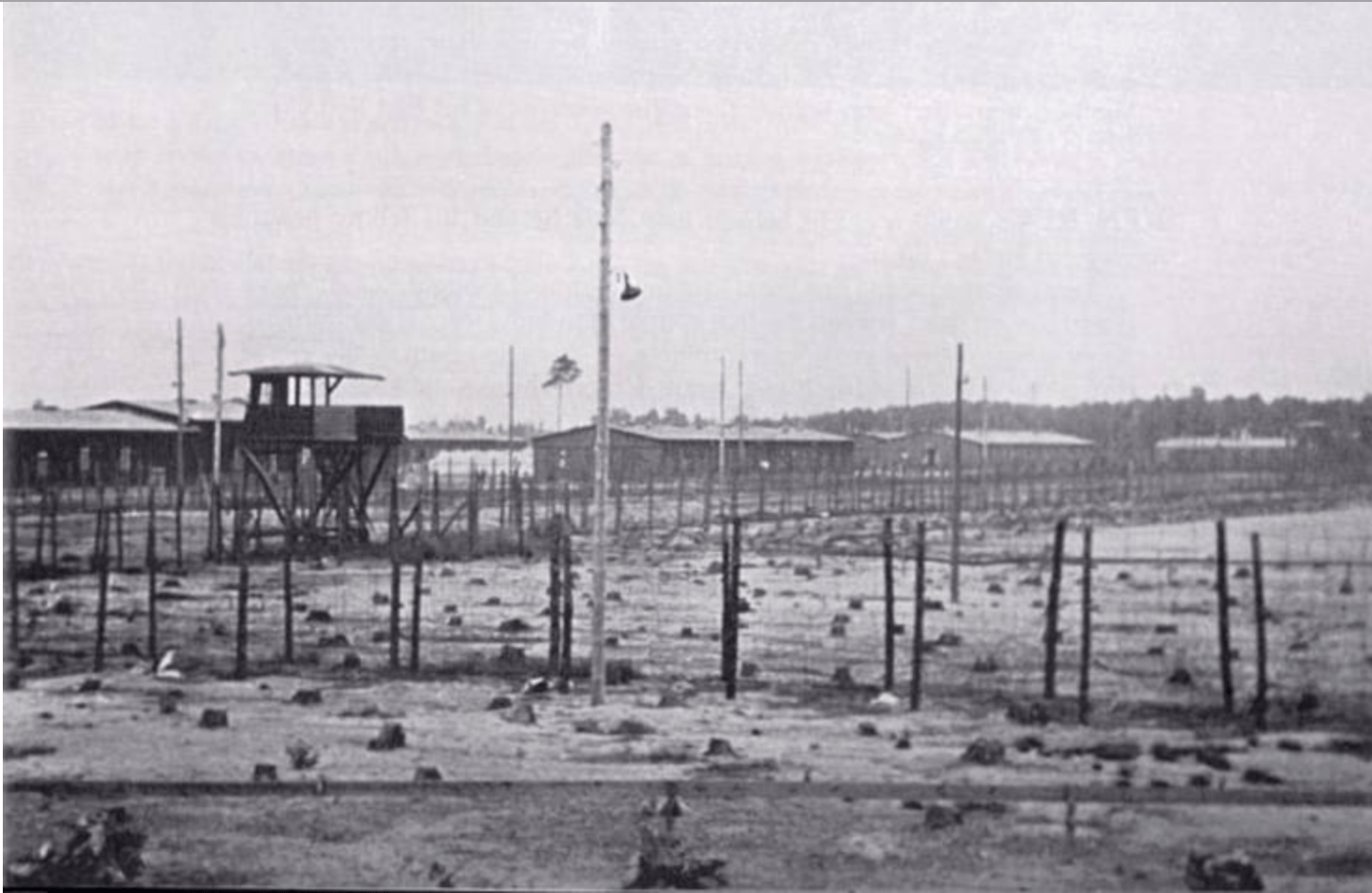
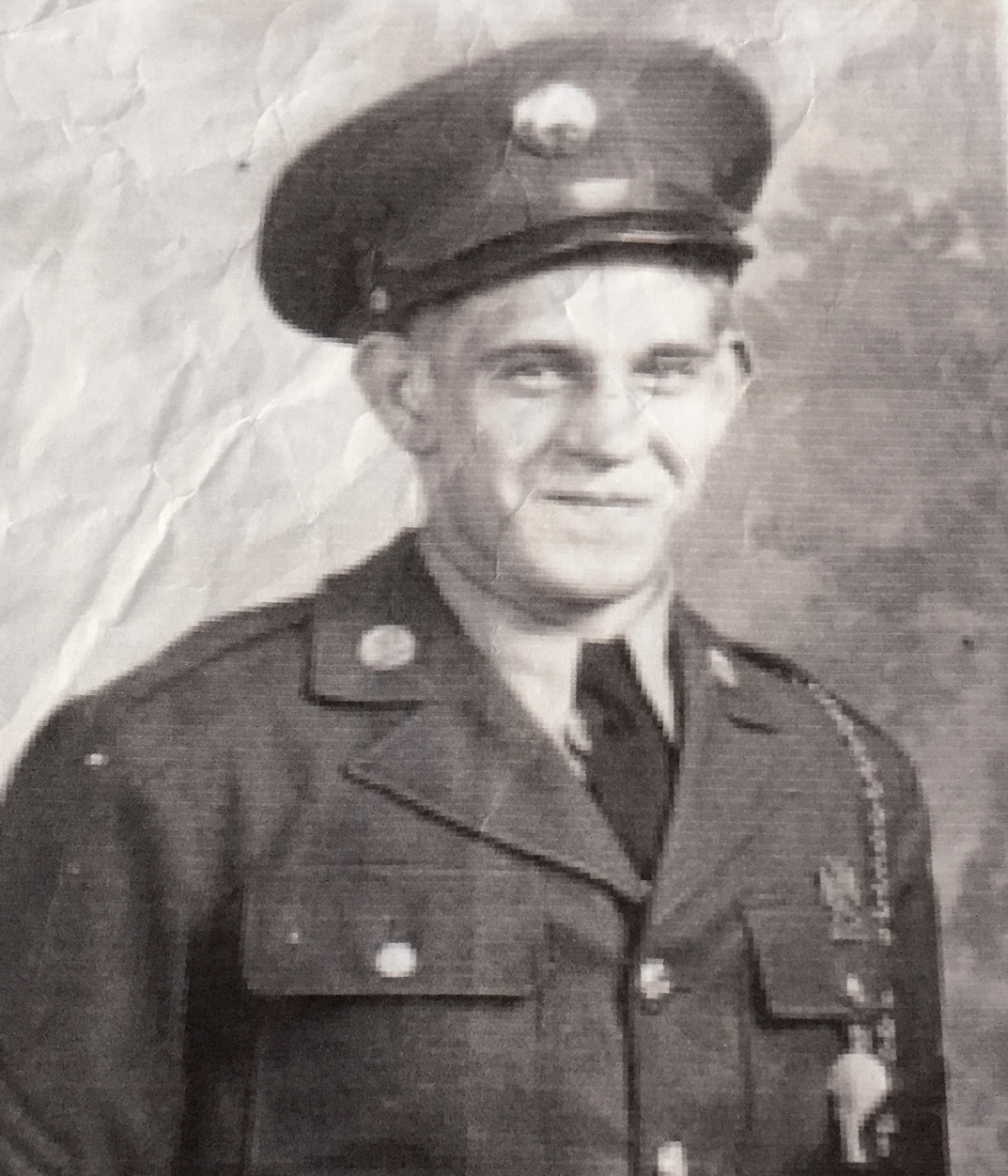
December 1944
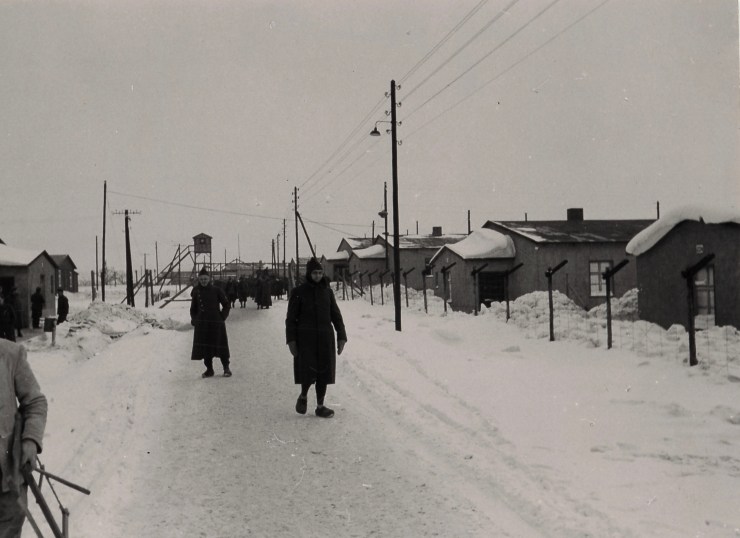
Stalag Weather:
The average high temperature is 37 degrees F; the low, 30. About 15 days of rainfall in December is normal. The average rainfall is 2.01 inches. It is cloudy approximately 85% of daylight hours. There is a 35% chance of light to moderate snow.
On the War Front:
- The bombardment of Iwo Jima begins
- The Battle of the Bulge began as German forces attempt a breakthrough in the Ardennes region
- The Malmedy massacre: SS troops execute 86 American prisoners in the Ardennes offensive
- General Anthony McAuliffe’s famous message of “Nuts” is sent to German officers at Bastogne demanding surrender
- The siege of Bastogne is broken, and with it the Ardennes offensive proves a failure
The following was taken from a Stalag III-C diary, dated Dec 7, 1944:
“Today was started out at 7:30 AM this morning with the blaring of the bugle, and coffee being brought to the barracks. Roll call was at 8:30 AM… Then the Red Cross parcels were issued… and we enjoy some swell American chow, good US food. …Dinner comes at 11:00 AM …we receive… 1 pint of soup…
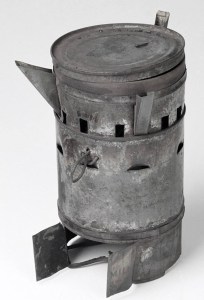
“The rest of the afternoon we spend killing time… Then coffee is issued at 3:00 PM. Then roll call and we have the rest of the night to cook on the stoves made out of milk cans which came in the Red Cross box.
“It gets dark by 4:30 PM, so we sit and wish for bigger and better air raids and play cards the rest of the night. So till next days issue sincerely and good night.
“– Shorty”
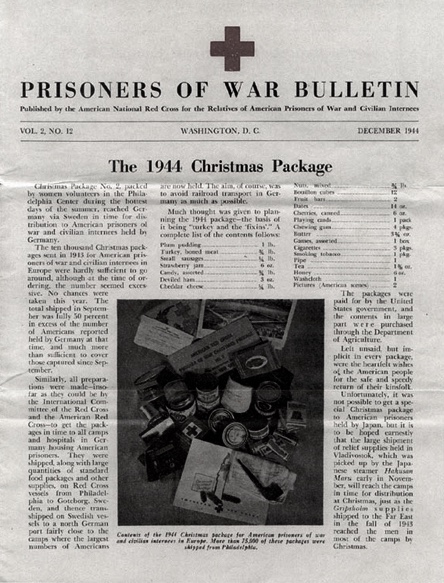
The Red Cross parcels contained cigarettes which became the camp currency.
“We spent some of our time playing cards for cigarettes when we had them.”
-Abe
More importantly, many of the German guards were also were experiencing rationing and cigarettes were in demand.
“We… used to trade …cigarettes to the German guards for …loaves of bread which were black and sour.”
-Abe
Within the camp a black market was established and food could be “purchased.”
Abe noted in his journal:
“Blackmarket – oatmeal – 20 cigarettes, sugar – 22 cigarettes, butter – 22 cigarettes.”
Life Behind Barbed Wire:*
Richard Hartman:
“Well, it was funny, there were no fights that I can recall. The camp was pretty well run by the prisoners. The Germans would bring the food to the gate, and then the group who were assigned to, you know, dispense the food …got a big vat of tea in the morning and a loaf of bread. And they’d tell you how many were on the loaf of bread, there would be the four, five or six, never less than four, which meant that you had to get four people to slice it up and be sure that it was evenly distributed. And at noon time they brought the vat around again, and it had soup in it. Usually rutabaga soup. And on Sunday they occasionally had pea soup, which was, oh my, that was good, because it had a piece of, it might have a piece of meat in it, and maybe a potato or two… And at night it would be the tea again. And that was what we existed on.
“And behind each tent was a, oh, maybe six feet by six feet by six feet deep, which was the latrine. And there was… one water faucet at the far end past the last tent that had a wooden trough that was maybe two feet wide and inverted so that the water ran down that, so you’d turn on the tap and the first one in line got clean water. And this trough was probably eighty feet long, and if you wanted to wash anything, you know, if you were first in line you got clean water; if you were the 80th one down, you were washing in 80 persons’ dirty water. But didn’t do much washing anyway. Because, like I say, it was bitterly cold.”
*Interviews of American soldiers who spent time in WWII German POW camps by the Library of Congress: Veterans History Project: http://www.loc.gov/vets/
As the year ended the Germans mounted a major counter attack against the Allied forces France (the Battle of the Bulge). In New York the musical “On the Town” about three American soldiers on a 24 leave in New York City during 1944 opened on Broadway.

The following was likely taken from a letter Abe wrote to Velma:
Dec 10, 1944
Dearest wife and sons:
Today is a very fine day in the camp; cool the sun is shining a little, and things aren’t going so bad. So to take the dullness away from this kind of life I took to writing a letter to the one I really am thinking of and to the two little boys whom she loves.
Here at night when there isn’t anything to do but to sit and think of the dear ones whom we left at home in a safe place to live. When things are blue and it seems that things aren’t going so well; we sit down and read the little book which is so popular.
Honey remember the book you gave me for Christmas of 1942; it has been used many times by many men…
Abe would observe Christmas of 1944 in Stalag III-C.
to be continued on Monday…
*banner photo courtesy of https://wallyswar.wordpress.com/pow2/
 ww2letterproject
Leave a comment